
Porn: The Addiction We Don’t Take Seriously
Stop Watching Porn
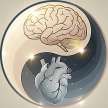

I’ve noticed something strange when it comes to how people talk about porn. They either make jokes about it or pretend it’s harmless. Like it’s just another thing adults do. But the more I thought about it, the more I realized, this thing is messing with us. Not just sexually, but psychologically, emotionally, even spiritually, if you want to go that deep.
I’m not writing this because I’m against sex or pleasure. I’m writing this because we’ve stopped thinking. We consume porn without ever asking ourselves the basic questions: What is it doing to me? How does it affect the way I see others? And why do I keep going back to it even when part of me doesn’t want to?
Let me be clear, I’m not judging anyone. I’ve watched porn myself at some point in my life. Everyone I know has. But most people won’t talk about it honestly, especially guys. And that silence? That’s the real problem.
Porn seems like freedom at first. Unlimited access, zero commitment. Just search, click, enjoy. But if you keep doing that over time, something changes. You don’t even notice it at first, but your brain starts to shift. The things that used to turn you on don’t anymore. So you escalate. You look for more extreme stuff. And then you escalate again. Before you know it, the stuff you’re watching doesn’t even align with your actual values or attraction.
Here’s the scary part: most people don’t realize they’re being conditioned. They think they’re in control, but they’re not. They’re just reacting to impulses, like lab rats chasing dopamine. Because that’s what porn really is , a dopamine trap. Instant gratification with no cost. Except there is a cost. It’s just invisible.
Let’s talk about the emotional impact. Ever notice how after you watch porn, there’s a weird emptiness? Like you got what you wanted, but now you feel worse? That’s your brain telling you something’s off. You weren’t fulfilled. You were stimulated, not satisfied.
Real intimacy, whether sexual or emotional, requires effort, risk, vulnerability. Porn bypasses all of that. It’s intimacy without connection. Sex without meaning. And the more you consume it, the more you train your brain to seek pleasure without depth. That rewiring affects everything: your relationships, your attention span, your emotional range. You become numb.
And what about the women in those videos? Or men, if that’s what you watch. Do we ever think about them as real people? Or just bodies? We like to believe it’s all consensual, but deep down, we know some of it isn’t. And even when it is, there’s still something dark about it. You’re watching a stranger act out your fantasy for money. Over and over. That’s not freedom. That’s commodification of the most intimate part of human experience.
Now imagine a teenager discovering porn today. At 13. At 11. With zero understanding of sex, love, or relationships. That kid is going to think porn is normal. That this is how sex looks. That women like being degraded, or that men should perform like robots. And it will take years, if ever, for them to unlearn it. That’s not just sad. That’s dangerous.
You might say, “But I’m an adult. I can separate fantasy from reality.” Maybe. But your brain doesn’t care. It’s still absorbing patterns. And if you keep feeding it the same stimuli, it adapts. You can’t avoid that. Even if you’re “in control,” you’re still being trained.
I’m not saying quit porn to be “pure” or “moral.” That’s not my angle. I’m saying: quit porn because you want clarity. Because you want to stop feeling foggy and distracted. Because you want to reclaim your ability to feel real attraction, to have real relationships. Because you want to stop numbing yourself.
Quitting porn doesn’t make you enlightened. It just gives you space to see what was happening underneath. And once you see that, you can’t unsee it.
You’ll notice you have more energy. More focus. More motivation to actually connect with people, not just fantasize about them. You’ll be less anxious, less insecure. You’ll regain your ability to feel excited by real life, by touch, by eye contact, by vulnerability.
But it’s not easy. The habit is strong. Especially because it’s private. No one sees it. No one judges you for it. Which makes it easier to keep going. But if you’re honest with yourself, you know when something’s not serving you. You know when something is quietly eating away at your mind.
So I’ll ask you one thing, just try going without it. Not forever. Just for a while. A month. A week. See how you feel. See what you notice. See what changes.
And if nothing changes, fine. Go back. But at least you’ll know you tried. At least you’ll know what your mind feels like when it’s not being flooded with artificial pleasure.
Because maybe, just maybe, what you think is freedom is actually a cage. You just got used to the bars. I truly hope everyone comes to understand what it means to be trapped within the illusion of freedom.
About the Creator
Beyond The Surface
Master’s in Psychology & Philosophy from Freie Uni Berlin. I love sharing knowledge, helping people grow, think deeper and live better.
A passionate storyteller and professional trader, I write to inspire, reflect and connect.
Keep reading
More stories from Beyond The Surface and writers in Psyche and other communities.
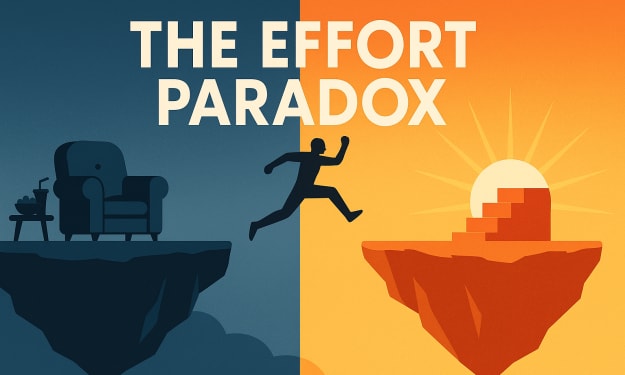
The Effort Paradox
We say we want a meaningful life. But when meaning knocks (wearing the clothes of discomfort), we turn away. This is the contradiction at the heart of human behavior: we long for purpose, mastery, and growth, yet we avoid the effort it takes to get there. And not just sometimes, but routinely.
By Beyond The Surface8 months ago in Psyche


Comments (1)
I have followed you on Medium also 😃☺️