
Oilers collapse in Game 1 with Stars
Can they come back?
Right, Then. About That Third Period...
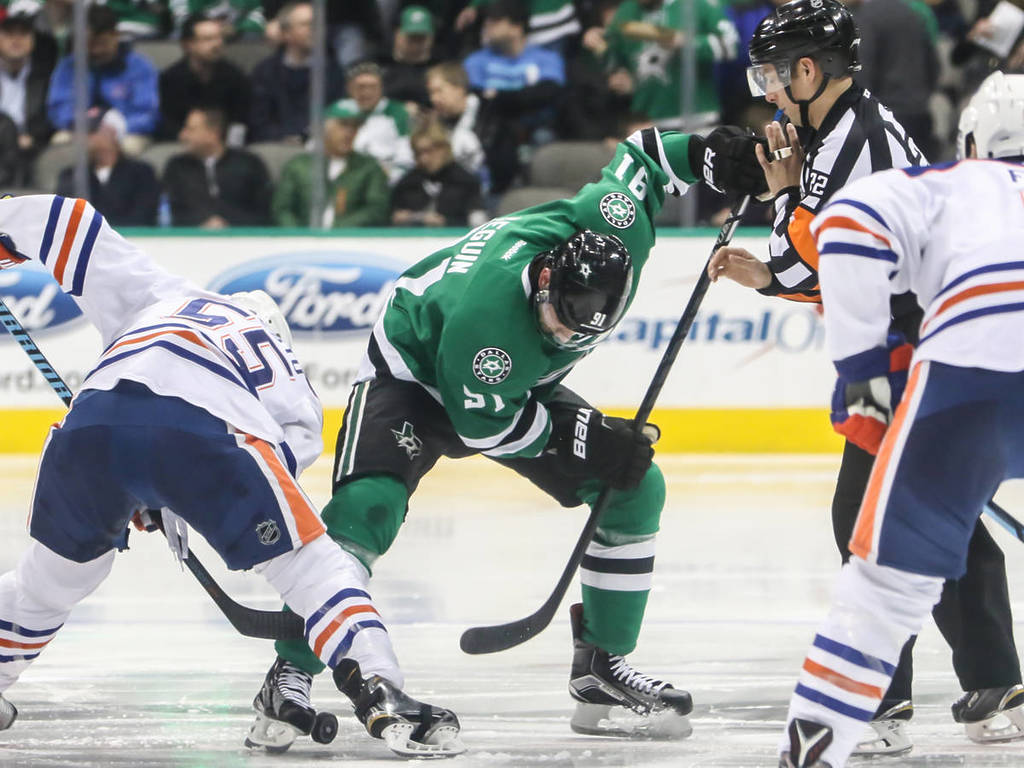
Right, then. That wasn’t exactly in the script the Edmonton had collectively drafted in its hopeful, slightly trembling heart, was it? Wednesday night. American Airlines Center in Dallas, a place that. It was a cauldron of noise, alright – initially a mix of nervous energy and that distinct Texan drawl, but mostly smug, eventually, as the night wore on and our collective blood pressure spiked higher than a July mosquito in Fort McMurray.
The Edmonton Oilers. They were up. Comfortably. It seemed – a phrase that in Edmonton sports lore should probably be accompanied by a dramatic organ chord and a flashing warning light. Goals were scored – beautiful, artful; typically Oileresque goals that make you spill your beverage of choice (perhaps a local craft beer, or something a bit stronger if you’ve been an Oilers fan since the 80s and your nerves are shot) in joyous, unrestrained exclamation. You know the kind: McDavid turning a Dallas defender into a pretzel, Draisaitl saucing a pass through three sticks and a time vortex, Hyman tipping one in from the blue paint where he pays rent. Cheers, albeit muted by the hostile environment, were exchanged by the brave, scattered pockets of blue and orange, those dedicated souls who’d mortgaged their kids’ education for playoff tickets.
And then: Poof. Not a gentle deflation, mind you, like a forgotten birthday balloon. Oh no. This was much bigger – a tire exploding on the QEII at rush hour, during a blizzard, while you’re already late for a meeting with your perpetually unimpressed mother-in-law, and your phone battery just died. A sudden, violent, "what-the-HELL-was-that?" kind of disintegration. A 3-1 lead, looking so solid, vanished into the thick, humid Texas night, replaced, with a cruel 6-3 final score. That scoreline, five three period goals, felt less like a loss and more like a particularly cruel magic trick performed by a grinning illusionist in a giant foam cowboy hat. David Copperfield making the Statue of Liberty disappear had nothing on the Stars making the Oilers' lead evaporate.
Silence. Stunned, deafening silence in Edmonton living rooms, the only sound distant, mournful howl of the neighbour’s dog, who frankly seemed to get it. Stunned silence from those who made the pilgrimage south, suddenly realizing their return flight might feel a lot longer. Stunned Stars fans who, for a flickering moment, probably couldn’t quite believe their luck either… though they’d never admit it, bless their cotton socks. They just started cheering louder, the roar amplified by that special kind of joy that comes from witnessing another team’s soul slowly exiting its body on live television. Dallas fans seemed to be savouring every last drop.
So, What in the Blazing Saddles Happened Out There?
In Dallas, Connor McDavid put it with his usual understated, almost painful precision on Thursday: “Really good for forty and really bad for twenty. You know, ultimately, that's what it came down to.” He elaborated, his words carrying the weight of a city’s dashed hopes. “Where did it get away from us? Obviously, the kill,” McDavid continued. “You know, can't put ourselves in that position. Got a two-goal lead in the third, and we take a couple of penalties and we gotta find a way to get a kill.” Truer words, 97. That twenty-minute segment felt like an eternity, like watching your team try to solve a Rubik's Cube while wearing oven mitts, underwater. Losing is one thing. It’s sports. It happens. But that? That was a gut punch … a kick to the shins … a surprise wedgie.
One goal. Then another. A brief Dallas retort, a single goal that felt like a mere blip – like a mosquito buzzing past your ear in the Arctic; annoying, yes. But, ultimately, insignificant. Then a third for the Oilers, making it 3-1. You could almost hear a collective sigh of relief from the 780: "Okay, we can breathe now.” The Stars’ goals came in a flurry, a painful staccato rhythm. 3-2. Uh oh. 3-3. Okay, deep breaths. This is playoff hockey. Character-building. Then: 4-3 Dallas. Right, this is where heroes dig deep. 5-3. The inspirational music screeches to a halt. Edmonton, we have a problem. A big, green, suddenly-unstoppable, Wyatt Johnston-shaped problem. The empty-netter for 6-3 was just salt in a wound already requiring emotional stitches.
As Ryan Nugent-Hopkins astutely observed Thursday: "When they push, you're in a position to defend and you're getting vulnerable to having to take a stick infraction.” In the harsh, unforgiving, light of the day after – a light that maliciously highlights every crumb on the counter and every flaw in last night’s performance – the questions swirl. What went wrong? Who’s to blame? How could this happen when everything was going so… right? Pinpointing a single culprit is a fool’s errand, simplistic blame-gaming best left to internet comment sections. Losses like this are a complex, ugly tapestry woven from misfortune, miscalculation, the opponent being better in key moments (darn them), and perhaps a mischievous hockey god with a penchant for dramatic irony.
And the penalty kill, as McDavid lamented. Usually a source of pride, did it suddenly spring multiple leaks? Effective penalty killing relies on aggressive pressure, smart stick work, and winning those crucial defensive zone faceoffs to allow for a clear. Were the Oilers losing those draws, allowing Dallas to set up their lethal power play unit – featuring the likes of Heiskanen quarterbacking, with Robertson, Hintz (when in), Pavelski, and Johnston buzzing – with ease? Were Dallas's puck movement and player movement too quick, pulling the Oiler penalty killers out of position, opening up those cross-ice seams for one-timers or backdoor tap-ins? A breakdown here isn't just about one guy; it's a systemic failure – a forward not covering the point, a defenseman losing his man in front, or a collective failure to anticipate and intercept. Dallas’s power play is no joke; they move it with speed and precision. If the Oilers weren't perfectly in sync, reading the play, and aggressively taking away time and space, the Stars were going to make them pay. And they did, didn't they? It felt like watching a dam with multiple cracks appearing simultaneously.
Blown coverages can also stem from miscommunication – who’s taking the puck carrier, who’s got the trailer, who’s covering the weak side? In the noise of a playoff game –especially on the road, those little verbal cues or eye contacts can get lost, leading to two guys covering one Star, and another Star waltzing in all alone, probably whistling a jaunty tune. And the inability to clear the crease? That’s prime real estate. If Dallas forwards like Jamie Benn or Tyler Seguin are allowed to set up shop in front of Skinner, tipping pucks, screening him, and whacking away at rebounds, life becomes exponentially harder for your goalie. It’s like trying to read a book with someone waving their hands in front of your face. You gotta be mean in front of your own net, legally mean, of course. Win those gritty puck battles along the boards.
When you have McDavid and Draisaitl, the expectation is always sky-high. If they were held off the scoresheet during the Dallas surge, or worse, on the ice for multiple goals against, the critics sharpen their knives. It’s unfair to expect them to be superhuman every shift, but in the playoffs, against top teams, that’s often what’s required. How does a team like Dallas try to neutralize them? It’s not usually one player; it’s a five-man unit effort. They’ll try to deny them controlled zone entries, forcing dump-ins. They’ll have relentless back pressure from their forwards, meaning Connor or Leon might beat one guy, but there’s another one right there. Key defenders like Heiskanen, with his incredible skating and reach, will be tasked with closing down space quickly. Dallas might also try to get their top defensive pairing or a dedicated checking line out against them whenever possible, especially with last change at home. If their usual magic is stymied, if they’re spending more time defending than attacking, it creates a huge offensive void and can demoralize the rest of the lineup who look to them to lead the charge. It’s like expecting your two main superheroes to save the city, and suddenly their capes are caught in a revolving door.
Alright, So We Got Kicked in the Shinpads. Now What?
The 2010 Boston Bruins: Up 3-0 in the series vs. Philly. Then up 3-0 in Game 7. And lost. Both. A special kind of pain. So, Oilers down 1-0 after that kind of loss. What do the numbers say? Historically, in a best-of-seven NHL playoff series, the team winning Game 1 wins the series roughly 68% of the time. Not exactly comforting. However, that’s a general statistic. It doesn’t account for specifics: team quality, how Game 1 was lost, or the resilience of the losing team. And if this Oilers team has shown anything, it's stubborn refusal to roll over.
Teams have come back from 0-1 deficits countless times. Even 0-2 or 0-3 (hello, 1942 Leafs, 2010 Flyers, 2014 Kings). Success often comes down to leadership, smart coaching adjustments, and crucially, short memories. Dwelling on Game 1 is a recipe for disaster. Learning from it, however, is crucial. As McDavid said, "Game two... gotta find a way to get a win here... lot of positives... don't think we need to change a whole lot." That’s the mindset. Acknowledge, analyze, adjust, advance.
The Oilers have recent experience with adversity. This group, as Nuge pointed out, "has always responded to these types of situations pretty well, and I'd expect the same, tomorrow night." He added, "We've had disappointment... and have responded, really, really well... I expect us to... do that again." The key isn't just that they lost, but how they respond. This isn't just X's and O's; it's backbone. This is where Coach Kris Knoblauch and the leadership group earn their paycheques. The message: Acknowledge it. Learn from it. Flush it. As Knoblauch said: "Maybe... a few years ago when they were younger, it would have been tougher, but this is such a mature, experienced group. They can just put it past you and move on... team wasn't as good as they are now." That’s the quiet confidence you want. He continued, "Yeah, I think there's a lot of positives... but, there's always room to get better." Spotting positives amidst carnage is key. For forty minutes, it was damn good. The trick is extending that to sixty.
About the Creator
Cam Tait
Cam Tait of Edmonton is a veteran journalist, author and comedian who lives with cerebral palsy. Overcoming great odds to live independently and work full time, he serves as a role model to future generations of Albertans.
Who is your "Person"?
It's important to recognize that you cannot go through life as easily on your own. My name is Elizabeth and I'm a survivor of child abuse and horrific trauma. Healing from trauma is not a quick fix and recognizing that it will take time, is part of the struggle.
By Elizabeth Woods5 days ago in Psyche
Is Insurance Really Helping Mental Wellness Counseling in Michigan?
Mental health has become a conversation we can no longer afford to sideline. Conversations once held in whispers are now more open, more accepting. Still, navigating the journey to emotional stability isn’t always as simple as finding a counselor and making an appointment, especially in states like Michigan, where the system’s well-intentioned structure can create confusion for those seeking peace of mind.
By Brandon Honey5 days ago in Psyche


Comments
There are no comments for this story
Be the first to respond and start the conversation.