
Notifications Are the New Cigarettes
The Addiction Design of Modern Apps

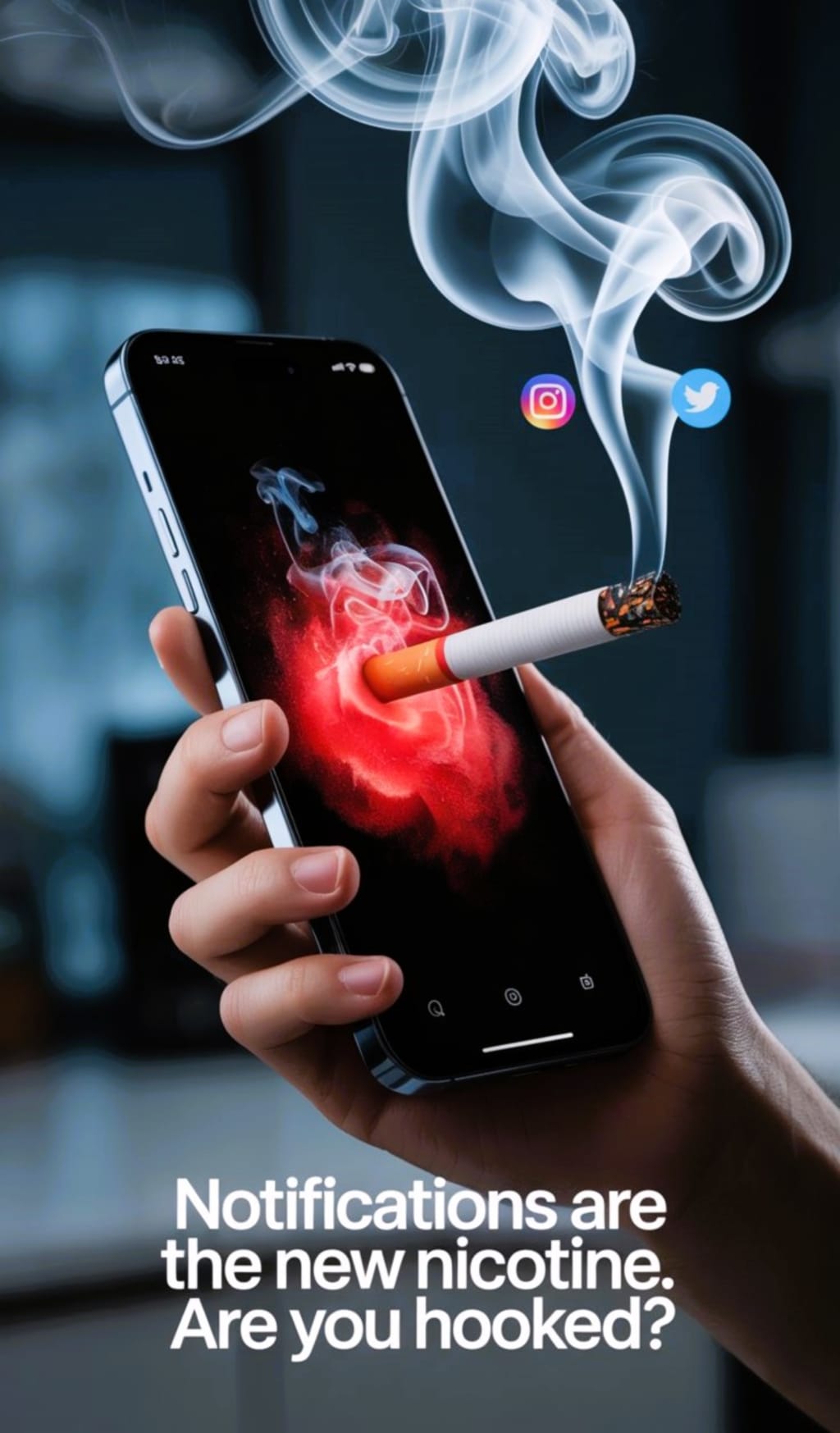
You might think addiction is something reserved for substances—alcohol, nicotine, caffeine. But addiction today wears a new face. It's not wrapped in a cigarette or poured into a glass. It’s tucked into your pocket, buzzing gently, lighting up with a red dot, whispering: “Check me.” Every ping, buzz, and badge on your phone isn’t just a convenience—it’s a carefully engineered hook. And much like the tobacco industry of the 20th century, the tech world has learned how to profit off our compulsions.
The Science of the Ping
Every time your phone lights up with a notification, your brain releases a tiny squirt of dopamine—the same feel-good neurotransmitter involved in gambling, eating chocolate, and yes, smoking. But unlike a cigarette that burns out in minutes, notifications can arrive at any time, day or night, making the potential for addiction nearly constant.
This is no accident. App developers use what psychologists call “intermittent variable rewards”—the same mechanism behind slot machines. Sometimes when you check your phone, there’s a funny meme. Other times, a like, a comment, or a new follower. And sometimes, there's nothing at all. It’s the unpredictability that keeps us coming back. We don’t know what we’ll get—but we know we might get something. Just like lighting up another cigarette, we check again, and again.
Addiction by Design
Think about how much of your day is governed by that little red dot. The color red, used for urgency and danger, isn’t a coincidence. It’s there to pull your eyes. The sound of a ping is tuned to cut through noise. The vibration mimics physical presence. All of it is designed to demand your attention and override your self-control.
Some apps even delay showing you likes or messages so you stay longer. Others keep badges on your app icons even after you’ve viewed them, encouraging repeat taps. We are not just users—we are participants in a vast behavioral experiment, designed not for our benefit, but for profit.
From Nicotine to Notifications: A Cultural Shift
In the 1950s, cigarettes were advertised as glamorous, sophisticated, even healthy. It wasn’t until decades later that the public began to understand the real cost: cancer, heart disease, addiction. Today, tech addiction isn’t yet viewed with the same seriousness, but the impact on mental health is undeniable.
We’re more distracted, more anxious, more sleep-deprived than ever. Notifications interrupt our thoughts, our work, even our conversations with people right in front of us. They fragment attention, reduce productivity, and increase stress. Some studies have even linked excessive phone use to depression and decreased emotional regulation—particularly in teens.
The difference? Cigarettes leave tar in your lungs. Notifications leave clutter in your brain.
The Silent Cost of Constant Connection
It’s easy to think, “I can handle it.” But even if you’re not glued to your phone 24/7, subtle changes are happening. Your attention span shrinks. Your ability to sit with boredom or silence fades. Your tolerance for deep work—writing, creating, thinking—weakens. In place of that stillness, you get stimulation without satisfaction.
Worse, we’re teaching our brains that rest means scrolling, not recharging. That the second we feel a hint of discomfort, a distraction is just a swipe away. Over time, this rewires our relationship with effort, focus, and even boredom. The long-term cost? A life lived on autopilot, constantly reacting instead of choosing.
Breaking the Cycle
The good news? You can reclaim control. Start by turning off non-essential notifications. Audit which apps are allowed to interrupt your day. Use “Do Not Disturb” during work hours or before bed. Move attention-hijacking apps like Instagram or Twitter off your home screen. Try setting your phone to grayscale—it dulls the appeal of those eye-catching red badges.
Even small shifts help retrain your brain to seek out real rewards: a conversation, a walk, a book. These things won’t give you a dopamine hit as instantly as a TikTok video—but they’re more nourishing in the long run.
Conclusion: A New Kind of Smoke Break
We’ve come to accept that smoking is harmful. Maybe it’s time to do the same for the constant interruptions of our digital lives. Notifications won’t give you lung cancer, but they can steal your presence, your peace, and your potential.
The next time your phone buzzes, pause. Ask yourself: Do I really need to check this—or is this just another puff of digital nicotine?
You might be surprised how freeing it feels to just let it go.
About the Creator
shoaib khan
I write stories that speak to the heart—raw, honest, and deeply human. From falling in love to falling apart, I capture the quiet moments that shape us. If you've ever felt too much or loved too hard, you're in the right place.
Keep reading
More stories from shoaib khan and writers in Psyche and other communities.
Living with High-Functioning Anxiety
From the outside, I looked like I was thriving. I never missed a deadline. My calendar was perfectly color-coded. I showed up early, answered emails within minutes, and never forgot a birthday. People called me "organized," "motivated," and "reliable." I wore those words like armor.
By shoaib khan10 months ago in Psyche
Top tipple tricks
Been thinking a lot about drinking, lately. Not least because of a recent episode of over-indulgence and the inevitable after effects. Some readers may recall the earlier articles I wrote about beating the booze. Here I set out an experiment in techniques for cutting down on my alcohol intake. The experiment was successful, the techniques worked, and I have armed myself with an arsenal of weapons in the war against the demon drink. I have yet to fire the first round however. It's all a question of timing (perhaps procrastination).
By Raymond G. Taylor3 days ago in Psyche
The Girl at Seat 4B: What I Learned by Ignoring My Phone for a Month
The blue light was my morning prayer. Before my feet hit the floor, before the coffee breathed its first steam, I was scrolling. I fed on a diet of outrage, filtered perfection, and the relentless "ping" of notifications that made me feel important while I was actually becoming invisible.
By imtiazalama day ago in Psyche
Bomb Scare
It was 2027, and the world never thought it would happen. A missle hit the United States, but it wasn't where they had anticipated. A little town in the northeast was hit by a missile strike, they didn't know why, and they didn't know exactly where it hit, but they did know it was a coastal community, somewhere between Maine and Delaware.
By Gregory Payton6 days ago in Fiction




Comments
There are no comments for this story
Be the first to respond and start the conversation.