
My Autistic Experience is Valid, Even if You Don't Understand It
I'm tired of having to explain myself.


I have been struggling to write an article about my autistic relationship for weeks.
My boyfriend is supportive of it: he has no qualms with sharing the fact that he’s autistic. He, like me, believes deeply in the power of sharing autistic stories as a form of advocacy. I do not feel any shame surrounding my relationship: I love my boyfriend, and besides, if I did feel shame, I’ve already written about my lowest point. I clearly have no problem exposing my bad side to you.
No, I have struggled to write this article because it is so difficult to explain my autistic experience to non-autistic people. I don’t know what a neurotypical relationship looks like in private moments: how you’re supposed to look at each other, talk to each other, touch each other. I only know my experience, and while my experience is comfortable to me, I don’t know how to compare it with a neurotypical’s experience.
But after thinking and thinking and thinking about this article, I stopped. Why do I care so much about explaining my relationship to neurotypicals?
Sure, a lot of my articles are about autism and the autistic experience, but they all have a point. This article is a sort of open letter to my parents, this one is an open letter to neurotypicals in general, and this one is an attempt to help other college-bound autistics. Who am I helping by revealing details about my relationship? And why do neurotypicals care so much?
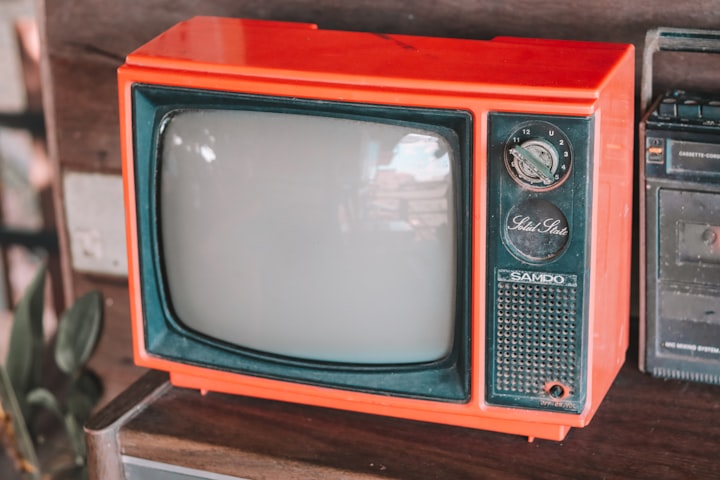
I remember when the Australian reality TV series Love on the Spectrum came out in the United States. While it was well-received, I have always had mixed feelings about it. The series follows autistic young adults as they enter the romantic world, cataloging their romances and heartbreaks. The documentary, as the writers want it to be called, feels more voyeuristic than normal romantic reality TV. Full disclosure: I haven’t watched the show, so I won’t discuss content here, just the premise.
Love on the Spectrum is, according to almost all reviews, compassionate and empathetic towards the autistic people involved. I don’t believe there was any ill-will on the part of the creators or participants, but I do question the interest neurotypical people seem to have in autistic relationships.
In most dating reality shows, the focus is on the will-they-won’t-they aspect, about scandal, about having trashy fun. This reality series is not. Love on the Spectrum seems to be making the case that autistic people are just like everyone else (as we are). It attempts to be a piece of activism. But we shouldn’t have to prove our equality, especially not by revealing intimate aspects of our lives. We should not have to be understood to be accepted. Love on the Spectrum seems like a way for non-autistic people to gawk at us weirdos while being afforded the social cushion of activism. It feels like inspiration porn.
But I think there is an autistic urge to be understood and folded into neurotypical society. Most of us want to be “normal,” even if it hurts us. We mask. We learn social cues. We act. Our social success is measured by the responses of neurotypicals. Consequently, I think we can go a bit overboard trying to defend our experiences.

In truth, no neurotypical person can understand the autistic experience. No autistic person can understand the neurotypical experience. But in a neurotypical society, it often seems like autistic people must justify the validity of their experiences. Our sensory issues are not taken seriously because neurotypical people generally don’t experience them. Our executive dysfunction is seen as laziness. Our relationships and sex lives are rarely discussed because of the degree to which wider society infantilizes autism and autistic people.
Because we live in a neurotypical society, we will probably never be fully understood. Short of creating an autism enclave, we’ll just have to live with that. But I refuse to believe that we need to fight to validate every aspect of our experiences to even be accepted. This happens in many different aspects of life, like relationships, as mentioned, but also with even more fundamental aspects, like communication.
Some autistic people are non-speaking. But, they can and do communicate. Be it through sign language, through writing, or through assisted communication devices, not speaking doesn’t mean they don’t have something to say. These alternative ways of communication, however, are frowned upon. Autistic children who don’t speak are, in many cases, not offered assisted communication devices because of the belief that speech is superior and that ACDs will prevent speech. Even if this is true, what makes speaking fundamentally better than other forms of communication? If it gets a point across, it’s communication. Here, like in many aspects of autistic life, neurotypicality is the gold standard. Autistic advocates today are talking about their experiences using ACDs and the benefits of doing such. But they are not believed. Their experiences are questioned because they don’t fit the idea of what neurotypicals think autism is or should be.
Maybe it seems like I’ve gotten off track. Maybe I have. It might seem strange to connect my difficulty in writing an article about my relationship, Love on the Spectrum, and assisted communication devices. But the common thread I see within all of these is the idea that the autistic experience needs to be defended before it is accepted. That neurotypicals seem to feel a need to understand us before they view us as fully human.

To answer the question I posed to myself at the beginning of this article, I think I care about explaining my relationship to neurotypicals because I want to feel legitimate. I want to make them understand and accept us. But I do not want to have to reveal every aspect of my life and be judged on it. I want my experiences, no matter how different from a neurotypical, to be accepted as human experiences. There is nothing wrong with me. I stim, I get overstimulated, I don’t make eye contact, and I struggle with communication. That does not invalidate my life.
Neurotypical: I don’t want to dissuade you from researching autism. But don’t treat us like a curiosity. Don’t ask invasive questions, or feel entitled to details of our lives. Most of you don’t, which is great. But as a society, I think we have a problem with immediately doubting the experiences of autistic people. Believe us about our own experiences. I wish you could understand me. I wish I could understand you. I can’t, but I still believe you about your experiences. I wish you would extend the same courtesy to me.
Maybe I will write about my relationship one day. But it will be for the benefit of autistic people, and not to try to earn the approval of the neurotypical Big Other.
Tori Morales (they/them) is an autistic college student writing about mental health, autism, and other topics. You can support them by buying them a coffee or following them on Twitter.
About the Creator
Keep reading
More stories from Tori Morales and writers in Psyche and other communities.


Comments
There are no comments for this story
Be the first to respond and start the conversation.