
Media vs. Memory
How scrolling archives shapes or distorts the way we remember our own lives.

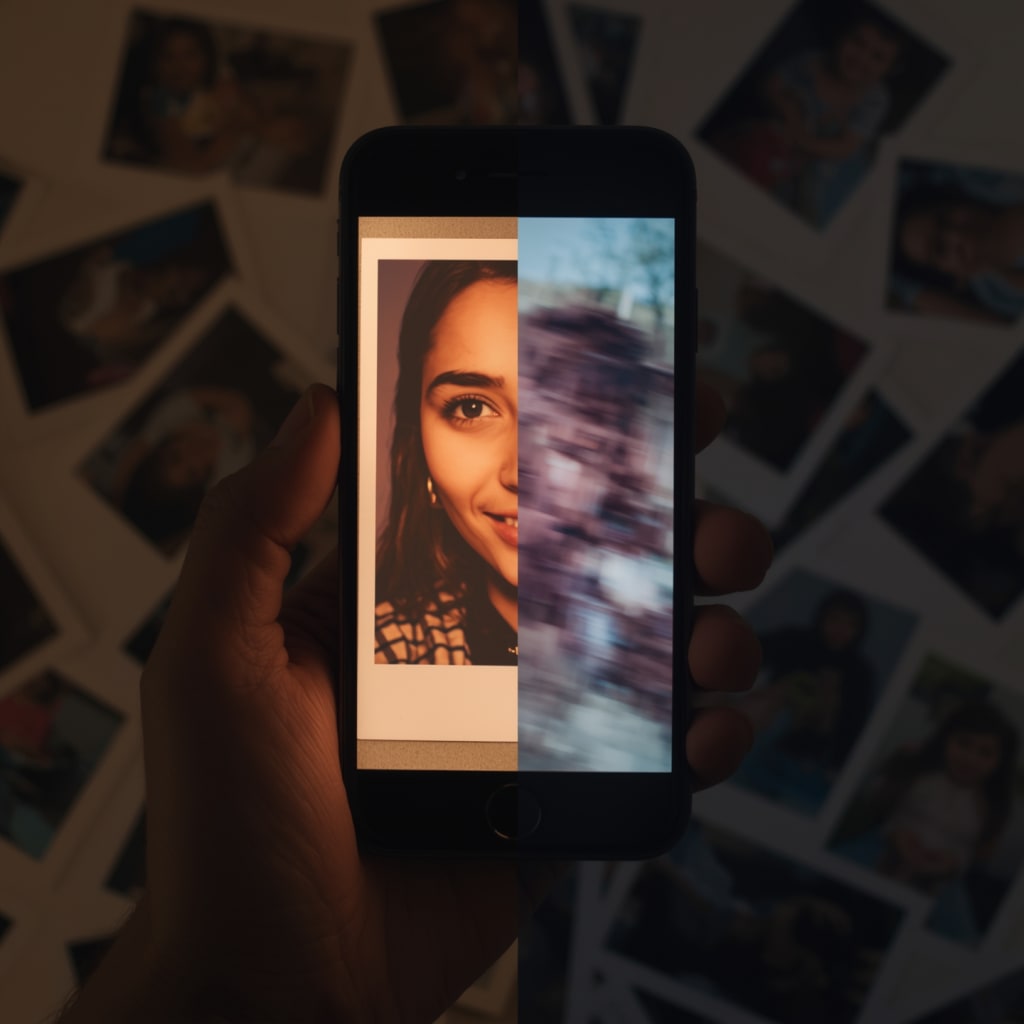
Social Media vs. Memory: The Archive That Owns Us
By Hasnain Shah
I don’t trust my memory anymore.
I used to believe it was a room I could enter freely, open drawers, pull out photographs, smell the dust, and leave when I was ready. Now, when I want to remember a summer night or a birthday, I no longer walk into that room. Instead, I open my phone.
Scrolling has become remembering.
It starts innocently enough—looking up a single picture of my high school graduation. But soon, I’m wading through endless tagged photos, grainy videos, and captions written by my seventeen-year-old self, who loved exclamation points a little too much. The memory no longer feels like mine. It feels like the internet’s version of me: public, curated, filtered.
I can still recall that day without the screen: the smell of hairspray, the sticky heat under my gown, how my grandmother’s voice cracked when she said she was proud. Yet when I compare that private memory with the archive online, I start to doubt myself. Was my gown really that shade of red, or has the photo’s saturation exaggerated it? Did my smile look that forced, or is that just the frame someone chose to upload?
The archive rewrites the past.
This is the paradox of social media: it promises to preserve memory, but in doing so, it edits it. Natural forgetting, the gentle fading of details, has been replaced with the permanence of a timeline. Instead of stories told and retold, morphing with each retelling, we have “proof.” And proof leaves little room for the imagination.
Sometimes this proof comforts me. I once stumbled across a video of my father dancing at a wedding, laughing harder than I remembered him ever laughing. I had forgotten that moment entirely until the video resurrected it. For a moment, I was grateful. But gratitude quickly turned sour. Now, when I think of my father’s laugh, I don’t hear the real thing from memory. I hear the tinny audio from that video. His laugh, in my head, has been replaced by its digital shadow.
And what about the memories that were never posted?
Scrolling gives me the illusion that my entire past is accessible, yet whole seasons of my life have no digital footprint. A road trip without Wi-Fi. A friendship before smartphones. A love I never dared to post about. These blank spaces feel less real now, as though they didn’t happen, because they’re not searchable. Memory bends toward what was documented.
Worse, the archive can distort not just what happened, but how we feel about it. An argument with a friend once lived only in my body—tight chest, hot cheeks, the sharpness of silence. Over time, those sensations would have softened. But instead, I found myself scrolling back to the angry text exchange, still preserved in our message thread. Reading the words again reignited the fight, long after it should have faded. Memory would have forgiven. The archive would not.
And then there are the things I wish I could forget but can’t. Embarrassing posts from adolescence. Photos with people who are no longer alive. Anniversaries of loss that apps “kindly” remind me of without permission. Social media doesn’t understand the tenderness of grief or the mercy of forgetting. It shoves the past into the present whether we ask for it or not.
I wonder if the generations before us remembered more kindly because their memories weren’t competing with an algorithm. Their pasts could soften at the edges, like old Polaroids. Ours remain high-definition, searchable, timestamped.
So what does this do to us? To know our lives in the way strangers might know them—through posts and images and likes—rather than in the unphotographed moments that actually made us who we are?
Maybe the challenge now is not how to remember, but how to choose what to forget. To resist the lure of scrolling as a substitute for memory. To let some nights stay blurry, some faces fade naturally, some laughter live only in the fragile archive of the mind.
Because memory, in its imperfection, was never the enemy. Its fading was the gift.
About the Creator
Hasnain Shah
"I write about the little things that shape our big moments—stories that inspire, spark curiosity, and sometimes just make you smile. If you’re here, you probably love words as much as I do—so welcome, and let’s explore together."
Keep reading
More stories from Hasnain Shah and writers in Psyche and other communities.
Why We Fear the Life We Actually Want
Why We Fear the Life We Actually Want By Hasnain Shah We like to imagine that the biggest battles we face are external—money, time, responsibilities, circumstance. We tell ourselves that if we had just a little more courage, a little more energy, a little more clarity, we would finally step into the life we dream about. But the truth is quieter, more unnerving: the thing we fear most is often the life we say we want.
By Hasnain Shah3 months ago in Psyche
Who is your "Person"?
It's important to recognize that you cannot go through life as easily on your own. My name is Elizabeth and I'm a survivor of child abuse and horrific trauma. Healing from trauma is not a quick fix and recognizing that it will take time, is part of the struggle.
By Elizabeth Woods4 days ago in Psyche



Comments
There are no comments for this story
Be the first to respond and start the conversation.