
“Just 12 Minutes of Patience”
The secret science behind anger, emotions, and inner peace.

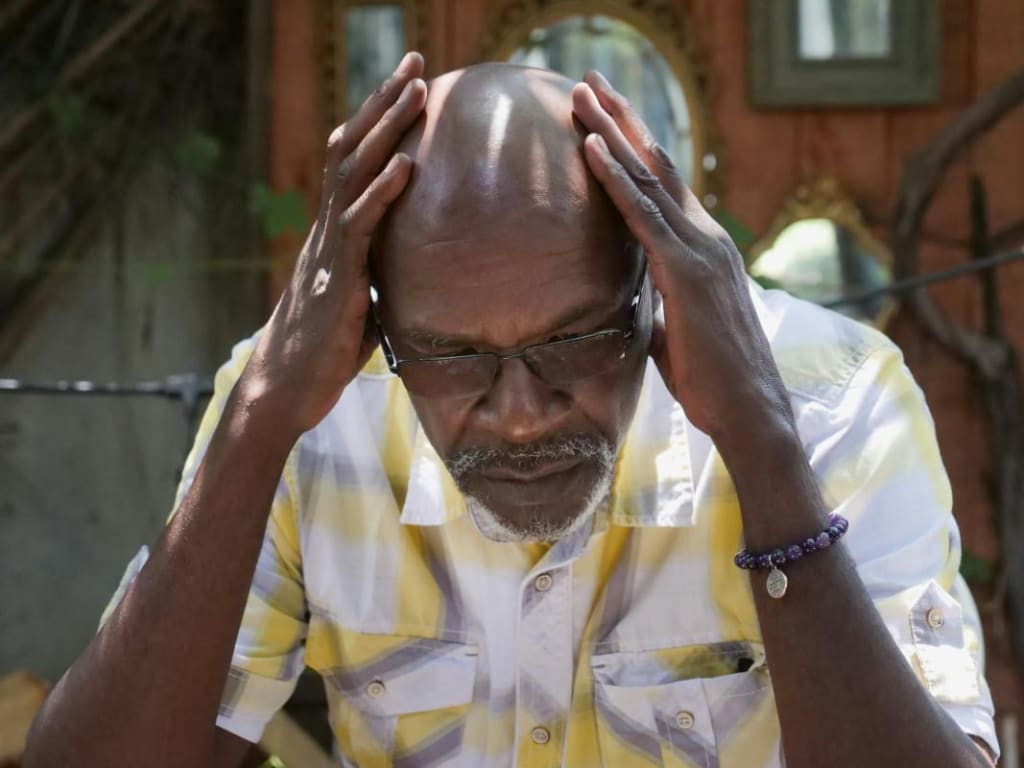
What if I told you that every emotion you feel — anger, sadness, fear, even love — lasts only twelve minutes inside your body? Science says our emotions are nothing but chemical reactions, and if we can manage those twelve minutes wisely, we can prevent regret, heartbreak, and chaos. This is the story of a man who discovered the hidden chemistry behind our feelings — and how twelve minutes of patience can transform not just your mood, but your entire life.
Someone who understands the chemistry of anger can control it very easily. I asked, “Sir, what is the chemistry of anger?” He smiled and said, “There are sixteen chemicals inside us. These chemicals create our emotions. Our emotions set our moods, and those moods shape our personality.” I listened to him quietly. He continued, “Each of our emotions lasts twelve minutes.” I asked, “For example…?” He said, “For example, anger is an emotion produced by a chemical reaction. Suppose our body did not produce enough insulin, or we ate too much salt, or our sleep was incomplete, or we left home on an empty stomach — what will happen? A chemical reaction will take place inside us. That reaction will raise our blood pressure, and that blood pressure will produce the feeling of anger inside us. We will flare up, but that flare-up will last only twelve minutes. After twelve minutes the body will produce chemicals that extinguish the anger, and within the next fifteen minutes we will cool down. So if we learn to manage those twelve minutes of anger, we can avoid the destruction anger causes.”
I asked, “Is this remedy limited only to anger?” He smiled and said, “No. We have six basic emotions: anger, fear, disgust, surprise, enjoyment (pleasure), and sadness. The duration of all these emotions is only twelve minutes. We feel fear for just twelve minutes; we laugh out loud for only twelve minutes; we are sad for only twelve minutes; we feel disgust for only twelve minutes; we are angry for twelve minutes; and shock or surprise also dominates us for only twelve minutes. After twelve minutes, our body returns each emotion to normal.” I said, “But I often see people angry, sad, disgusted, or afraid all day long. They don’t return to normal.” He smiled and said, “Look at emotions like fire. Imagine there is a fire in front of you. If you keep pouring oil on that fire, or keep adding dry wood, what will happen? The fire will spread; it will keep burning. Most of us add oil and wood to our emotions instead of extinguishing them. So an emotion that should have normalized in twelve minutes expands and stretches to two, three days. If we do not control it in two or three days, that emotion becomes a long-lasting mood, and that mood becomes our personality. Then people start calling us ‘Angry Khan,’ ‘Sad Allahditta,’ ‘Fearful Malik,’ ‘Hate Shah,’ ‘Laughing Mian,’ or ‘Surprised Shah.’” He paused and then said, “Have you ever noticed why many people always look surprised, always laughing, always hateful, or always fearful or sad? The reason is clear. An emotion knocked at their face for twelve minutes, but they didn’t let it go back, and so that emotion — whether surprise, laughter, hate, fear, sadness, or anger — became their personality. It became permanently engraved on their face. If they had managed those twelve minutes, they would have avoided a lifetime of damage; they would not have become slaves to a single emotion; they would not have been blackmailed by it.”
I asked, “And isn’t love an emotion?” He replied immediately, “Love and desire are essentially children of pleasure. This emotion also lasts only twelve minutes. If you don’t add new wood to its furnace, it too will end in twelve minutes. But we foolish people wrap it in the beloved’s hair and hang it around our necks, becoming humiliated like Majnun. If we could simply endure those twelve minutes of desire, we would avoid sin, crime, and disgrace. But we fail to do so, and so we are stoned, killed, imprisoned, and humiliated. We are all prisoners of those twelve minutes. If we somehow serve that sentence, we avoid the long imprisonment; otherwise, those twelve minutes won’t spare us.”
I asked him, “How do you manage those twelve minutes?” He smiled and said, “I just demonstrated it in front of you. That gentleman came in anger and demanded his file. I told him I had already signed and sent his file back, but he wouldn’t accept it. He accused me of lying and malice and insulted me and my family. My body was on fire, but because I knew my state would last only twelve minutes, I quietly stood up, performed ablution, and started praying. My prayer took twenty minutes; within those twenty minutes my anger subsided, and the gentleman also reached the truth. Had I not prayed, I would have answered him; a heated exchange would have followed; people would have gathered; there might have been a fight; I might have torn his head off or he might have harmed me. In the end, what would have come of that chaos? We would both have been fools, chasing each other like dogs all day without checking our ears. So I sat on the prayer mat and spent those twelve minutes, and thus I, he, and the whole office were saved from disaster. Our day and our honor were preserved.”
I asked, “Do you pray every time you are angry?” He replied, “No, not at all. Whenever I am overcome by an emotion, I first shut my mouth. I do not utter a word. Even while laughing loudly I do not speak. I just laugh and then start doing something else. When struck by fear, anger, sadness, or pleasure, I go for a walk, bathe, perform ablution, keep a vow of silence for twenty minutes, recite istighfar on the tasbih, call my mother or my children, clean my room or desk, open my bag and sit down, close my eyes and lie down, or get up and pray. In this way the twelve minutes pass, the storm subsides, my reason returns, and I become capable of making decisions.” He fell silent. I asked, “And if you don’t have these conveniences, what do you do?” He paused, thought for a few moments, and said, “Even if the sky falls or the earth splits, I do not open my mouth. I remain silent, and believe me, however great a tsunami may be, it cannot match my silence. It will retreat. You too can defeat all the storms of life by remaining silent.
About the Creator
hamad khan
I write stories that touch hearts and heal minds.
Through simple words, I share real-life lessons, emotions, and moments of reflection.
Join me on a journey of healing, hope, and self-discovery.
Keep reading
More stories from hamad khan and writers in Psyche and other communities.
She Was Admired by Many, Accepted by None
Literature often serves as a mirror reflecting the truths that society prefers to ignore. Among the masterpieces of Urdu fiction, Umrao Jaan Ada stands as a powerful exploration of identity, dignity, and social hypocrisy. Written by Mirza Hadi Ruswa in the late nineteenth century, the novel remains one of the earliest and most influential psychological narratives in South Asian literature.
By hamad khan12 days ago in History
Top tipple tricks
Been thinking a lot about drinking, lately. Not least because of a recent episode of over-indulgence and the inevitable after effects. Some readers may recall the earlier articles I wrote about beating the booze. Here I set out an experiment in techniques for cutting down on my alcohol intake. The experiment was successful, the techniques worked, and I have armed myself with an arsenal of weapons in the war against the demon drink. I have yet to fire the first round however. It's all a question of timing (perhaps procrastination).
By Raymond G. Taylor3 days ago in Psyche
TV Quiz Show Brain-Rot
I might expand on this soon, but I need you to understand this... *** We've often seen that social media's infinite scrolling and slot-machine style refreshers are based upon the methods implemented by casinos in order to keep us playing the game (or in their case, using the application). But what we do not discuss often enough is how these same casino-like situations are implemented by television in order to keep us paying attention to the screen.
By Annie Kapur6 days ago in Psyche
The Politics of Playing Dress-Up
Well, to start off I'd like to say a happy world book day to all who celebrate. I know I haven't really posted anything on my socials about it but I'm not a jubilant kind of person. I lay low most of the time. Let's start off with a popular anecdote from the vaults...
By Annie Kapur7 days ago in Geeks




Comments
There are no comments for this story
Be the first to respond and start the conversation.