
I’m Sorry, But I’m NOT Sorry
When you say that you’re sorry much too often, it loses its meaning.

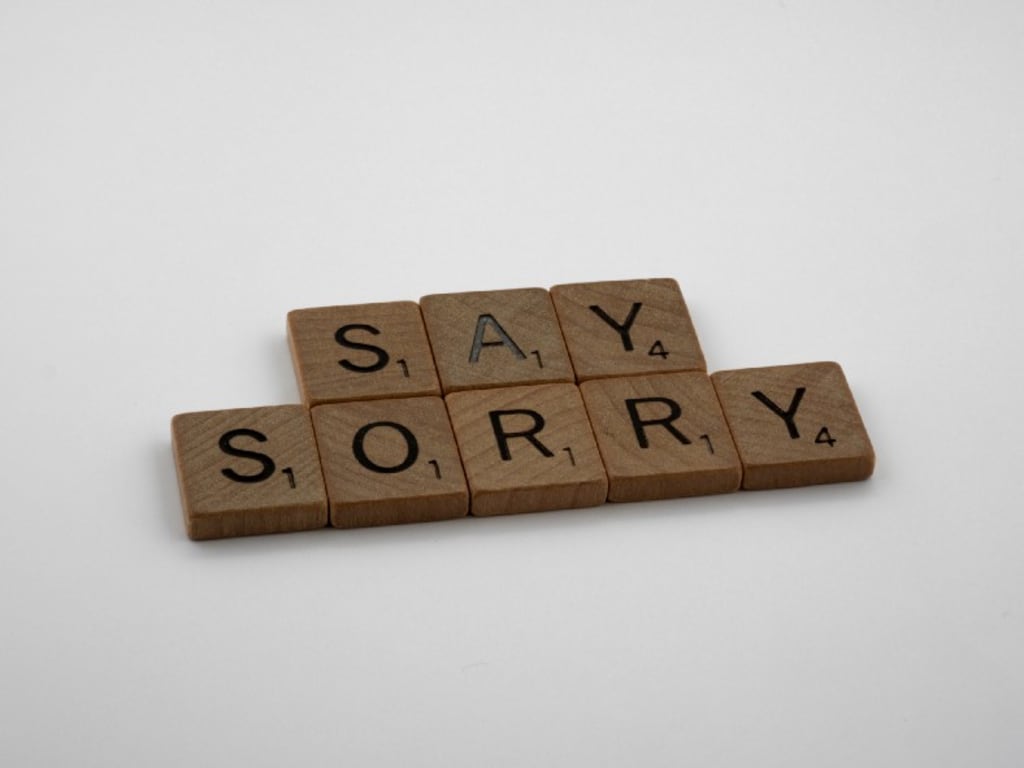
I used to struggle with being a people-pleaser. I had a strict, tough upbringing and always felt I was on the defensive whenever my dad was around. This likely led to my bad habit of constantly saying, “Oh, sorry!”
I’m sure a lot of you can relate to what I mean. Someone being overly apologetic about all kinds of minor things is hard to watch. We’re taught as young children by our parents to apologize a LOT. “Say you’re sorry to your brother!”
I’m not upset with the people who do this constantly or annoyed when I see it happening. As the person observing this type of behavior, I tend to feel bad for the ones who are stumbling all over themselves, constantly apologizing for every little thing.
I generally try to reassure the person that it’s quite all right. I tell them not to worry about whatever it is they’re apologizing for. I realize that they are likely doing it because we’ve both had a similar, tough upbringing. Or their manners are on a higher level than many people who wouldn’t apologize for committing a slight infraction or faux pas.
This got me thinking about when the shift occurred for me. When did I go from being overly apologetic about every little thing to only apologizing when I actually needed to and sincerely MEANT it?
I think the change occurred for me when I quit investing time in not-so-nice people. Moving out of my parents' home at age 21 and standing on my own two feet did wonders for me. I was no longer nearly as jumpy about every minor thing I was chastised about growing up. This was helpful to both my mental health as well as my need to constantly apologize about minor things.
However, this was not the end of my overly apologetic tendencies. I still had more to learn in life. I dated and then married a woman who most would consider to be somewhat overbearing and not an overly kind person at times. I was still on the defensive often.
I wasn’t some prize package, myself at that age. I was barely 22 when I got married, and I’m sure after being raised in a controlling, overly nitpicked household growing up, I wasn’t the kindest, most thoughtful young husband. While I didn’t want to be bossed around and controlled, I would revert back to apologizing for dumb reasons, just to avoid arguments and conflict.
After about ten years of this type of marriage, I was growing weary of the conflict and constant apologizing. I could barely stand myself. And having a two-year-old daughter who I knew would soon be observing these behaviors and our loveless marriage, I knew I had to do the harder, yet right thing. So we divorced.
I’d like to say that this was the end of my frequent apologetic ways, but oh no. I had a LOT more to learn. I jumped right back into a relationship and wasn’t single even close to enough time to learn from the mistakes of my first marriage. And the person I jumped into the new relationship with took full advantage of my overly apologetic ways.
As bad as my first marriage was, this new relationship was far worse. There were abusive tendencies, both mentally, emotionally, and even physically a few times. I was hit at least three times that I can remember. My apologetic ways were back in full force again, to avoid conflict and fighting.
This led to the build-up of anger issues. I’ve always been a kind, empathetic, caring person. But those traits in me were starting to die. I was a shell of the man I once was.
I hit a point toward the end of the relationship where I didn’t WANT to hurt myself, but I figured a fatal car wreck wouldn’t be the worst thing in the world. Those were some dark days, the worst of my life.
I snapped out of it after a number of years and decided that I’d had enough. No longer was I going to tolerate any mistreatment, abuse, gaslighting, or anything else of the sort. I left the relationship and vowed to work on myself before allowing anyone else to hurt me. Nobody was going to take advantage of my typically kind, caring, empathetic ways ever again.
I’m proud to say that I stopped saying “I’m sorry” constantly. 2011 brought peace back into my life, healing for all of the nonsense I had endured to that point, and personal growth. By the end of the year, I had met my soulmate which was truly unexpected and still felt a little soon.
I was guarded and careful initially. But I also knew that when you meet a wonderful, beautiful person and soul, where laughter and kindness abound, you don’t waste the opportunity. I was 37 years old at the time, and all of the signs pointed toward this being what we’d both been searching for all of our lives.
This is where I learned that quality over quantity was most important as it related to apologies. I didn’t need to apologize for every little mistake. She wasn’t waiting there with a frying pan or rolling pin, waiting to clock me as soon as I made any small mistake. We both were relaxed and comfortable in each other’s presence.
I also learned the quality side of the equation. I loved this woman, even in the beginning. That’s still so true. If I messed up, you better believe I was going to apologize and mean it. Just because I had done my share of over-apologizing in the past, I wasn’t going to retire from it completely.
It’s important to not use past over-apologetic tendencies in the past to justify never apologizing in the present. But choose what you decide to apologize for. If you keep good company, you won’t feel the need to be constantly apologizing for silly, trivial things. You will know the correct mistakes to apologize for.
There are also some cases where I will NEVER apologize. Though few and far between, they definitely exist for me. If you’re expecting an apology for any of these reasons, keep waiting. Because it won’t happen.
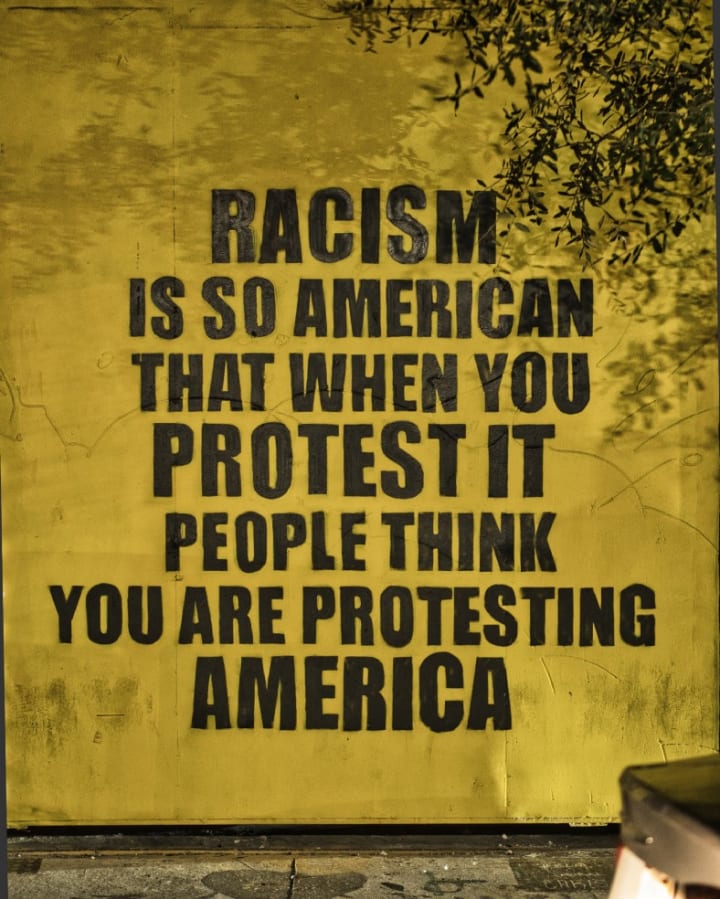
I will never apologize for calling out racist, bigoted, sexist, homophobic, or xenophobic behaviors. Whether this is happening online or right in front of me, face-to-face, I will always call out ignorance. You may call it a teaching moment, call it bad manners, or call it whatever the hell you want.
Just don’t expect an apology from me if you violate this steadfast rule of mine. I have a mixed-race Bride and children. I have a gay daughter. And I’m very much in favor of women’s rights, and pro-immigration. I will never apologize for this and for standing up for what’s right. I will publicly call you out if you’re a racist, bigoted garbage human. And I won’t apologize for it.
I also will never apologize if I cannot attend a social situation in order to put my family’s needs first. Some people get miffed if you don’t accept their invite to some minor thing. Most do understand what it’s like to raise a family and have a spouse and kids at home that you’d rather spend your time with than attend a BBQ or party. I will not apologize for putting our family's needs first.
I also will not apologize for my lack of need for your organized religion. If your religion makes you feel like a better person and it shows, I’m happy for you. But I do not need to be a part of a religion to be a good human being. You will not receive an apology from me for that.
Ultimately, for me, it comes down to surrounding myself with good human beings. Whether that’s family, friends, or online people, I know that if I’m investing time in good human beings who really matter, there will be no need to feel on edge and to be overly apologetic for every little thing.
The apologies I do hand out, I will actually mean each and every one. I am in no way advocating that we should never say, “I’m sorry” and not be able to admit to our own mistakes. We’re all human. We’re going to have our bad moments, lose our tempers, and say things we didn’t mean in the moment.
Apologies will mean more if you’re not tossing them out constantly around people that make you uncomfortable. Let’s make our words actually have an impact, and use them appropriately. It will be a relief to you to not have to say “I’m sorry” constantly.
About the Creator
The Mouthy Renegade Writer
I write about politics and enjoy humor writing. Host of The Renegade Writer's Mouthy Musings podcast. Anti-Trump, pro-LGBTQ. I support women's rights. Mouthy as fuck. Join our Mouthy Militia!
themouthyrenegadewriter.substack.com/subscribe
Keep reading
More stories from The Mouthy Renegade Writer and writers in Psyche and other communities.
Why It’s Ok To Just Say “No” When People Make Requests Of You.
In American society, most people still have a certain level of politeness. We feel bad about saying the word “no” to others when we don’t really want to do something. So we often end up doing things we’d rather not do.
By The Mouthy Renegade Writer4 years ago in Psyche
Top tipple tricks
Been thinking a lot about drinking, lately. Not least because of a recent episode of over-indulgence and the inevitable after effects. Some readers may recall the earlier articles I wrote about beating the booze. Here I set out an experiment in techniques for cutting down on my alcohol intake. The experiment was successful, the techniques worked, and I have armed myself with an arsenal of weapons in the war against the demon drink. I have yet to fire the first round however. It's all a question of timing (perhaps procrastination).
By Raymond G. Taylor4 days ago in Psyche
TV Quiz Show Brain-Rot
I might expand on this soon, but I need you to understand this... *** We've often seen that social media's infinite scrolling and slot-machine style refreshers are based upon the methods implemented by casinos in order to keep us playing the game (or in their case, using the application). But what we do not discuss often enough is how these same casino-like situations are implemented by television in order to keep us paying attention to the screen.
By Annie Kapur7 days ago in Psyche
Becca
"Everything is so... flat." Denille said stupidly as she looked around her new neighborhood. She looked around at the muted desert where even the smallest sign of life seemed to have given up. The plant life was shrubs that were half cooked by the heat and where there should have been a lawn, a mess of white rocks laid glistening in the sun. Even the sky looked stretched thin, like the sun had ironed it smooth. She’d moved from Riverside, where at least there were hills, but here in Barstow, everything felt baked and brittle.
By Sara Wilson7 days ago in Fiction



Comments (1)
great read-I'm less than 3 years from leaving my over controlling parents and still have this issue