
How to Use the AWARE Method to Cope With Crippling Anxiety Effectively
5 step process to calm yourself down


I have always been an anxious person. However, after I entered college, the anxiety turned dysfunctional and distressing. I started having random crying spells and panic attacks that began to adversely affect my daily life.
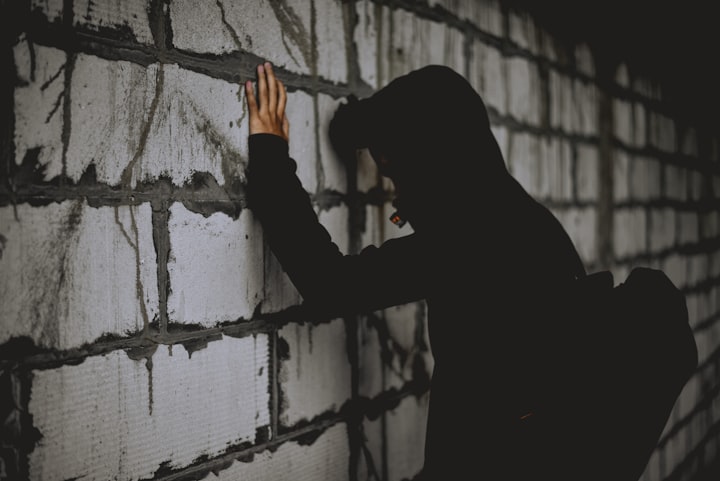
Most of these incidents did not even have a trigger. Once, I was sitting in my classroom, all excited for the lesson by my favorite professor when I realized that my body had gone tense. Paying attention became tough as my anxiety skyrocketed through the roof. The only thing I could do was look at the floor and breathe through my mouth.

It was an extremely scary feeling.
Since then, I have done a lot of research and self-experimentations in this area. I have found that anxiety is very common with about 40 million American adults being diagnosed with an anxiety disorder every year.
In my training to be a psychologist, my textbooks and class readings have helped me discover various science-backed techniques that work wonders for anxiety.

One of the easiest but effective techniques is the AWARE technique.
The AWARE Technique
Dr. Dave Carbonell, a Clinical Psychologist with a specialization in anxiety-related disorders, has formulated a 5 step process to help individuals calmly deal with anxiety.

He has adopted these steps, based on a professional text titled Anxiety Disorders and Phobias: A Cognitive Perspective by Beck, Greenberg, and Emery.
The five steps to AWARE are as following.
Step 1: Acknowledge and Accept

In the first step, Carbonell asserts that you need to acknowledge the fact that you are having an anxiety attack. Ignoring it would not help in dealing with the anxiety.
Any fear and nervousness happening in the present moment need to be accepted. However, acceptance doesn't mean that you need to tell yourself that you are in any life-threatening danger.
Allow yourself to feel the anxiety, however, do not let it turn into something it is actually not.
Here I acknowledge the present reality, that I'm afraid and starting to panic. I won't try to ignore it or pretend it's not there. I won't struggle to distract myself, tell myself to "stop thinking about it!", or snap rubber bands on my wrist.
As you feel the anxiety creep in, do not fight the feeling. Scan your body and see how you feel. Then tell yourself about it as it is. Do not ignore or run away from it.
Accepting the symptoms is a powerful step to overcoming anxiety.
Step 2: Wait and Watch

In the next step, don't do anything. Even though anxiety could be a scary feeling, resist moving away for as long as you can.
Instead of running away to relief, Let the relief come to you.
As you wait, watch yourself. Observe yourself and how you are feeling at the moment. Here, you are not only casually going over your symptoms, but also making a mental note of that.
Carbonell suggests using a panic journal for this purpose. In this, you record all the information about the anxiety, ranging from the symptoms to the thoughts and behaviors before and after the anxiety.
According to him, his patients report that just filling out a diary helps them to calm down.
It helps you get a little distance from your emotions. It works because, while you complete a diary, you're in the role of an observer, rather than feeling like a victim.
If not a physical dairy, you can also use your phone's notes app and jot down the symptoms and the before/after of the anxiety attack.
Step 3: Actions

Once you pass the first and second step, the third step is to do something about the anxiety. Things you could do in this stage are.
-4–7–8 breathing. In this, you breathe in for 4 seconds, hold it for 7 seconds, and exhale for 8 seconds.
-Clench tight any of the body parts that get tense during the anxiety for a few seconds and then release the tension slowly. Do it till you feel better.
-5–4–3–2–1 grounding. Make a mental note of 5 things you can see, 4 things you can touch, 3 things you can hear, 2 things you can smell, and one thing you can taste.
Depending on your personal preference, you can try any one or all of the relaxation techniques.
Step 4: Repeat

There is a possibility that you might only feel a temporary sense of relief. However, when the anxiety starts coming back, all the efforts might appear futile.
As quoted by Carbonell,
"The Repeat step is here to remind you that it's OK if that happens. Just take it from the top again."
When the anxiety comes back, repeat the previous steps again. Keep on doing this till the anxiety stops coming back, entirely or in the same intensity.
Step 5: End

The final step is to remind you that every anxiety attack ends. Even if it appears to be never-ending at that point in time, however, it would eventually come to an end.
Remind yourself that the anxiety would come to an end. Remember the last time you had the same anxiety attack and it did come to a stop after some time.
Remembering that the panic is temporary can be soothing during a time of perceived crisis.
Final Thoughts

With the pandemic and social isolation, a larger number of people are struggling with anxiety. In a 2020 research conducted on college students in Bangladesh, it was found that 18.1% were severely suffering from anxiety. In another study, mental health in the UK has seen to be worse than pre-COVID-19 trends.
Uncertainty about the future, fear of catching the illness, losing closed ones are just some of the large number of factors that are negatively impacting the mental health of the people in the pandemic.
Even though things have calmed down and people are moving out more, however, the impact on mental health has continued. It makes it imperative to take care of your own mental health.
With the usage of several techniques, I have been dealing effectively with random anxieties and mood swings.
Self-care has taken a more significant role in my life with the current situation and would continue to even when things go back to normal.
About the Creator
Jjyoti
24. Full-time post-grad student. Part-time writer.
Support me: https://ko-fi.com/jjyoti
Society Often Teaches Us to Suppress Our Sad Feelings, Branding Them as Negative.
Allow yourself the time to feel, process, and let go. What a journey we’ve traveled together. You can relate to that pain that appears out of nowhere and wants to linger in our minds. Once fear moves in, it takes root—spreading doubt, loneliness, and confusion It’s that kind of pain that overtakes your mental health, gradually making a home within you. Your thoughts can create a space filled with fear, a feeling that we often cling to because it’s the one our minds use against us—leading to a fierce battle between your thoughts and your feelings. It’s a struggle no one wants to lose, yet losing yourself feels like an ever-present threat. Isn’t that a trick life plays on us?
By Johana Torres13 days ago in Psyche
Etsy and the £50 Scented Candle
Whilst browsing the realms of Etsy in order to find some bespoke candles, I was shocked to discover one of the candles on the site was listed for £50 (around $67 at the time of writing). I wondered why and so I clicked ahead. It was a candle, shaped like a Greek Statue, smelling of vanilla (apparently, though I know you can't smell things through a screen and an open candle smells lacklustre for those of us who know our candles) and perched on a piece of plastic. Yes, it looked quite pretty but apart from pouring candle wax into a mould and waiting for the whole thing to dry before cracking the mould off, I'm not sure what the candlemaker did to make it worth £50.
By Annie Kapur5 days ago in Psyche


Comments
There are no comments for this story
Be the first to respond and start the conversation.