
Efficient Learning Method: Using Output to Drive Input
The Feynman Technique, with its unique concept of “using output to drive input,” provides us with a shortcut to the palace of wisdom


We are constantly learning throughout our lives. Learning is like a meandering river that nourishes our souls and propels us forward. However, sailing in this river, we often encounter various challenges, one of which is how to master knowledge efficiently and deeply. The Feynman Technique, with its unique concept of “using output to drive input,” provides us with a shortcut to the palace of wisdom. This article will deeply explore this method, reveal the mysteries behind it, and explain how it can help us go further and further on the road of learning.
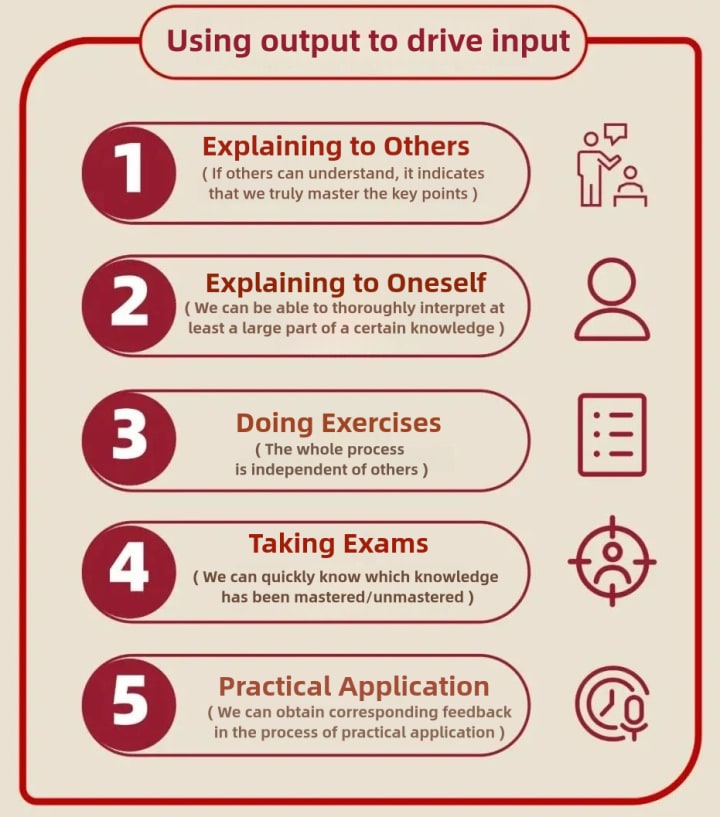
Output: The Catalyst for Learning
In traditional learning concepts, input (such as reading and listening) is regarded as the starting point of learning, while output (such as explaining and writing) is regarded as the result or by-product of learning. However, the Feynman Technique subverts this traditional concept. It emphasizes using output to drive input, making the learning process more active, efficient, and in-depth. This method can not only help us better understand and remember knowledge but also promote the integration and application of knowledge and stimulate our learning motivation.
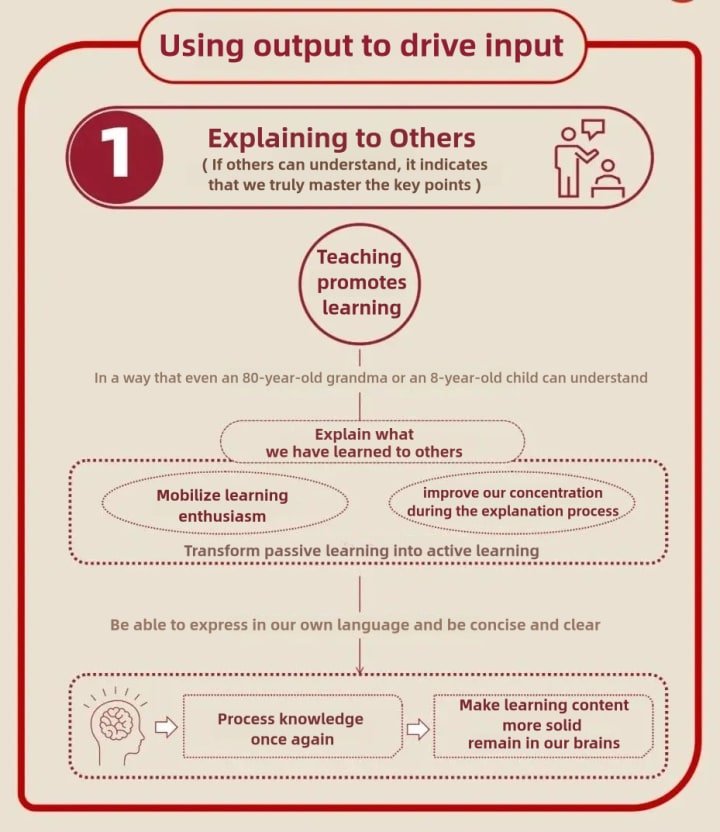
I. Explaining to Others: The Touchstone for Testing True Knowledge
Explaining the learned knowledge to others is the first step in using output to drive input. In this process, we not only need to ensure that we understand the core points of knowledge but also think about how to convey it to others in the most concise and clear way. When others can understand our explanations, it is actually an affirmation of our learning results and also proves that we truly master these knowledge points. In addition, the interaction and feedback during the explanation process can also help us discover and correct understanding biases in time and further deepen our understanding.
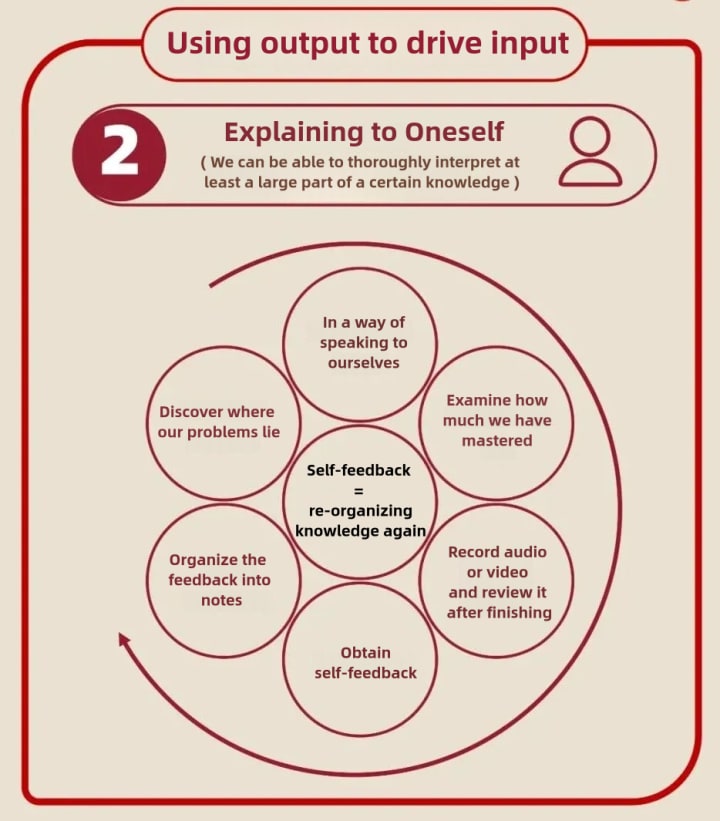
II. Explaining to Oneself: In-depth Exploration through Self-Dialogue
In addition to explaining to others, explaining to oneself is also an effective output method. When we try to interpret a large part of a certain knowledge in our own language, we are actually having a self-dialogue. This dialogue prompts us to think more deeply about the internal logic and connections of knowledge, thereby deepening our understanding. At the same time, through self-explanation, we can also discover our knowledge blind spots and point out the direction for subsequent input.
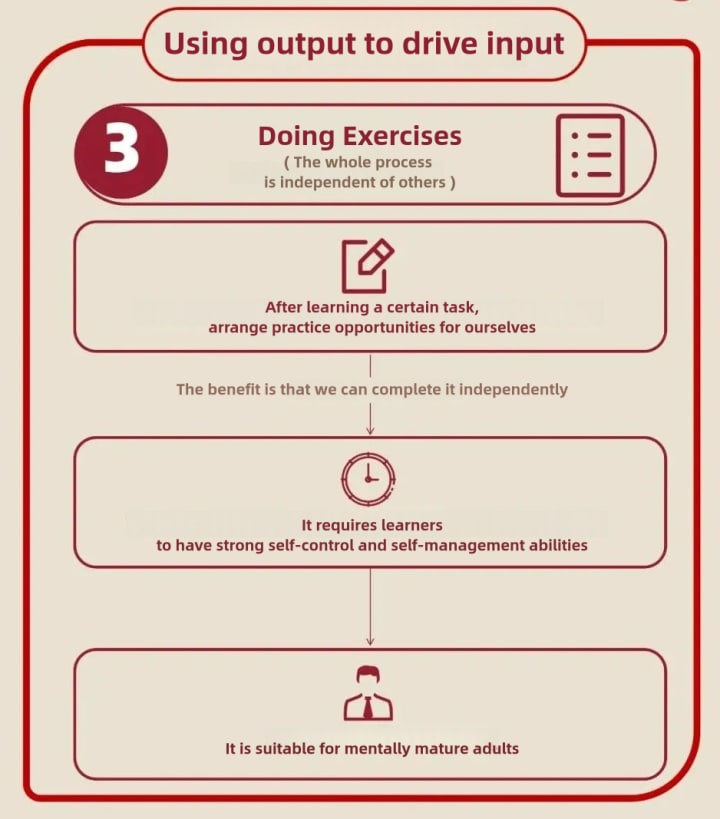
III. Doing Exercises: Tempering Independent Thinking
Doing exercises is another important link in using output to drive input. In the process of independently completing exercises, we not only need to use the learned knowledge to solve problems but also face various challenges and difficulties. This process of independent thinking can not only consolidate our memory but also improve our problem-solving ability and thinking ability. More importantly, through exercises, we can discover and make up for our deficiencies in time and provide targeted guidance for subsequent input.
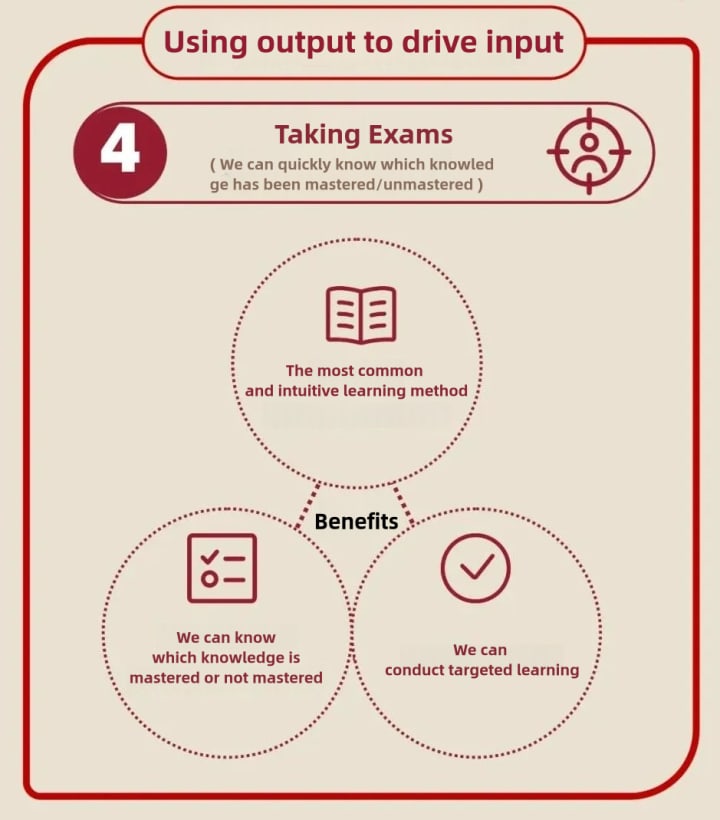
IV. Taking Exams: The Touchstone for Mastering Knowledge
As a special output method, taking exams has its unique value. Through exams, we can quickly and comprehensively understand our mastery of knowledge. Which knowledge points have been firmly grasped? Which knowledge points still have ambiguities or omissions? Exams provide us with clear feedback. This feedback can not only help us adjust our learning strategies in time but also stimulate our learning motivation and prompt us to invest more efforts in learning.
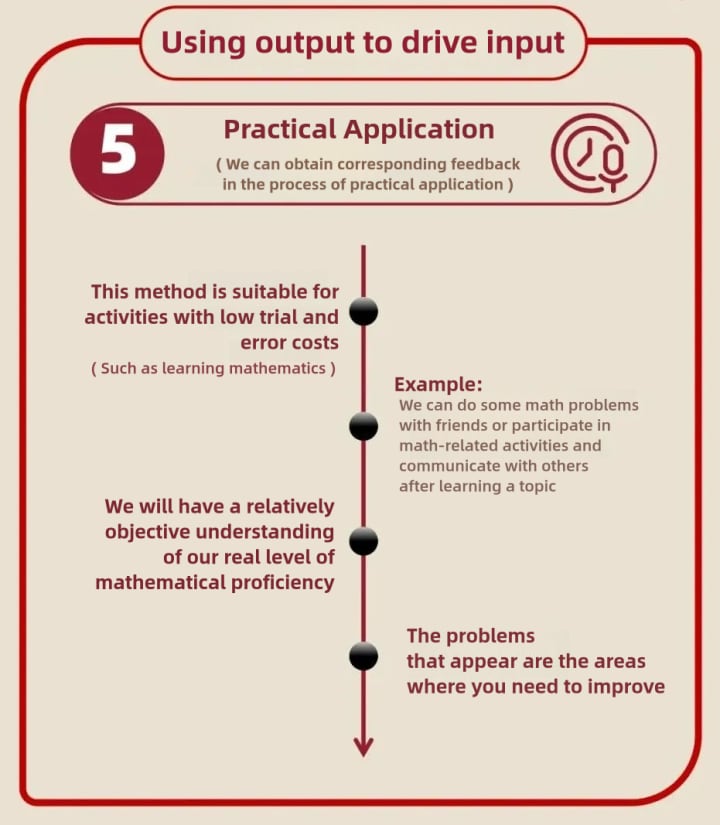
V. Practical Application: The Bridge from Knowledge to Ability
The purpose of learning is to transform knowledge into practical ability. By applying the learned knowledge in real life, we can not only test our learning results but also obtain valuable feedback in the application process. This feedback can not only help us further consolidate and deepen our understanding but also promote the transfer and innovation of knowledge. At the same time, practical application can also stimulate our creativity and imagination and let us experience the fun and value of learning in the process of solving problems.
Using Output to Drive Input for Efficient Learning
Using output to drive input is an efficient and in-depth learning method. It can not only deepen our understanding and memory of knowledge but also promote the integration and application of knowledge and stimulate our learning motivation. In this era of information explosion, open the door to wisdom with the Feynman Technique and start a learning journey full of challenges and rewards. May we all go further and further on the road of learning and gain more knowledge and wisdom!
If you agree with our viewpoints, please give us a like, and follow us.We will update daily and look forward to growing together with you.
About the Creator
Victor
Gain momentum here, and stride forward boldly into the rest of your life.




Comments
There are no comments for this story
Be the first to respond and start the conversation.