
Confronting Corporeality
What human dissection taught me about bodies, mortality, and staying grounded


As inevitably common as it is, death is not a comfortable subject. To think about the end of every memory, laugh, success, failure, and pain we experience on Earth seems almost unbearable. Regardless of faith, or its absence, we all accept that we will eventually leave the world we know and love behind. However, in the wake of each departure is a sign that we did live: a body.

Before my first day of anatomy lab, I thought deeply about meeting my first patient. Before they died, they understood how important it is for medical students like me to learn and understand anatomy, so they graciously donated their body to the CUNY School of Medicine. However, despite the permission I had to violate and cut what once was a person for the sake of my education, I felt increasingly unsettled as the first day approached. How could I respectfully approach a person, peel back their skin, open their thorax, and hold their heart in my hands? Such questions baffled me and my classmates as we stepped into the lab in our white coats and gloves.

It would have been too much to see her face on the first day; a cloth enshrouded her head, and others covered her hands and feet. Otherwise, I could see she was a short and thin with several tattoos. The scene was overwhelming in its gruesome sterility, and I felt compelled to gently hold her cloth-covered hand to attempt sending some kind of message to her. I wanted to think anything that would make her feel comfortable with where she was. "I'm sorry you had to die," I started. "I am sure you were lovely" I continued. Most importantly, I remembered to say "Thank you so much." Of course, all I could feel in response through my gloved hands was a rigid, moist coolness; this was probably more for my comfort than hers. I slowly let go, and my group began flipping through a dissection manual.
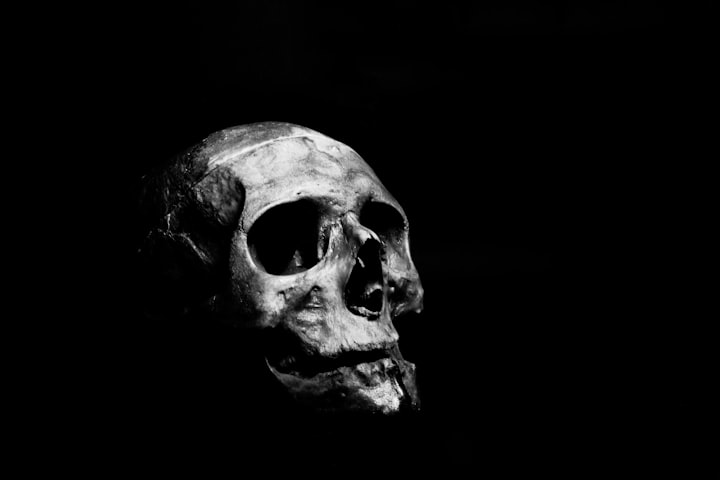
I was originally ashamed to say that her body became increasingly material rather than symbolic of a life with each class session. There were countless hours of inhaling a scent mixed between formaldehyde and downy fabric softener and meticulously peeling skin to preserve the muscles underneath. In addition to the physically tedious procedures, the stress of memorizing each muscle, vessel, nerve, and membrane served as a potent distraction from the idea of the body itself. Eventually, it was difficult to believe or remember that this body once belonged to a person. This is not to say that her body wasn't handled with the utmost care, but that there was a strange void in studying it. Whereas I initially thought the hardest part of anatomy would be confronting this woman, the real hurdle was her overwhelming absence. In the search of identifying each piece of her, there were no laughs in her lungs, nor words in her mouth. Although we could intimately touch every single component of her body, everything else she ever was remained inaccessible and mysterious.

While I learned the answers to my anatomy exams to eventually pass the course, I had to make my own answers to the questions that arose in the lab. Specifically, I realized that we are so much more than our bodies, and that there is something brilliantly mysterious and captivating about life as it's being lived. Even as we breathe, there are so many secrets we contain within ourselves, and many will entirely disappear with us at our ends. However, while I was unable to know who the woman was, I know that there were people who did know her. While she left us students with her body, she likely left her spirit with everyone she touched and loved. In this way, whether we like it or not, we leave our most brilliant selves behind in addition to our bodies.

I also am more aware of how much of ourselves are our bodies. It is common to have a head-up perspective of thinking we are brains driving motorized meat suits, and this belief is easily adopted when allowing anxiety, intellectualism, and social media to occupy us for hours. But if death is a process in which our bodies reach their limits and just stop functioning, it means our entire body is essential to fully experiencing life. I do not know what the woman did with her body, but it would not be too farfetched to say she breathed in the air of a cool spring morning, sipped the gentle flavor of some type of tea, and hugged her loved ones to say hello and goodbye. As we live, grow, and age, we should remind ourselves of how great it is to be able to feel such a spectrum of physical experience and be able to express ourselves with our bodies.

As per tradition, a memorial was held to say goodbye to the bodies met in the anatomy lab. In my memorial, I thanked the woman for giving me the opportunity to learn so much about anatomy and humanity that would benefit my future patients. I also grieved that I would never know her, but that her gift gave me an idea of how selfless and brave she must have been. As I leave her body behind, I hope each day that I can stay present with my own body and continue to live a well-lived life of my own. Dear reader, though I may never know you, I hope you share in pursuing this experience with me.
About the Creator
Noah Rodriguez
A multiracial gay med student/writer and NYC native. I believe identity is something that is creatively built, discovered, shared, and transformed, and healing can come from that.
Keep reading
More stories from Noah Rodriguez and writers in Psyche and other communities.
How Time Logging Can Transform Your Productivity
I know a thing or two about time management. At Sophie Davis, the BS/MD program I attend, students are regularly instructed on the importance of managing their time. Sharpening this skill has been excellent for my performance, but I value awareness of time as a way to maximize experiencing the things that bring us meaning and happiness on our journeys. I have developed many strategies while acquiring a bachelor's degree in 3 years, but the most important tool I've used for myself is time logging.
By Noah Rodriguez5 years ago in Motivation
Top tipple tricks
Been thinking a lot about drinking, lately. Not least because of a recent episode of over-indulgence and the inevitable after effects. Some readers may recall the earlier articles I wrote about beating the booze. Here I set out an experiment in techniques for cutting down on my alcohol intake. The experiment was successful, the techniques worked, and I have armed myself with an arsenal of weapons in the war against the demon drink. I have yet to fire the first round however. It's all a question of timing (perhaps procrastination).
By Raymond G. Taylor5 days ago in Psyche
Stop - Just Stop it right now
"Each one of us has lived through some devastation, some loneliness, some weather superstorm or spiritual superstorm; when we look at each other, we must say, I understand. I understand how you feel because I have been there myself. We must support each other and empathize with each other because each of us is more alike than we are unalike."
By Elizabeth Woods7 days ago in Psyche




Comments