
Better Off Without Them
Believing That What I Needed Was Not For Me
My set of parents were born in the "Boomer" era, or so it's coined. The discussion around mental health in my house was infrequent and poorly sourced. The irony was that, not only did both of my parents have their own mental health issues, they also had personality disorders... neither of which were acknowledged. That's a story for another time.
As I grew older I was made aware that it was "normal" to have depression or to feel depressed once I became a teen. The way they spoke of it make it sound like this was purely a hormonal onset that would surely pass with time. I think their intention was to "prepare me" for the inevitable mood swings I was bound to experience, regardless of the very real possibility that I could experience actual clinical depression. I think handing me that information, regardless of how misguided it was, was their way of telling me that if I were feel anything divergent of what society deemed as "normal" behavior or feelings, it would pass and I shouldn't think or worry about it too much.
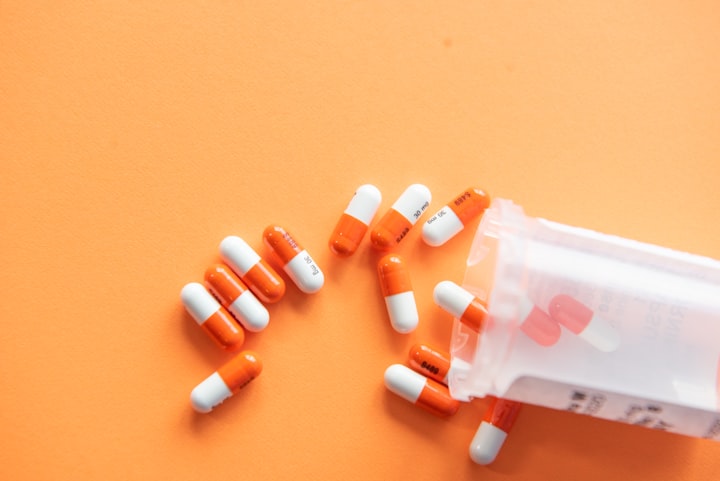
Cut to me at 16 with severe clinical depression, causing frequent and intrusive suicidal thoughts that would follow me well into adulthood. My mothers' solution to this was to have me see the school counselor, whom, though she was very nice was not equipped to help me manage the seriousness of what I was experiencing. The talk of antidepressants came up. I was terrified of taking any medication. My mother had an ungodly tolerance to prescription drugs and was always prescribed the highest dose of the strongest medication the doctor could offer.
She had back problems so she was often prescribed heavy-duty painkillers. She had also survived stage 4 uterine cancer and so she was also prescribed hormone and thyroid meds. She always made it very clear to me that medications were not something you took unless you were practically on your death bed. Ironically enough she was the first to hand me ibuprofen at the slightest sign of premenstrual cramps, a slight fever, or a slight headache. Welcome to the Rubix cube that was my adolescent life.
Mental anguish held no candle to physical pain, which she was quick to remind me she had a much higher tolerance for than the average person, meaning that if she felt pain, it was beyond anything an average person could handle. I've seen her break her leg and barely flinch, so I think that's probably true.
Having been fed all of this information, my terror of taking medication came from watching her dependency on them. I didn't realize or even consider that one could have a healthy perspective and relationship with properly monitored prescriptions. This is because it was never modeled or spoken about. My mother thought that she was protecting me by putting the fear of God into me when it came to prescription medication.
So what's the point of this story?
I spent the better part of fifteen years surviving rather than living. Each day that went by was painful and compounded with shame where I was left wondering why I felt and thought the way I did. It left me to self medicate, self-harm, and mishandle many fascists of my life. The point of this story is that the conversation around mental health and prescription medications, and how they relate to each other, is a critical one that I'm confident my generation and generation before mine did not have.
I grew up thinking that when it came to managing mental health, the best thing to do was to avoid medication unless you were a weak person that had given up on themself. I was encouraged to "stay off of them" as if somehow taking medication tainted your brain, or that you would somehow no longer be yourself, turn into some mindless drone.
The conversation around mental health and mental illness is significantly different but they are equally as important.
Because I, nor my parents, or their parents, were ever given the correct information on what those two topics encompass, how to approach mental health practice or identify mental illness, so many of us have gone misdiagnosed or undiagnosed leading to incorrect or no treatment at all. It wasn't until this year that I learned the depression and anxiety I've struggled with are actually symptoms of untreated Bipolar 2 Disorder, ADHD, General Anxiety Disorder peppered with Complex PTSD. I'm nearly 31. I was afraid to accept the idea that I could be suffering from something that required medicinal assistance.
I'm grateful for what I know about myself now, as I can properly treat my disorders, no longer afraid of medication as I now have the proper information surrounding it. I'm grateful that enough of us are breaking that stigma of holding our pain close to our chests for fear we will be judged or told we're not trying hard enough. I'm hopeful that my son will live in a world that continues to challenge misconceived notions about what should and shouldn't be said when talking about mental illness, especially surrounding the topic of medication.
You are not weak if you struggle with mental illness and need the assistance of a prescription. You are a mental gladiator that faces off with challenges that mentally healthy people could never relate to. Without medication, that arena is filled with dozens of lions, with it, it has the potential to hold maybe a few. There is a difference between someone who struggles with mental illness and someone who has felt a symptom of it temporarily. Don't let those people diminish your experience by letting them tell you how they overcame their symptoms without the help of medication. That's not their place, just as it isn't ours to tell someone they need medication.
We can't blame our parents or those that came before us for the information we needed but weren't give able to give. We can identify that we needed it from the ones who were meant to protect us but we can't hold onto that. The best we can do is pass on the power this knowledge has to those after us, hopefully reducing pain caused by stigma for generations to come. We can take what we've learned and continue to share with the people around us who are willing to listen. If there's one thing I've learned, it's that we fear what we don't know, if we can change that we are all better for it.
About the Creator
Felicia P.
I've always felt a little different. Turns out, I am. Between being adopted, the proud owner of a mood disorder and being racially ambiguous, I have plenty to share.
Please enjoy my stories, ideas and feels. I'd love for you to tag along.
Keep reading
More stories from Felicia P. and writers in Psyche and other communities.
Top tipple tricks
Been thinking a lot about drinking, lately. Not least because of a recent episode of over-indulgence and the inevitable after effects. Some readers may recall the earlier articles I wrote about beating the booze. Here I set out an experiment in techniques for cutting down on my alcohol intake. The experiment was successful, the techniques worked, and I have armed myself with an arsenal of weapons in the war against the demon drink. I have yet to fire the first round however. It's all a question of timing (perhaps procrastination).
By Raymond G. Taylor5 days ago in Psyche




Comments
There are no comments for this story
Be the first to respond and start the conversation.