
ARTIFICIAL INTELLIGENCE AND ITS IMPACT ON HUMANITY
"The Rise of Artificial Intelligence: Impacts, Ethics, and Humanity's Future"
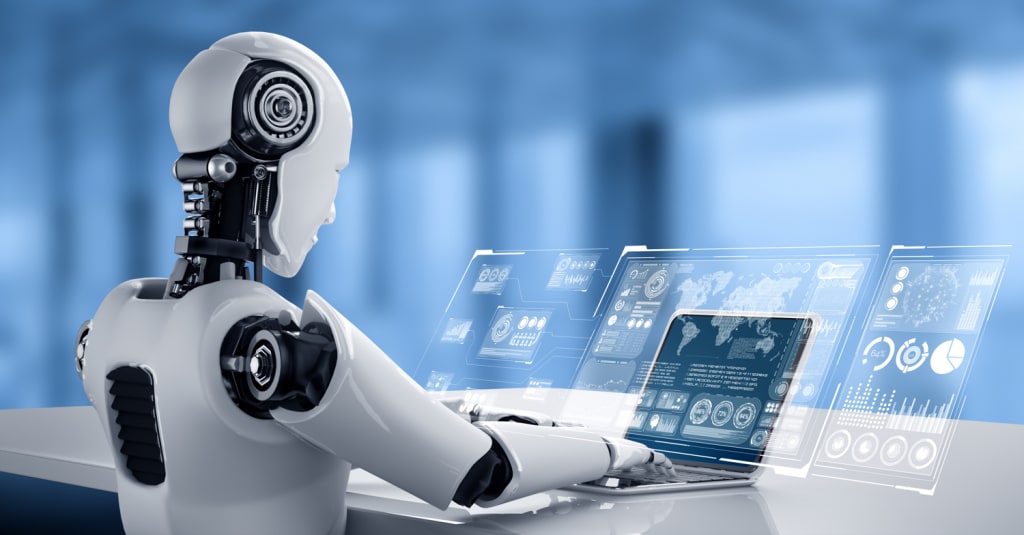
INTRODUCTION:
Artificial Intelligence (AI) has emerged as one of the most disruptive and transformative technologies of the 21st century. AI is a branch of computer science that focuses on creating intelligent machines that can perform tasks that typically require human intelligence, such as learning, problem-solving, and decision-making. As AI continues to advance and become more sophisticated, its impact on humanity is becoming increasingly significant, both in terms of its potential benefits and its potential risks.
On the one hand, AI has the potential to revolutionize various aspects of our lives, from healthcare and transportation to finance and entertainment. AI algorithms can analyze large amounts of data much faster and more accurately than humans, allowing businesses to make better decisions and improve their operations. AI-powered tools are also being used to create more immersive and engaging experiences for consumers in the entertainment industry.
However, the rise of AI also raises concerns about its impact on employment and the economy. As machines become more intelligent and capable of performing tasks traditionally done by humans, there is a risk of significant job displacement. This could have serious economic and social consequences, especially for those who are already struggling in the job market.
AI also raises ethical concerns related to privacy, security, and bias. As AI algorithms become more sophisticated, they are becoming increasingly difficult to understand and control. There is a risk that these algorithms may perpetuate existing biases and discrimination, leading to unintended consequences.
Given the potential benefits and risks of AI, it is important that we carefully consider its impact on humanity and take steps to mitigate its negative consequences. This requires collaboration between policymakers, researchers, and industry leaders to ensure that AI is developed in a responsible and ethical manner. By doing so, we can harness the power of AI to create a better future for all.
Definition of Artificial Intelligence:
Artificial Intelligence (AI) refers to the development of intelligent machines that can perform tasks that typically require human intelligence, such as learning, problem-solving, and decision-making. AI is a branch of computer science that focuses on creating algorithms and systems that can exhibit "intelligent" behavior, such as recognizing speech or images, understanding natural language, and making predictions based on data.
The goal of AI is to create machines that can perform tasks that are difficult, if not impossible, for humans to do, or to do them faster, more accurately, and more efficiently than humans. AI is being used in a wide range of applications, including healthcare, finance, transportation, entertainment, and more. As AI continues to evolve and become more sophisticated, its potential impact on society and the economy is becoming increasingly significant, both in terms of its potential benefits and its potential risks.
Importance of AI in today's world:
Artificial Intelligence (AI) is becoming increasingly important in today's world due to its potential to transform various aspects of our lives, including healthcare, transportation, finance, and entertainment. Here are some reasons why AI is important:
Efficiency and productivity gains: AI algorithms can analyze large amounts of data much faster and more accurately than humans, allowing businesses to make better decisions and improve their operations. This can lead to significant efficiency and productivity gains.
Improved accuracy and decision-making: AI algorithms can be trained to recognize patterns and make predictions based on data, leading to improved accuracy and decision-making.
Increased innovation and new opportunities: AI is enabling new applications and opportunities that were previously impossible or impractical. For example, AI-powered virtual assistants and chatbots are creating new ways for businesses to interact with customers.
Positive impacts on healthcare: AI is being used to develop new drugs, improve disease diagnosis, and personalize treatment plans for patients. This has the potential to improve the quality of healthcare and save lives.
Positive impacts on transportation: AI is being used to develop self-driving cars and optimize traffic flow. This has the potential to reduce accidents, improve transportation efficiency, and reduce carbon emissions.
Brief overview of the impact of AI on humanity:
Artificial Intelligence (AI) has the potential to have a significant impact on humanity, both positive and negative. Here are some examples of its impact:
Positive impact:
Increased efficiency and productivity in various industries, leading to cost savings and economic growth
Improved accuracy and decision-making in fields such as healthcare and finance, leading to better outcomes for individuals and society as a whole
Increased innovation and new opportunities for businesses and individuals, creating new markets and products
Positive impacts on healthcare, transportation, and entertainment, leading to improved quality of life for many people
Negative impact:
Job displacement and economic consequences, as AI algorithms and robots replace human workers in certain industries
Ethical concerns related to privacy, security, and bias, as AI systems are developed and deployed
Potential misuse of AI, including the development of autonomous weapons and other malicious uses
The possibility of unintended consequences or unpredictable outcomes, as AI systems become more complex and integrated into society
Overall, the impact of AI on humanity will depend on how it is developed and deployed, as well as how individuals and society adapt to its use. Therefore, it is important to approach AI development and deployment in a responsible and ethical manner, considering both its potential benefits and risks.
Benefits of artificial intelleligence:
Efficiency and productivity gains in various industries: AI algorithms can process large amounts of data much faster and more accurately than humans, leading to increased efficiency and productivity in various industries. For example, AI can be used to automate routine tasks, optimize supply chains, and improve customer service.
Improved accuracy and decision-making: AI can analyze vast amounts of data and identify patterns that would be difficult, if not impossible, for humans to detect. This can lead to improved accuracy and decision-making in various fields, such as healthcare, finance, and law.
Increased innovation and new opportunities: AI is enabling new applications and opportunities that were previously impossible or impractical. For example, AI-powered virtual assistants and chatbots are creating new ways for businesses to interact with customers, and AI-generated art and music are expanding the boundaries of creativity.
Positive impacts on healthcare, transportation, finance, and entertainment: AI is being used to improve healthcare outcomes by developing new drugs, improving disease diagnosis, and personalizing treatment plans. AI is also being used to develop self-driving cars and optimize traffic flow, leading to more efficient and safer transportation. In finance, AI is being used to detect fraud and make investment decisions. In entertainment, AI is being used to create personalized recommendations and content.
The Risks and Concerns of Artificial Intelligence
Job displacement and economic consequences: As AI algorithms and robots replace human workers in certain industries, there is a risk of job displacement and economic consequences. This could result in increased income inequality, decreased job security, and challenges in retraining workers for new jobs.
Ethical concerns related to privacy, security, and bias: The development and deployment of AI raises ethical concerns related to privacy, security, and bias. For example, AI systems may collect and analyze personal data without individuals' consent or knowledge, leading to concerns about privacy. Additionally, AI systems may have inherent biases that reflect the biases of their developers or training data, leading to discriminatory outcomes.
Potential misuse of AI, including the development of autonomous weapons: The development of AI also raises concerns about potential misuse, such as the development of autonomous weapons or other malicious uses. This could result in unintended consequences or even harm to individuals and society as a whole.
Overall, these risks and concerns highlight the need to approach AI development and deployment in a responsible and ethical manner, with a focus on maximizing its benefits while mitigating its risks. This may require regulatory oversight, industry standards, and ethical guidelines to ensure that AI is developed and deployed in a way that is safe, fair, and beneficial for individuals and society as a whole.
The Future of Artificial Intelligence:
Advancements in AI technology and its potential implications: The future of AI is likely to involve significant advancements in technology, including the development of more sophisticated algorithms, greater computing power, and the integration of AI with other technologies such as robotics and the Internet of Things (IoT). This could have significant implications for various industries and aspects of our lives, including healthcare, transportation, and entertainment.
The role of policymakers, researchers, and industry leaders in shaping the future of AI: The future of AI will be shaped not only by technological advancements, but also by the decisions made by policymakers, researchers, and industry leaders. These stakeholders will need to address the risks and concerns associated with AI while also maximizing its benefits for individuals and society.
Possible scenarios and predictions for the future of AI and humanity: There are a range of possible scenarios and predictions for the future of AI and humanity, ranging from optimistic to dystopian. For example, some predict that AI could lead to significant improvements in healthcare, education, and other areas, while others warn of the potential for job displacement, increased inequality, and even existential threats to humanity.
Overall, the future of AI is likely to be shaped by a complex interplay of technological advancements, ethical considerations, and societal and economic factors. It will be important for stakeholders to approach AI development and deployment in a responsible and ethical manner to ensure that its benefits are maximized and its risks are mitigated.
Conclusion:
In conclusion, the impact of Artificial Intelligence (AI) on humanity is both profound and complex. On the one hand, AI has the potential to revolutionize various industries and aspects of our lives, leading to greater efficiency, productivity, and innovation. On the other hand, AI also raises significant risks and concerns related to job displacement, ethical considerations, and potential misuse.
To ensure the responsible and ethical development of AI, it is important for stakeholders to prioritize transparency, accountability, and a focus on maximizing the benefits of AI while mitigating its risks. This may require regulatory oversight, ethical guidelines, and industry standards to ensure that AI is developed and deployed in a way that is safe, fair, and beneficial for individuals and society as a whole.
Looking ahead, the future of AI is likely to be shaped by a range of factors, including technological advancements, ethical considerations, and societal and economic factors. While there are both optimistic and dystopian scenarios and predictions for the future of AI, it is clear that AI has the potential to transform society in significant ways. As such, it will be important for stakeholders to continue to engage in responsible and ethical development and deployment of AI in order to maximize its potential benefits while mitigating its risks.
About the Creator
As a Neuroscientist, I Quit These 5 Morning Habits That Secretly Destroy Your Brain
The First Hour Controls Everything : During a neuroscience workshop I attended hosted by researchers affiliated with Harvard University, one sentence completely changed my perspective on daily life: “The first hour after waking up determines your brain’s chemistry for the rest of the day.” At first, I thought that sounded dramatic. But the deeper I studied brain science, the more I realized something uncomfortable: Most of us are unknowingly damaging our brain every single morning. Not through drugs. Not through trauma. Not through disease. But through small, repeated habits. And because these habits feel “normal,” we never question them. Over time, I decided to experiment on myself. I removed five common morning behaviors — and the cognitive changes were undeniable. Here are the five morning habits I quit — and why neuroscience suggests you should reconsider them too.
By Shahid Zaman7 days ago in Psyche



Comments
There are no comments for this story
Be the first to respond and start the conversation.