
Am I unwell? or, is the Australian Mental Health System?
Battling the mental health system with a reflection on admissions into both public and private hospitals.


Content Warning: The following article discusses suicide and may be triggering for some readers. If you, or someone you know is in danger or needs support, please call 000 or a crisis helpline such as Lifeline on 13 11 14 immediately. More information on support can be found at Lifeline’s website: https://www.lifeline.org.au/
Just to give a bit of context, I am not a doctor, I do not work in the medical field and I certainly am not an academic. I am, however, a patient. My writing is a reflection of my experience, and is purely opinion based on my experience. This is in no way an article to tell you what you should do with managing your mental health and what treatment you should do, but instead explores the experience of treatment and delves deeper into whether there is more that could be done to change the experience. Mental health definitely, is not a one size fits all scenario and I encourage you to access the treatment that is best suited if you or someone you know, is experiencing a mental health crisis.
I won’t go into too much detail about how I got here as it may be triggering for some. If you think it may be too much, please feel free to scroll down to the next paragraph titles “Why?”.
For me, this journey started 62 day’s ago, with my first suicide attempt, and it has been 57 days since my first hospital admission following a second suicide attempt. It is hard to write about this as it is so raw, but also I haven’t been able to fully recover from my deteriorating mental health condition. Some days I feel myself getting better, some days I feel myself getting worse. Triggered by certain things that often send me back into a spiral of emotions. But my biggest challenge, has been navigating the complex and varying mental health systems to try and get the right help and support and avoid becoming another statistic. I would have become another young, Māori male who’s life was cut short. Just like two of my uncles, and two of my cousins.
Why?
We always ask ourselves “why?”, for many different reasons. Why have I written this article? To understand why, we have to take a step back. I have started writing since I have been in hospital as a way to express how I have been feeling in a creative form to support my recovery, but also because of my medication, my treatment and my trauma, it is often hard to remember what is happening. Writing keeps a written record for me to look back and reflect on. But also sees an opportunity to help someone who may need it. This article takes a deeper look into my experience with trying to get support from the Australian Health System, when I felt like everything in my life was falling apart. The good, the bad and the ugly parts of it.
To be clear, I have been a voluntary patient. I have not been forced to go to hospital; although initially I was told if I did not go voluntarily, the doctors would look at getting a mental health order and having me detained due to my condition and state of mind and the risk to myself.
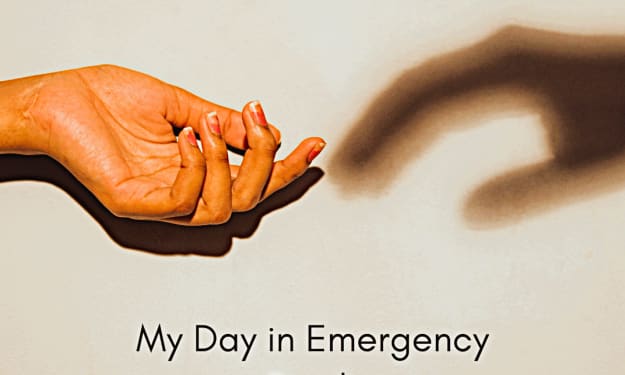
Emergency Department
The emergency department (ED) was the scariest part. The sitting. The Waiting. I went in at around 4pm in the afternoon, waited until around 11pm, went home to sleep for a few hours, and then back again at 7am to continue the wait. For someone in crisis, the waiting was unbarable. Hours of sitting in a public emergency department, surrounded by people that were there for different reasons.
The wait is caused by triaging — as someone with emergency services experience in my own career, the priority will always go to the person that needs it the most. Someone who is bleeding out from an accident is more likely to be seen before someone with a broken arm. So it takes time. It isn’t easy. But it’s a starting point for a long journey to recovery as mental health is not something that you can fix overnight.
Although the wait is inevitable, it can for some people make them feel better. They are in an environment where they are safe, they may anticipate that help is on the way. For others, the wait could be unbareable, the amount of people can cause anxiety, panic or even paranoia. Sometimes you may even ask yourself “is the wait worth it?”.
Hospitals are always under the pump. Always more people to be seen, a constant flow of patients in and out like a revolving door. But I question, is it equipped to for those that are in a mental health crisis? Is there more that can be done? There could always be more heavier investment into emergency mental health services. Organisations such as Lifeline are set up to provide easier access to support in crisis.
It may not be the nicest or most comfortable system, but it is better to be safe and get support and I would not discourage anyone from seeking assistant by admitting themselves to ED. I was very resistant, and procrastinated going, but my friends and family were worried about me, and I would say I am grateful that I did go.
I remember the triage mental health specialist saying to me “this is voluntary, but in your condition, we would look at seeking a mental health order” when it came to referring me to a psychiatric unit. It did create another level of anxiety, becuase I knew how mental health orders worked and involuntary admissions. It is definitely not something I would wish upon anyone, so I went off voluntarily to save the hastle and the cost on public services. I also know that it can bring a whole lot of other emotions with involuntary admission. So I went willingingly, once a bed was available for me in a public psychiatric unit.
Public Hospital
From ED, I was transferred by ambulance to the public psychiatric unit. I remember feeling so alone in there. I was surrounded by patients that didn’t want to be there. I was heavily medicated, so I was practically incapable of moving for most of my first day there.
There is a vibe about being in a public psychiatric unit. Most patients are involuntary, so they hold a level of resentment about their circumstances. I remember a patient coming up to me the next morning during breakfast and saying “you must of really put up a fight when you came here”. Puzzled, I asked why? He said I was out of it and strapped to a bed and wheeled in on a stretcher. Unfortunitely, I had to let him down and explain that I was just high as a kite because I took what ever drugs the doctors were willing to give me, and the straps were just seatbelts so that I could be safely transferred from ED to the psych unit.
The environment itself was sad. Concrete floors, metal shutters on the windows, door handles and railing without loops, and water taps that were like nubs sticking out of the wall. All for the sake of safety and security, to ensure that patients cannot harm themselves. But it is cold and uninviting. I likened it to a prison. It wasn’t through a lack of care, but more a lack of resources that made it so uncomfortable. Your room was always locked if you closed the door and you required a nurse to physcially open the door for you if you closed it behind you. It was a nuisance, but it also gave you a sense of security when you are inside your room. You know that only nurses and doctors can get in. You may feel like you are in a prison, but you also feel safe.
The unit I was in had about 30 beds, and 3 nurses. Often there were no activities and medication was often used to make you feel more at ease. It felt like a bandaid being slapped on a broken arm. As hard as it may feel being in there, it is a good starting point to recovery. They can get you on a solid medication regime to get you started until you are stable. As a voluntary patient, however, it may not be the right place for you. Something that triggered me while being in there is quite often the patients will be arguing with the nurses. A lot of people were there because they had to be there, not because they chose to be there. Often that can make it difficult to be motivated to want to do anything, because you are not surrounded by people who are wanting help. They at times, think there is nothing wrong with them and cannot accept the reasons as to why they are there.
I met some lovely people in the public hospital. They are beautiful people who are just in unfortunate positions.
Often information wasn’t communicated when handovers occurred, so at times you were left repeating yourself. For some people, this could be triggering or retraumatising having to repeat the same thing over again. This is something, I myself struggle with, is having to repeat the same thing over again.
Private Hospital
For me, I was fortunate enough to be able to have private health insurance, which made going to a private hospital a more viable option. It took a bit to get a private admission, but I managed to get a space in a private psychiatric clinic. I knew it would have more opportunities for treatment and a more supportive hands-on environment and it certainly was that. I had been admitted into two different private hospitals and both were varied. But both had amazing supports.
The first was an already established clinic, with plenty of treatment options. They had Electroconvulsion Therapy (ECT) treatment, they had Transcranial Magnetic Stimulation (TMS) treatment, they were well established, had a series of day programmes. The staff were lovely, and the nurse to patient ratio was much lower than in the public hospital.
One of the strange feelings I had when I was first admitted was that I was never so grateful for carpet. It completely changed the atmosphere of the hospital. It felt more like a hotel than a hospital. The greenery, plants, pictures and activities made it more homely. All the staff knew you as soon as you came in. You weren’t identified by your room number, you were identified by your name.
The second hospital had recently opened, was very modern, but was still finding its feet. The entire hospital was learning and adapting, and adapting to the patients needs to ensure a safe and settled environment. This hospital had a little bit of a “retirement home” vibe. But the nurses were friendly, approachable, always ready to listen and they seemed like they genuinely cared. The surprising thing is, this hospital took me in even though other hospitals declined me as I was deemed to be “too high risk”. Because it was so new, the hospital itself was learning new things and making adjustments so they could improve on its services.
The demographic of the patients in both hospitals were also completely different, they were more willing to accept support, more open about their feelings and more engaged. They tend to be higher functioning people, the opposite end of the spectrum of what you would typically find in a public psychiatric ward, however, they have the same conditions. A true reflection that mental illness does not discriminate.
A Broken System
It’s hard to compare the two, as they both have their pro’s and con’s. One may be more suitable for some, but not for others. If you have the money or private medical insurances, you can effectively “shop around” and try and find a private hospital that more aligns with your needs. Private hospitals can make the journey easier if you are placed in the right hospital. But the caviat to that is you have to have money or medical insurance to be able to pay for quality health care. Effectively, it is a business, so there may be times where they won’t accept you, with the mentality that there will always be another patient to fill the bed.
Unfortunately, for a lot of people they get caught up in the public system. Medicated, uncarred for, often not believed. Needing help, asking for it, but not being able to recieve the help they really need to support their condition. Mental health is a challenge, a journey and it is a hard road.
The waiting times and lack of resources in public psychiatric units make it ineffective and is more of a bandaid applied to a broken arm, as opposed to a fix. The public system we have in place does not always provide a safe and comfortable environment to support those that need it most. I have spoken to other patients about their stories and their journey’s of navigating the system, and one thing is evident. It is hard, scary and often not what most would expect. It definitely does not fix the issues, but it is a good starting point.
Navigating the public mental health system has shown that as a country we still haven’t got it right. That is evident not only in my experience, and the experience of others that I have met during my hospital admissions, but it is also in the stats, 3,307 people took their own lives in Australia in 2024. In an ideal world, the system would be enough of a safety net to catch those that are struggling. However, the reality is the system itself is broken and in desparate need of resourcing, funding and an uplift to better support those in crisis.
Although the system is a challenge in itself, it doesn’t stop us as individuals from supporting someone who is struggling. In their most vulnerable moments, just being there can be enough to change someones mind. But more importantly, staying by their side can be enough to ensure they continue to want to live life.
About the Creator
Rowan Huxley
An expressive writer, that sheds light on real world issues. With a focus on tough topics such as mental health, identity and navigating with trauma.
Keep reading
More stories from writers in Psyche and other communities.
Our Song
Evening has given way to night. Gently, I settle next to you on the comfortable, old love seat and reach for your hand. You snatch it away, again. It cuts me to the quick, but I hide the pain, understanding that the reaction is but part of your demented state. Since the accident, your presence here in our cozy home has been clouded by a haze I can't see. Nevertheless, I feel the frigidity of your expressions and it serves as an excruciating reminder of the immeasurable distance between us.
By Dana Crandell3 days ago in Fiction
The Angry Man in Your House
"If you grow up with an angry man in your house, there will always be an angry man in your house" This statement has caused plenty of controversy online, people say its a statement that blames victims while also undermining those who break traumatic cycles to form health relationships... but if I'm honest now that I'm in my 30s it makes more sense to me than ever, and I'd argue that its not just about fathers and uncles.
By S. A. Crawfordabout 7 hours ago in Humans



Comments
There are no comments for this story
Be the first to respond and start the conversation.