
3 Agoraphobia Coping Mechanisms
The Agoraphobia Series Pt.1

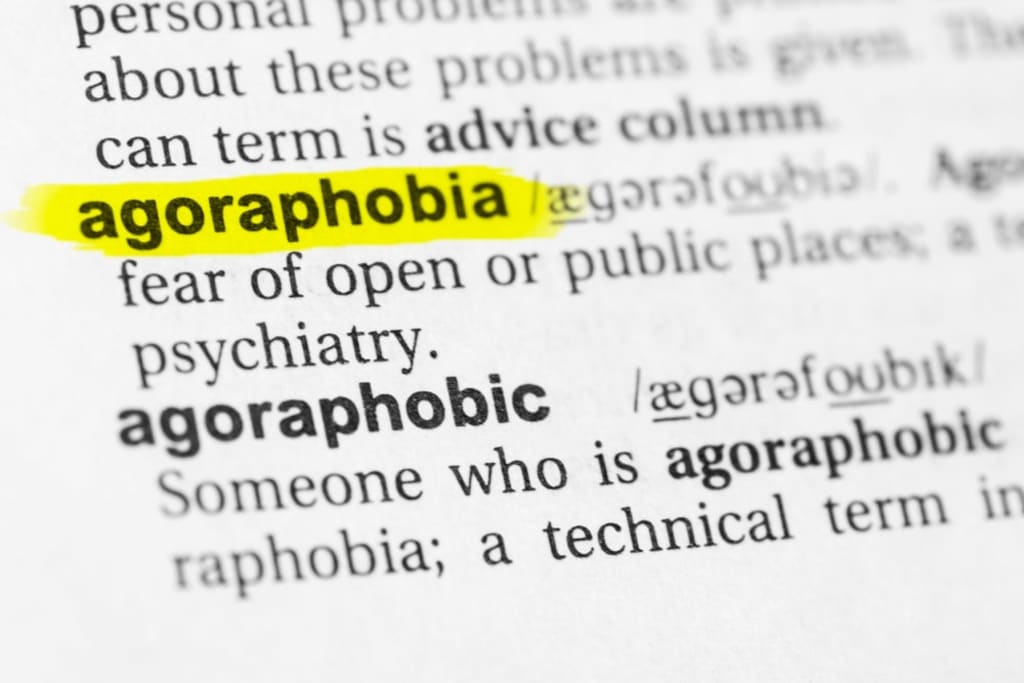
Since I was very young, I was diagnosed with pretty bad agoraphobia. It led to a number of things: dermatillomania, hypochondria and various social anxiety problems and panic disorders. During university, I collapsed a number of times in various locations including the library and the lunchroom because of my panic attacks. My agoraphobia no doubt has caused my life to be completely isolated from most every other meaningful human connection. Am I worried about that? No. What am I worried about? I am worried that I one day, it will become impossible for me to shut myself away and so, I require a coping mechanism. Even though it is difficult, I am pretty sure it is not impossible.
I have since found different ways to cope with them alongside making sure I take my medication. Some work better than others and honestly, I find that many coping mechanisms on the internet are more for generalised anxiety rather than specific phobias etc. I noticed that with agoraphobia, nobody really knew how to handle it correctly and so, I had to do it myself. Over the years I’ve tried everything from yoga to herbs, from psychology studies to breathing exercises. You name it, I’ve tried it. And here is the list of ten different coping mechanisms specifically for agoraphobia I have come up with, tried and tested.
I hope this helps you on your journey as well. This list will also be filled with anecdotes and small tips if I want to add anything extra. And remember, even though I am very far from being cured and I am possibly in the worst years of my agoraphobia, I have since come to understand that there's no cure. There's medications to repress it and there are things I can do that make it a tiny bit easier to deal with. Even something that makes a small step towards a two-way conversation with your phobia/anxiety is worth doing no matter how small.
Obviously, agoraphobia manifests differently for different people but, for generalised agoraphobia these may be some obscure methods but are also ones I have found can make things a little bit less restrictive.
I hope you can try these and see if any work for you.
3 Coping Mechanisms for Agoraphobia:
1. Comfort Spacing
Comfort Spacing, as I like to call it, is creating spaces of comfort outside your own home. How is this done? Well, say you go to the supermarket with someone else twice a week. Do this trip with the same person twice a week for around ten to twelve weeks and then, once, go on your own. Force yourself to go once alone per week and once with the other person per week. As this gradually turns into you going there on your own twice a week, you will have created a comfort-space within around ten weeks of going alone. This is a space in which your agoraphobia may have reduced vastly and is outside your own home.
Tip: You want to pragmatically comfort-space. Choose places you go often, such as individual shops or workspaces. Do these first and make sure you know the route to and from the spaces and your home well enough so that you can plan your trip.
Tip 2: If you do not want to start with a workspace, then begin with somewhere that is walking distance from your own home. Perhaps a neighbour's house or a corner shop.
Anecdote: I comfort-spaced my local supermarket which is one street away from my house. I did this when I was eighteen and it helped if I took the road that passed my uncle's house so that I knew I was still within distance of someone familiar. Using familiars can also help; if you know someone who lives en-route to the comfort-space the try to plan your route through their location. You will find that anxieties surrounding area reduce quicker since you feel you already know the situation.
2. Playing Dress-Up
A coping technique I like to call 'playing dress-up' seems like a silly one but trust me, I can do wonders for your anxieties. Wearing a bright or stand-out piece of clothing can reduce anxieties around something bad happening to you whilst your outside. A big problem amongst agoraphobes is that we tend to believe something bad will happen to us whilst we are outdoors. Most of this lies with kidnapping and murder. Now obviously, we cannot see in advance who may do that to us or someone else. But in order to reduce your anxieties around that situation, you cannot repress the thought but you can prepare for it.
Preparing for this dark thought includes wearing a piece of stand-out clothing in order to be seen. Once you know people have seen you and are not going to forget the person wearing bright pink platform shoes, or a luminous green jacket, you can be sure that if something bad happened and people were questioned, everyone would remember you. This is called 'countering the thought'. If you've had a thought that something bad is going to happen and it won't go away, then you can counter the thought by creating a solution to a problem that hasn't happened. The phrase 'don't think about it' and 'don't worry' tend not to work and so, creating an environment for solutions is of prime importance.
Tip: Making sure the outfit or item is something memorable is also very important. If you think something bad is going to happen (and more than often, it won't) then don't tell yourself 'not to worry' because that can make it worse. Instead, make sure you're seen and so, this will drive off the thought you have of anyone potentially wanting to hurt you because people will see you and your actions.
Anecdote: I normally go out wearing dresses from the 1950s rockabilly era and people comment on the cherry, strawberry and lemon prints on my bright outfits. Other times, I go out wearing white platform trainers and with those, I have even had people photograph me a number of times. Knowing that people have seen me and won't forget seeing me is a good way to lower my anxiety around being outside amongst the unknown and other because even if something bad does happen, nobody will forget where I was and what I was doing there.
3. Spatial Awareness
Spatial Awareness is a difficult one that even I myself have not yet mastered, but I am on my way to practicing in my everyday lifestyle. The question is: how do you get to know outdoor spaces? The answer is: through spatial awareness. For example: if you live near an open space such as a forest, a park or even a seaside (anywhere where there is a wide open space) then go to that place and walk the length of it over the course of a few weeks. Whilst you walk the length of it from one side to the other, stop in random places and do a slow, 360 degree turn. Each time you turn and face back the way you came, analyse your anxiety to run off in that direction and try your best to turn back around and carry on walking. Don't force it though and if you feel overwhelmed then go back home.
Trust me, it might sound a bit silly but it works. I live opposite a park and I am still doing it. It may take a few times to do in order for you to get more and more familiar with the outside space and be able to actually walk through the entire thing. This not only produces knowledge of the outdoors and turns this outside location into a 'comfort space' but also builds up the feeling of reward as you reach milestones, goals and then beat them to get a new personal best. The feeling of reward will spurn you on to want to get one further than you did before.
Tip: The best way to set milestones is by doing your turns every 20 to 30 steps so that you can feel comfortable without getting too overwhelmed all at once.
Conclusion:
I am hoping to create a series on agoraphobia since I have now been suffering with it for just over ten years. I may also make a series on hypochondria since again, I have suffered with it for just over ten years. Hopefully though, we can get a dialogue going and if you want to contact me about any problems (if I can help in any way) then my email address is in my bio. But the biggest tip I have is this: trust your therapist/counsellor/psychologist etc. you may think that you are the most individual person to have this disorder but once you think about the fact that many people suffer from these things all over the world, you don't feel as isolated and alone. Your professional helper has probably seen hundreds of cases like yours before and that, even though it is hard to think about sometimes, is one of the most reassuring things about going to the professional for this help. Also remember to take your medication, there is absolutely no shame in being on psychiatric medication at all. If you need your medication to operate in your daily life then you should take it.
About the Creator
Annie Kapur
I am:
🙋🏽♀️ Annie
📚 Avid Reader
📝 Reviewer and Commentator
🎓 Post-Grad Millennial (M.A)
***
I have:
📖 300K+ reads on Vocal
🫶🏼 Love for reading & research
🦋/X @AnnieWithBooks
***
🏡 UK
Keep reading
More stories from Annie Kapur and writers in Psyche and other communities.
Top tipple tricks
Been thinking a lot about drinking, lately. Not least because of a recent episode of over-indulgence and the inevitable after effects. Some readers may recall the earlier articles I wrote about beating the booze. Here I set out an experiment in techniques for cutting down on my alcohol intake. The experiment was successful, the techniques worked, and I have armed myself with an arsenal of weapons in the war against the demon drink. I have yet to fire the first round however. It's all a question of timing (perhaps procrastination).
By Raymond G. Taylorabout 8 hours ago in Psyche




Comments
There are no comments for this story
Be the first to respond and start the conversation.