
"You Get to Exhale Now"
Finding gay representation and how it shaped me to be the storyteller I am today



“You get to exhale now, Simon. You get to be more you than you have been in... in a very long time. You deserve everything you want.”
As I sat in the cinema, I was taken aback by how deeply those words resonated with me and the emotional impact they had. The line from Love, Simon stayed with me for a long time and prompted me to reflect on the portrayal of gay men in the media. It became clear that there's never room for them to just stop and be themselves in all their multi-layers without their sexualities being their defining trait. It was a trope that I had almost begun to expect to see in fiction, but there seemed to start to be a shift in that narrative.
It was 2018 when the much-anticipated adaptation of Becky Albertali’s "Simon vs the Homo Sapiens Agenda" was released. As it was written by two screenwriters from the "This is Us" series – a show I was obsessed with at the time, I decided to see it with a group of friends during my final year of university. As the cinema was within walking distance of the campus, we headed down for a screening one particularly cold evening. I had read the book prior to the film’s release, and even though I was in my early twenties, I immediately identified with the nerdy, and Harry Potter-obsessed Simon, who served as the protagonist of a surprisingly heartwarming gay reimagining of "You Got Mail", essentially.
Gay fiction was difficult to come by when I was a teenager – a lot of LGBT representation were like finding needles in a haystack, but supernatural heterosexual romances were all the range down every YA section. In truth, my first introduction to gay representation came from self-published authors on Amazon, whose work I was only able to read through my e-reader. I believe the first time I even saw a gay romance was during a World War Two drama that was on TV when I was eleven or twelve. Believe me, I’ve tried to find the name of this show, but I cannot remember it nor can I remember who the British actors were that starred in it, but I do remember their overall arc and the feelings it evoked.
In the aftermath of the war, two navy soldiers are back home and struggling with the aftermath of what they’ve lived through – one has PTSD and is haunted by nightmares of drowning and the other is physically disabled. This was the first time I had seen a disabled character on screen outside the coming-of-age comedy Inside I’m Dancing. As the characters mainly communicated through letters and one was reluctant to see the other, I had no idea this was even a gay romance until their first on-screen kiss. Believing the characters were going to find happiness together, I was in utter disbelief when it ended in a complete tragedy that would have outshone anything William Shakespeare might have penned.
“That’s so stupid!” I exclaimed at the TV, surprising my family with my incredulity at the pretty gruesome twist. “They made each other happy. Why couldn’t they just be together? Why end it like that?”
I didn't realise it at the time, but I would find myself pondering that same question for years to come. It seemed like gay romances could be divided into three overlapping categories: sexual awakening, internalized homophobia, and depressing plot twists. During my time in college and later at university, I discovered many iconic pieces of queer cinema such as Brokeback Mountain, All About My Mother, My Brother the Devil, and numerous other international and British films from both past and contemporary filmmakers.
I remember reading Becky Albertali’s debut novel around the time I was writing an essay on two British independent movies – "My Brother the Devil" and "Fishtank" – and their portrayal of the British working class and sexuality. In "My Brother the Devil," James Floyd plays a gang member who struggles with his sexuality and eventually realises that he is gay. The movie breaks familiar tropes by showing Floyd's character overcoming his own toxic masculinity and sharing a beautifully vulnerable love scene with his co-star. The film tastefully portrays intimacy between the characters before and after the love scenes, opting for a "closed door" approach to male love scenes, which was rare and refreshing to see.
So, I have seen many interpretations of what love between two men could be and how that may play out. Some of these portrayals were good, some not so much, many nuanced and complex at best. However, Love Simon stood out among the rest. Here we see a character learning to love himself before he can even consider opening himself up to the idea of loving someone else and being loved. Filmed in apparently one take, Greg Berlanti directs Nick Robinson and Jennifer Garner’s characters as the mother and son have a heart-to-heart in one of the most memorable scenes of the film.
Simon: Did you know?
Emily: I knew you had a secret. When you were little, you were so carefree. But these last few years, it's almost like I can feel you holding your breath. I wanted to ask you about it, but I didn't want to pry. Maybe I made a mistake.
Simon: No. No, Mom, you didn't make a mistake.
Emily: Being gay is your thing. There are parts of it you have to go through alone. I hate that. As soon as you came out, you said, "Mom, I'm still me." I need you to hear this: You are still you, Simon. You are still the same son who I love to tease and who your father depends on for just about everything. And you're the same brother who always complements his sister on her food, even when it sucks. You get to exhale now, Simon. You get to be more you than you have been in... in a very long time. You deserve everything you want.
After that scene, I felt I like I was being given permission to breathe. There are so many pieces of literature, cinema or television that I could remember seeing a gay representation, but it wasn’t until 2018 that I could think: “ I actually can relate to this guy, he was just like me as a teenager” which was a significant realisation as I sat in that auditorium. This moment was so simple and yet it gave me an overwhelming sense of relief to see a genuine moment between a parent and their child that wasn’t steeped in tragedy or melodrama. From then on, I started to see a real shift in the portrayal of queer love which continues to this day. As for me, this gay me more confidence to pen many of my screenplays, plays and novels with LGBTQ+ characters at the heart of them.
Which in many ways, deserves an exhale.
About the Creator
Ted Ryan
Screenwriter, director, reviewer & author.
Ted Ryan: Storyteller Chronicles | T.J. Ryan: NA romance
Socials: @authortedryan | @tjryanwrites | @tjryanreviews
Reader insights
Outstanding
Excellent work. Looking forward to reading more!
Top insights
Easy to read and follow
Well-structured & engaging content
Eye opening
Niche topic & fresh perspectives
Heartfelt and relatable
The story invoked strong personal emotions
Masterful proofreading
Zero grammar & spelling mistakes
On-point and relevant
Writing reflected the title & theme
The Author Diaries #1: The Storyteller’s Curse — Exclusive Prologue Reveal
Author’s Note: Dear Readers, Thank you for being here — for reading, subscribing, and stepping back into the world of The Storyteller Chronicles. When I finished Book One, I truly thought the story was done. Silas was defeated. The grimoire was safe. Lauren had saved the day — in two worlds — and her family were reunited.
By Ted RyanExclusive • 8 months ago
The Pride Flag and the Diversion
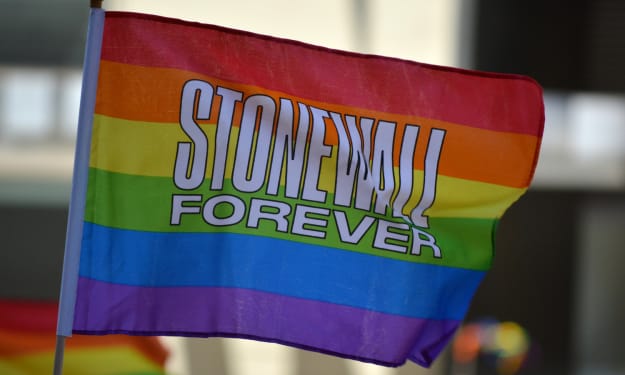
For nearly a decade, the LGBTQIA Pride Flag rippled in the wind at Christopher Park, a kaleidoscope of color staked into the soil of America’s first national monument to LGBTQIA+ liberation. That flag came down this week. Federal officials, citing new guidance from the Trump Administration, silently lowered the rainbow flag from its pole across the street from the Stonewall Inn. The birthplace of the modern gay rights movement now flies only the United States flag.
By Tim Carmichael19 days ago in Pride



Comments (4)
I’d missed this piece Ted. I’ve had some long breaks on vocal. Congrats on your placement. That is excellent. I found your analysis of gay representation in cinema, and how it’s often been steeped in tragedy, interesting. It’s incredibly empowering when you see yourself on screen in some shape or form. A terrific, perceptive and heartfelt piece, Ted! 😊
Wooohooooo congratulations on your honourable mention! 🎉💖🎊🎉💖🎊
Truly touching, warmed my heart right up!
This was beautiful! Good luck in the challenge.