
World's largest religious gathering begins in India, hundreds of millions of Hindus expected to attend
400 million people are expected to attend the Maha Kumbh Mela, or pitcher festival

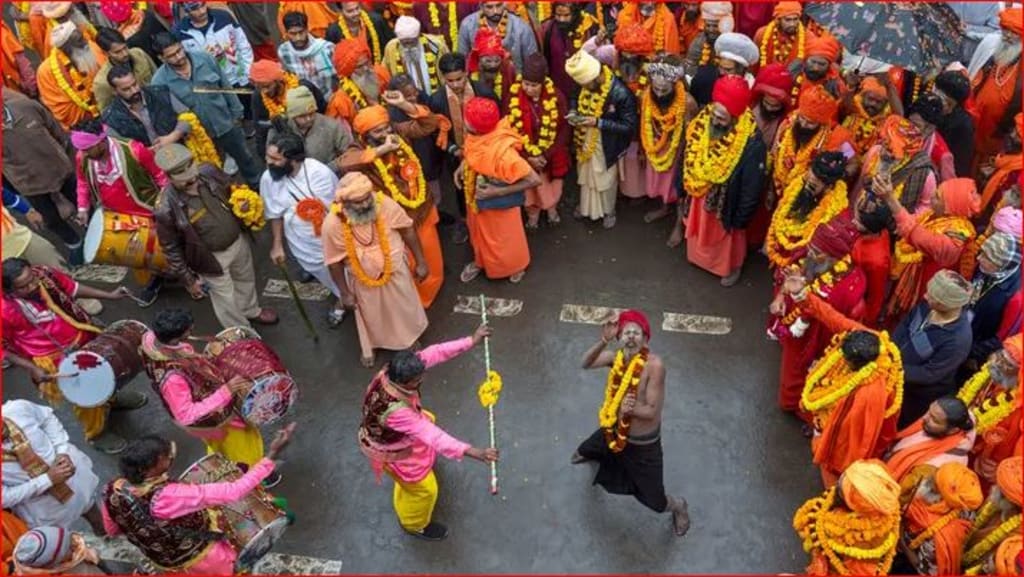
Maha Kumbh Festival: The World’s Largest Religious Gathering in Prayagraj
Millions of Hindu devotees, mystics, and holy men and women from all across India have gathered in the northern city of Prayagraj to kick off the Maha Kumbh festival, which is being hailed as the world’s largest religious gathering. This year’s festival, held every 12 years, is expected to draw more than 400 million people—more than the entire population of the United States.
For the next six weeks, pilgrims will gather at the confluence of three sacred rivers—the Ganges, the Yamuna, and the mythical Saraswati. It is believed that a dip in these holy waters will cleanse them of past sins and bring them closer to achieving the ultimate goal of Hindu philosophy: liberation from the cycle of rebirth.
The Sacred Confluence of Rivers

The Ganges and the Yamuna rivers are especially revered in Hinduism. A holy dip in their waters is said to purify one’s soul and end the cycle of reincarnation. The Maha Kumbh Mela, or pitcher festival, is held once every 12 years in the most auspicious of cycles, and this year’s gathering is the grandest of them all. Pilgrims believe that the mythical Saraswati river once flowed from the Himalayas through Prayagraj, joining the Ganges and Yamuna.
The festival includes a series of ritual baths by Hindu sadhus (holy men) and other devotees. Every day, people bathe in the waters, but on the most auspicious days, thousands of naked, ash-smeared monks rush to the rivers at dawn to take a dip, hoping for salvation. Many pilgrims stay for the entire 45-day festival, observing austerity, giving alms, and bathing in the holy rivers each morning.
A pilgrim, Bhagwat Prasad Tiwari, shared, "We feel peaceful here and attain salvation from the cycles of life and death." For many, the Maha Kumbh is not just a religious event; it’s a journey to spiritual freedom.
The Roots of the Kumbh Festival
The origins of the Kumbh Mela lie in Hindu mythology. It is believed that the god Vishnu wrested a golden pitcher containing the nectar of immortality from demons. As the story goes, a few drops of this nectar fell at four cities—Prayagraj, Nasik, Ujjain, and Haridwar—where the Kumbh festival is celebrated to this day.
The Kumbh rotates between these four cities, taking place every three years in one of them, with the largest gathering held every 12 years in Prayagraj. In 2019, the Ardh Kumbh (Half Kumbh) gathered 240 million visitors, with around 50 million pilgrims bathing on the busiest day.
The Maha Kumbh: The World’s Largest Gathering
At least 400 million people are expected to visit Prayagraj during this year’s Maha Kumbh festival. This number dwarfs the 2 million visitors who attend the Hajj pilgrimage in Saudi Arabia each year. The scale of the event is awe-inspiring, and it is also a huge test for the Indian authorities, as the festival is an important showcase of Hinduism, tourism, and crowd management.
The grounds around the confluence have been transformed into a vast tent city that stretches across 15 square miles. This sprawling city is equipped with over 3,000 kitchens, 150,000 restrooms, and essential services like housing, roads, electricity, water, and hospitals. In addition, Indian Railways has set up more than 90 special trains to help transport the millions of pilgrims.
With a substantial increase in security, over 50,000 personnel are stationed throughout the city to ensure smooth crowd management. AI-powered cameras monitor crowd movement and send alerts to control rooms to avoid stampedes.
The Festival’s Political Significance
The Maha Kumbh festival is also politically significant, especially for Prime Minister Narendra Modi and his party, the Bharatiya Janata Party (BJP). Hindu nationalism is a cornerstone of Modi’s political agenda, and the festival has become an important platform to strengthen his party’s relationship with India’s Hindu population, which makes up around 80% of the country’s 1.4 billion people.
Uttar Pradesh’s Chief Minister, Yogi Adityanath, is a prominent Hindu monk and politician in Modi’s party. Under his leadership, the state has allocated more than $765 million for this year’s event, further solidifying the BJP’s connection to the festival. Large billboards featuring Modi and Adityanath adorn Prayagraj, along with slogans promoting their government’s welfare initiatives.
In 2019, Modi’s government also changed the city’s Mughal-era name from Allahabad to Prayagraj, a move aligned with the party’s agenda of replacing Muslim-era names with Hindu symbols. Despite controversies, the Kumbh festival remains a vital part of India’s religious and political landscape.
Conclusion
The Maha Kumbh Mela is a grand spectacle of faith, culture, and spirituality. It’s a reminder of the deep religious traditions that continue to thrive in India, drawing millions of people from all walks of life in search of spiritual fulfillment. For those who have never experienced it, the festival is an eye-opening glimpse into the power of religion in India, as well as the country’s ability to organize such a massive event. As the festival continues over the next several weeks, it will undoubtedly leave a lasting impact on all those who partake in it.
About the Creator
Ramesh Mahato
Experienced content writer, blog writer, and translator passionate about crafting engaging, SEO-optimized content. I specialize in writing informative articles, blog posts, and accurate translations that captivate readers and drive results
Keep reading
More stories from Ramesh Mahato and writers in Pride and other communities.
Hottest in the Office
Dear Rafi, You’re very distracting to work around. For the first second I saw you the other day, I thought you were some type of executive. It took a moment to realize no, you were just the new guy, dressed up for the job he wants. Be still, my heart.
By Gabriel Shames6 days ago in Pride
Alive
The shocking true story of Uruguayan Air Force Flight 571 and the moral horror that saved sixteen lives The crash of Uruguayan Air Force Flight 571 into the Andes Mountains on October 13, 1972, and the subsequent seventy-two-day survival ordeal of the passengers would become one of the most controversial and morally complex survival stories ever recorded, forcing sixteen young men to make the unthinkable decision to consume the flesh of their dead friends and teammates in order to stay alive in one of the most hostile environments on Earth, and the psychological and ethical dimensions of their choice continue to provoke debate and reflection more than fifty years after their rescue shocked the world. The flight was carrying forty-five people including nineteen members of the Old Christians Club rugby team from Montevideo, Uruguay, along with their friends and family members, traveling to Chile for a tournament, and the passengers were young, healthy, optimistic people with their whole lives ahead of them, many of them students from wealthy families who had never experienced real hardship and who could not have imagined that their routine flight would turn into a nightmare of freezing temperatures, starvation, and impossible moral choices that would haunt them forever.
By The Curious Writerabout 12 hours ago in Pride




Comments (2)
Nice write up♦️♦️
Wow! That sounds like an amazing and huge religious gathering! Fantastic work’