
What percentage of americans are lgbtq
Understanding LGBTQ+ Demographics: What Percentage of Americans Are LGBTQ+?


In recent years, conversations surrounding LGBTQ+ identity have moved from the margins to mainstream discourse, sparking curiosity about the actual size and composition of this community in the United States. "What percentage of Americans are LGBTQ+" isn't just a statistical question it's a window into evolving social attitudes, generational shifts, and the ongoing journey toward visibility and acceptance. This article explores the latest data, examines trends across demographics, and discusses what these numbers reveal about contemporary American society.
The Current Landscape: Key Statistics
According to the most recent and comprehensive data from Gallup's 2023 poll, 7.6% of U.S. adults identify as LGBTQ+. This figure represents a steady increase from previous years up from 5.6% in 2020 and just 3.5% in 2012 when Gallup first began tracking this metric.
Breaking down this percentage reveals a diverse community:
Bisexual individuals make up the largest subgroup at 4.7% of all U.S. adults.
Gay and lesbian identities account for 1.6% each.
Transgender identification stands at approximately 1.4% of adults.

Other identities (including queer, pansexual, asexual, and non-binary) represent the remainder.
Generational Differences: A Striking Pattern
Perhaps the most revealing aspect of LGBTQ+ demographics is the dramatic generational divide:
- Generation Z (born 1997-2012): 22.3% identify as LGBTQ+
- Millennials (born 1981-1996): 9.8% identify as LGBTQ+
- Generation X (born 1965-1980): 4.3% identify as LGBTQ+
- Baby Boomers (born 1946-1964): 2.7% identify as LGBTQ+
- Silent Generation (born before 1946): 1.7% identify as LGBTQ
This progression suggests that younger generations are not only more likely to identify as LGBTQ+ but also feel safer doing so. The data indicates either an actual increase in LGBTQ+ individuals or more likely a significant reduction in historical barriers to self-identification.

Geographic and Political Variations
LGBTQ+ identification isn't evenly distributed across the United States. Gallup's data reveals that:
The West leads with 8.1% of residents identifying as LGBTQ+
The Midwest and Northeast follow closely at 7.6% and 7.5% respectively
The South reports the lowest percentage at 7.3%

These regional differences, while modest, may reflect varying cultural attitudes and levels of social acceptance. Similarly, political affiliation shows correlation with identification rates, with liberals being more than twice as likely as conservatives to identify as LGBTQ+.
What's Behind the Rising Numbers?
The increasing percentage of Americans identifying as LGBTQ+ reflects several interconnected factors:
1. Reduced Social Stigma: As societal acceptance has grown evidenced by marriage equality, anti-discrimination protections in many states, and positive media representation more people feel comfortable openly identifying as LGBTQ+.

2. Evolving Language and Understanding: The expansion of terminology beyond traditional gay/lesbian categories to include bisexual, pansexual, asexual, queer, and non-binary identities has allowed more people to find labels that accurately reflect their experiences.
3. Generational Shift in Attitudes: Younger generations have grown up during a period of rapid social change regarding LGBTQ+ rights, making them both more likely to explore their identities and more likely to know peers who have done so.

4. Intersection of Gender and Sexual Identity: The growing visibility of transgender and non-binary identities has contributed significantly to the increasing numbers, particularly among younger generations.
The Bisexual Majority: A Notable Trend
Within the LGBTQ+ community, bisexual individuals now represent the majority approximately 62% of all LGBTQ+-identified Americans. This marks a significant shift from earlier decades when gay and lesbian identities were most visible in both media and advocacy. Women are significantly more likely than men to identify as bisexual (4.9% vs. 2.1% of all U.S. adults), though both numbers have increased steadily.
Limitations and Considerations in the Data
While current statistics provide valuable insights, several important considerations remain:
Self-identification vs. behavior vs. attraction: Surveys typically measure how people identify themselves, which doesn't always align with sexual behavior or romantic/sexual attraction. Research suggests that more Americans report same-sex attraction or experiences than identify as LGBTQ+.

Cultural and methodological factors: Survey methodologies, question wording, and cultural differences in understanding sexuality and gender can affect results across studies.
Continuing evolution: As understanding of gender and sexuality continues to develop, so too will measurement approaches and terminology.
The Impact of Visibility
The growing percentage of Americans identifying as LGBTQ+ has tangible social and political implications:
Political Influence: As the LGBTQ+ community grows in visibility and numbers, its political influence expands, affecting policy debates around discrimination protections, healthcare access, and educational inclusion.
Corporate and Media Representation: Increased representation in media and marketing both reflects and reinforces the community's growing visibility and economic influence.

Community Support Systems: Larger, more visible communities foster better support networks, resources, and advocacy organizations.
Ongoing Challenges: Despite progress, LGBTQ+ Americans particularly transgender individuals and people of color continue to face significant disparities in mental health outcomes, economic security, and experiences with discrimination.
Conclusion: More Than a Number
The question "what percentage of Americans are LGBTQ+" ultimately reveals more than a statistic it highlights an evolving understanding of identity in America. The rising numbers, particularly among younger generations, suggest a future where diverse sexual orientations and gender identities are increasingly recognized as part of the human spectrum rather than exceptions to a norm.

As we consider these numbers, it's crucial to remember that behind each percentage point are millions of individuals with unique stories, experiences, and contributions to our national fabric. The data reflects not just who we are now, but the direction we're heading toward a society where more people feel free to bring their whole selves to their communities, workplaces, and families.
Whether the percentage continues to rise or eventually stabilizes, the trend toward greater visibility and acceptance appears firmly established. In understanding these demographics, we gain not just numerical insight but a clearer picture of America's ongoing journey toward becoming a more inclusive society for all.
About the Creator
David Femboy
David here. Sharing my authentic femboy journey the outfits, the lessons, the life. For anyone exploring gender expression. Let’s redefine masculinity together. 💖
Keep reading
More stories from David Femboy and writers in Pride and other communities.
What percent of gen z is lgbtq
A seismic shift is occurring in how we understand identity and sexuality, and at the forefront is Generation Z. Born roughly between 1997 and 2012, this cohort is redefining norms at a breathtaking pace. One statistic, in particular, has become a flashpoint for cultural analysis, political debate, and societal introspection: What percentage of Gen Z identifies as LGBTQ+?
By David Femboy2 months ago in Pride
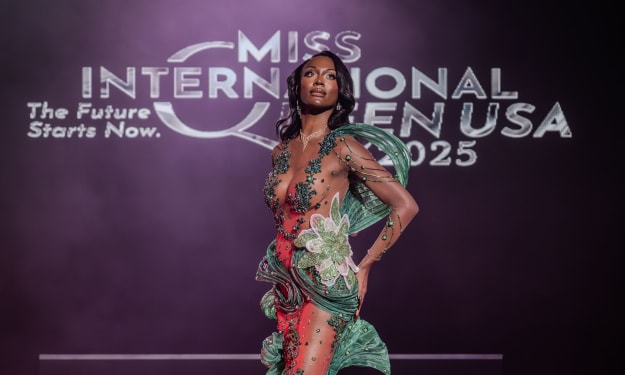
A Beauty Pageant That Is Much More than Crowns and Gowns
Miss International Queen – USA (MIQ-USA) returns this month with a bold new vision as it crowns its 2026 titleholder in Atlantic City on March 26–27. Following a celebrated debut in Las Vegas — where Vegas 411 hailed the production as “the new crown jewel in Las Vegas shows” — the nation’s premier pageant for transgender women enters its next chapter with an ambitious theme: “A Portrait of Possibility.”
By Ben Nelson2 days ago in Pride



Comments
There are no comments for this story
Be the first to respond and start the conversation.