


LGBTQ+ is an evolving acronym representing a diverse spectrum of sexual orientations, gender identities, and expressions. At its core, LGBTQ+ stands for Lesbian, Gay, Bisexual, Transgender, and Queer (or Questioning), with the "+" symbol crucially acknowledging the many additional identities that exist beyond these five categories. This inclusive term represents not just labels, but real people, communities, and experiences that have historically been marginalized.
Understanding LGBTQ+ isn't just about memorizing definitions it's about recognizing human diversity, fostering empathy, and building a more inclusive world. As society's understanding of identity deepens, so too does the language we use to describe it, making ongoing education essential for allies and community members alike.
Breaking Down the Acronym: What Each Letter Represents
L: Lesbian
A lesbian is a woman who experiences emotional, romantic, or sexual attraction primarily to other women. The term is used both as a noun and adjective (as in "lesbian woman").
G: Gay
Most commonly referring to a man attracted to other men, "gay" can also be used broadly to describe anyone who experiences same-gender attraction. Many women also identify as gay rather than lesbian, highlighting the personal nature of identity labels.

B: Bisexual
Bisexual individuals experience attraction to more than one gender. This attraction isn't necessarily equally split between genders and can fluctuate over time what's often called the "bi-cycle." Importantly, bisexuality is not a transitional identity or a form of indecision, but a valid and complete orientation in itself.
T: Transgender
Transgender (often shortened to "trans") describes people whose gender identity differs from the sex they were assigned at birth. This is distinct from sexual orientation a trans person can be straight, gay, bisexual, or any other orientation. Key related terms include:

Cisgender: Individuals whose gender identity aligns with their assigned sex
Non-binary: People who don't identify exclusively as male or female
Gender dysphoria: Distress that can occur when someone's assigned sex and gender identity don't align
Q: Queer or Questioning
Queer: Once used as a slur, this term has been reclaimed by many as an umbrella term for non-heterosexual and non-cisgender identities. Some prefer "queer" for its flexibility, while others still find it offensive, so it's best to use only when someone self-identifies with it.

Questioning: The process of exploring one's sexual orientation, gender identity, or expression.
The Vital "+": Beyond the Initialism
The plus sign is perhaps the most important character in the acronym, representing the countless identities not captured in the five letters:
Intersex: People born with variations in sex characteristics that don't fit typical binary notions
Asexual/Aromantic: Those who experience little or no sexual/romantic attraction

Pansexual: Attraction regardless of gender
Two-Spirit: A term used by some Indigenous North Americans for people with both masculine and feminine spirits
And many more, including genderfluid, agender, demisexual, and others
The Evolution of Language: From LGBT to LGBTQ+
The terminology has expanded significantly over decades, reflecting growing understanding:

1960s-1970s: "Gay" served as an umbrella term
1980s: "Gay and lesbian" became more common
1990s: LGBT gained prominence, acknowledging bisexual and transgender communities
2000s: LGBTQ added to include queer/questioning identities
2010s-present: LGBTQ+ (or sometimes LGBTQIA+) emphasizes inclusion of all identities

This evolution matters because language shapes reality. As activist Leslie Feinberg noted, "Pronouns are the only thing in the English language that indicate who you are rather than what you do." Respecting someone's stated identity is a fundamental form of human dignity.
Common Misconceptions Debunked
"It's Just a Phase"
Sexual orientation and gender identity are deeply rooted aspects of personhood. While understanding oneself can be a journey, identities within the LGBTQ+ spectrum are as valid and stable as straight and cisgender identities.
"Transgender is the Same as Sexual Orientation"
Gender identity (who you are) and sexual orientation (who you're attracted to) are separate dimensions of human experience. A trans woman who's attracted to men is straight; one attracted to women is lesbian.
"They're Trying to 'Recruit' People"
This harmful myth suggests LGBTQ+ identities are choices that can be influenced. In reality, people don't choose their orientations or identities they discover them.
"It's a Modern Western Concept"
Historical and cross-cultural evidence shows LGBTQ+ identities have existed throughout human history and across all cultures, from Two-Spirit people in Indigenous communities to the "galli" priests of ancient Rome.
Why LGBTQ+ Visibility Matters
Representation saves lives. According to The Trevor Project's 2022 National Survey:
LGBTQ+ youth who felt high social support reported significantly lower suicide attempts
45% of LGBTQ youth seriously considered suicide in the past year
Transgender and nonbinary youth who reported gender identity acceptance had significantly lower suicide risk
Visibility in media, politics, workplaces, and communities creates a world where LGBTQ+ people can live authentically without fear. It also educates the broader population, replacing fear and misunderstanding with knowledge and empathy.
How to Be an Ally: Practical Steps
Educate Yourself: Read articles, watch documentaries, follow LGBTQ+ creators
Use Correct Language: Respect names and pronouns when in doubt, ask politely

Speak Up: Gently correct misinformation when you encounter it
Support LGBTQ+ Organizations: Donate, volunteer, or amplify their work
Examine Your Assumptions: Question heteronormative and cisnormative thinking
Listen More Than You Speak: Center LGBTQ+ voices in conversations about their experiences
The Ongoing Journey
Understanding LGBTQ+ isn't about achieving perfect terminology mastery it's about recognizing human complexity and committing to respect. Language will continue evolving as our understanding deepens, and what matters most is approaching each person with curiosity rather than assumption, and dignity rather than judgment.

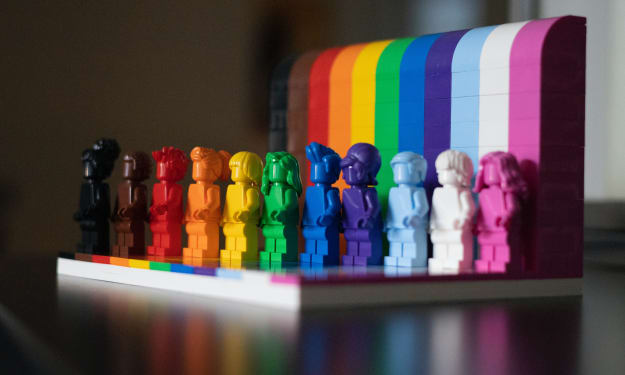
The rainbow flag, created by Gilbert Baker in 1978, represents this diversity beautifully: red for life, orange for healing, yellow for sunlight, green for nature, blue for harmony, and violet for spirit. These are universal human experiences that LGBTQ+ people share with all humanity, while also having unique experiences shaped by their identities.
Moving Forward Together
The journey toward full equality continues worldwide. As of 2023, 64 countries still criminalize same-sex relationships, while others have made remarkable progress in LGBTQ+ rights. Each of us has a role in creating a world where people can love authentically and live openly without fear.

Whether you're exploring your identity, supporting someone who is, or simply seeking to understand, remember that at its heart, LGBTQ+ represents what we all seek: the freedom to be ourselves, to love who we love, and to build communities where everyone belongs.
The "+" isn't just a symbol it's an invitation. An invitation to expand our understanding, to include more stories, and to recognize that human diversity will always exceed our language's ability to categorize it. And that's not a limitation it's a beautiful reminder of our shared, wonderfully complex humanity.
About the Creator
David Femboy
David here. Sharing my authentic femboy journey the outfits, the lessons, the life. For anyone exploring gender expression. Let’s redefine masculinity together. 💖
Keep reading
More stories from David Femboy and writers in Pride and other communities.
How many people are lgbtq
In recent years, conversations about LGBTQ identities have moved from the margins to the mainstream. From representation in media to debates about rights and inclusion, one question frequently arises: Just how many people are LGBTQ? The answer is more nuanced than a simple percentage, and understanding the data is key to fostering a more inclusive society. This article dives into the latest statistics, explores why numbers vary, and discusses what these figures truly mean for visibility and acceptance.
By David Femboy2 months ago in Pride
The Pride Flag and the Diversion
For nearly a decade, the LGBTQIA Pride Flag rippled in the wind at Christopher Park, a kaleidoscope of color staked into the soil of America’s first national monument to LGBTQIA+ liberation. That flag came down this week. Federal officials, citing new guidance from the Trump Administration, silently lowered the rainbow flag from its pole across the street from the Stonewall Inn. The birthplace of the modern gay rights movement now flies only the United States flag.
By Tim Carmichael19 days ago in Pride
A Planetary Alignment will coincide with Mercury Retrograde
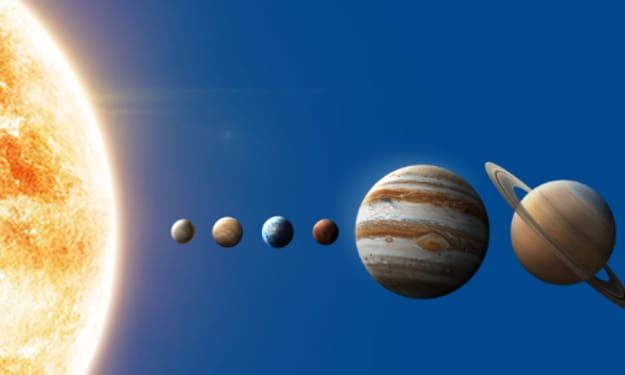
Double phenomena in the heavens Some people say in jest that the planets have aligned in their favor when life works the way they desire. Were you aware that there are seasons when things do line up in the heavens? There will be a planetary alignment AKA a planet parade, on February 28, 2026.
By Cheryl E Preston5 days ago in FYI

Comments
There are no comments for this story
Be the first to respond and start the conversation.