
The Prayer Closet
In a forgotten church closet, Jamie finds what the sermons never offered: permission to exist.

The church was silent. Not in a comforting way, but in the way old buildings get quiet when no one's watching. When even the saints in stained glass look tired of listening.
Jamie sat on the back steps behind Fellowship Hall, knees hugged to their chest, trying not to cry. Not loud, anyway. Loud was dangerous. Loud meant someone might hear, and hearing meant questions would follow.
It wasn't anything dramatic. Just a comment, a passing line from the youth pastor about “real boys not painting their nails.” A joke. Everyone laughed.
Jamie did too.
That was the part that hurt the most.
Somewhere between the second service and choir practice, they wandered into the supply hallway, booking for a place to breathe. Past the janitor’s closet, past the locked room with the baptismal robes, past the thermostat that never worked, until they found a door they’d never noticed before.
Small, wrapped wood. Ni sign, just a handle.
They pushed it open.
It wasn’t big, barely enough space to sit cross-legged, and smelled of dust, hymnals, and cedar. There were old communion trays on a shelf. A few broken chairs stacked in the corner. A cracked Bible with someone’s name etched on the inside cover: To Michal. 1986. Keep praying.
Jamie sat in the corner, curled around the weight in their chest, and let the silence settle. It was the first time in months they hadn’t felt watched.
Without really thinking, they pulled a pencil from their backpack and wrote a single word on the back wall:
Please.
That was all.
The word didn’t fix anything, but writing it helped. A little
Jamie came back the next week and the next. Always after service, always when no one would notice. They brought a flashlight once and began to see it:
Faint handwriting in the corners. Words layered like whispers.
God still loves you.
You’re not broken.
Psalm 139: You are fearfully and wonderfully made.
-A, 1997
They weren’t the first.
The next Sunday, Jamie brought a pen.
They didn’t plan to write anything, just to read. But something about the ink made the words feel more permanent , like the writers had decided they were done whispering.
On the back of the door, hidden behind a stack of broken VBS props, someone had written in red ink:
They told me God hated who I loved. I believed them. But I kept showing up anyway. That’s how I know He never left.
Underneath, in smaller shakier writing:
I wanted to die. Then I found this place.
Jamie started at that one for a long time.
Not because they were afraid of dying.
But because sometimes… just sometimes it felt easier than living as a ghost in their own skin.
They added their own line beneath it, careful and small:
Still here. Still hoping.
That night they prayed, for the first time in months. Not out loud, not on their knees. Just a breath:
If you still see me… let me see You.
There was no lightning. No voice from heaven.
But something happened.
A stillness.
Not the quiet that had weight in it, the kind that pressed down, but the kind that made room.
Jamie felt like they were finally sitting with Someone who didn’t flinch.
They came back with post-it notes the next time. Left verses. Left questions: Taped a small candle to the shelf and lit it while they sat. Just once.
The next week, the candle was gone, but in its place was a folded scrap of paper taped to the wall. It read:
“What you bind on earth shall be bound in heaven. What you lose… shall be loosed.” (Matthew 18:18)
Underneath:
We were never meant to carry shame as proof of holiness.
Jamie didn’t know who wrote it. But they wanted to thank them.
Not just for the scripture but for the permission.
Every sermon they’d ever heard about “identity” came with a warning. A call to repentance. A buried threat. But here, the quiet scripture didn’t feel like a trap. It felt like a lifeline.
They started rereading the Bible, this time with a highlighter and no filter. They saw things they hadn’t seen before. That Jesus didn’t throw stones. That he touched the untouchable. That the only people he ever shouted at were the ones who used religion like a fence.
Jamie didn’t come out. Not yet.
But in the prayer closet, they stopped apologizing for existing.
It wasn’t long before someone noticed.
Jamie had always been careful. Quiet. Out of the way. But when you go from invisible to present, people start asking questions.
It started with a youth group leader mentioning their painted fingernails. “Bold choice,” he said, like he was offering a compliment. But there was something in the way he said it, tight-lipped, eyes flicking toward the others. It wasn’t the words, it was the warning inside them.
Then came the prayer request.
Jamie hadn’t even bowed their head yet when someone prayed, “Lord, help those who are confused. Remind them. You made them male and female, and nothing in between.”
The room was still. No one looked at Jamie.
That was how they knew it was for them.
That night, they stayed late after the youth group. Said they’d forgotten their phone. Waited until the hallway was clear. Then slipped into the prayer closet like it was a refuge carved into a storm.
The notes on the wall were still there. So were the names, initials mostly.
One was new.
J, 2025, They tried to pray the color out of me. I almost believed it was gone. It’s not.
Thank God.
Jamie smiled.
They didn’t bring a candle this time. Just a Sharpie.
They walked to the side wall, the one no one had written on yet, and began to write:
You don’t have to choose between your faith and your identity.
You don’t have to let shame pretend to be the voice of God.
You don’t have to disappear to belong.
They stopped and stood back. Read the words. Let them sink in.
Then, in careful cursive beneath it all, they wrote.
God never asked me to be someone else. Only to be honest.
There was a knock on the door.
Jamie froze.
It was soft. Not angry. Not Urgent.
Just a knock.
“It’s okay,” a voice said. “I’m not here to make you leave. I just… I used to sit in there, too.”
Jamie opened the door.
A young woman stood in the hallway. Maybe early twenties. She wore a church T-shirt and a nervous smile.
“You left that verse from Matthew,” Jamie said.
She nodded. “I figured someone needed it.”
They didn’t hug. Didn’t cry. Just stood there a minute.
Long enough for the quiet to become something holy again.
“There’s more of us,” she said. “We just stopped saying it out loud.”
Jamie stepped out of the closet, sharpie still in hand.
Not because they were done hiding, but because they finally had somewhere worth walking toward.
Jamie returned one last time. Not to hide, but to leave a blessing behind.
They came early, before the choir arrived, while the sun was still climbing through the stained-glass windows. The air inside the closet smelled like cedar and candlewax, something Jamie could only describe as a memory.
They brought a small, sealed envelope with wax and slid it into the back of the old Bible. Inside was a note, handwritten:
If you’re here, it’s probably because the world has made you feel too much, too different, too heavy, or too strange to be loved.
You’re not.
You were not a mistake. You are not confusing. You are not a problem God is trying to solve.
You’re a story He’s still telling
Hold On.
Jamie placed the Bible back on the shelf, fingers lingering on the worn leather cover like a benediction.
Then they stood and pulled a candle from their bag, a new one this time. Lavender and oak. Something soft. They lit it, let it flicker, then wrote one final message on the wall in black ink.
This closet is holy ground.
If you ever feel like you can’t be both who you are and who God made you to be, come sit awhile.
We'll be here. The ones who came before. The ones still holding on. The ones still believing in a love bigger than shame.
You're not alone
You never were.
Jamie stepped out into the hallway, blinking against the morning light. Someone was singing faintly in the sanctuary, an old hymn, soft and imperfect. The notes drifted like dust motes in the sunlight. Jamie didn't recognize the voice. But they didn't need to.
They smiled
Not everything had changed.
Not yet.
But they had.
And that, for today, was enough.
About the Creator
Keep reading
More stories from Robert Lacy and writers in Pride and other communities.
The Room at the End of the Hall
The house had too many windows. Ezra had counted them once, forty-two, not including the small one in the attic. Light poured in from every side, but somehow, the place still felt shadowed. Maybe it wasn't the house that was dark. Perhaps it was the weight he brought in with him.
By Robert Lacy9 months ago in Pride
A Beauty Pageant That Is Much More than Crowns and Gowns
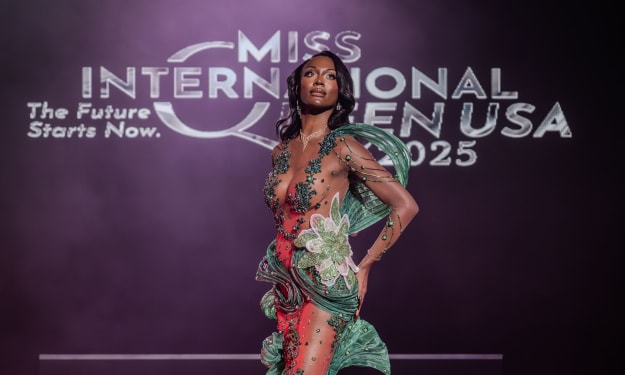
Miss International Queen – USA (MIQ-USA) returns this month with a bold new vision as it crowns its 2026 titleholder in Atlantic City on March 26–27. Following a celebrated debut in Las Vegas — where Vegas 411 hailed the production as “the new crown jewel in Las Vegas shows” — the nation’s premier pageant for transgender women enters its next chapter with an ambitious theme: “A Portrait of Possibility.”
By Ben Nelsonabout 18 hours ago in Pride
Tatt~Master
— Assembly Line Tatt Machine ~ Impressions to Impress — As I begin to understand more about the Tattoo Phenomenon. I've written silly, yet verbatim, dating site anecdotes in 'Frazzled.' So let me ask you: Would you be More attracted to someone slathered with tattoos, or Less?
By Jay Kantor4 days ago in Humor



Comments
There are no comments for this story
Be the first to respond and start the conversation.