
The Plot To Blow Up John Briggs
The Weather Underground, Proposition 6, and the rise of LGBTQ+ resistance

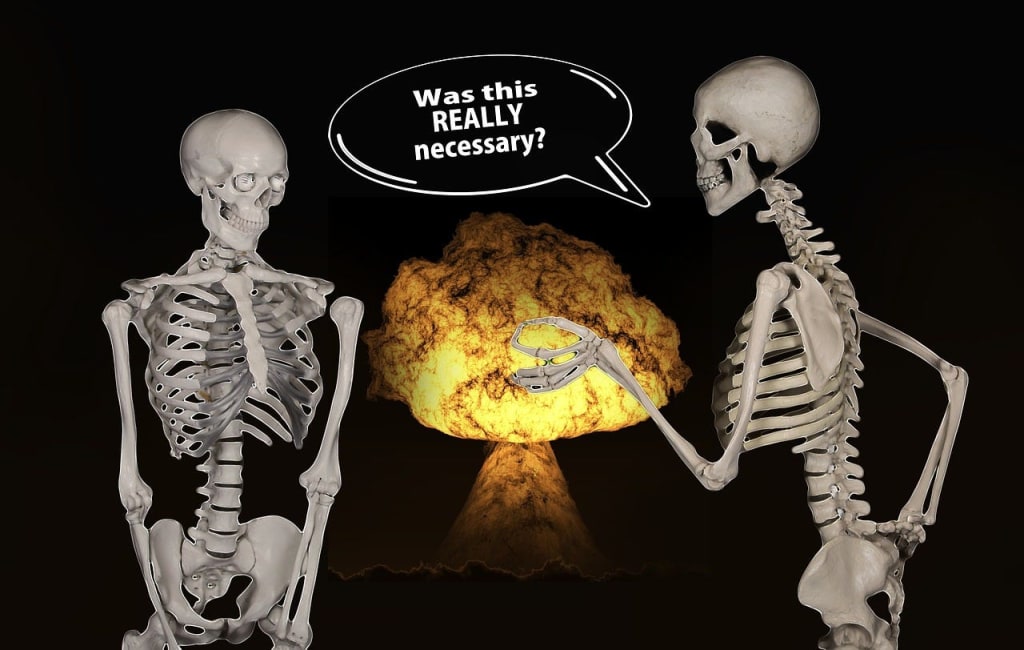
Welcome to the 1970s! It was the decade that brought us Betamax, the Rubik's Cube, Star Wars, the women's liberation movement, protests against the Vietnam War, and counterculture—all characterised by an era of both division and hope.
It is within this cultural climate that two very different forces would cross paths: a radical group that resorted to violence for change and an LGBTQ+ rights movement that sought equality through solidarity, activism, and justice.
The Weather Underground
Born from the anti-war organisation Students for a Democratic Society (SDS), the Weather Underground took activism to an extreme.
Their mission? To dismantle US imperialism and combat social injustices. And how were they going to do this?
Bombs.
Lots and lots of bombs.
The Weather Underground decided to go on a bombing spree and target well-known organisations throughout 1970. And to be fair, things were going well with their plan until March 6, 1970.
On that date, the group intended to bomb a pair of Detroit police buildings and a non-commissioned officers' ball in Fort Dix, New Jersey. But things didn't go as planned. The Detroit scheme was thwarted, as an FBI informant within the group alerted authorities about the bombs, and they were subsequently disabled on the morning of March 6.
However, the Weather Underground did get their explosion, as on the same day, their townhouse in Greenwich Village, New York, exploded when faulty explosives intended for Fort Dix detonated prematurely, killing three of the founding group members.
This deadly accident marked a significant milestone, as the Weather Underground publicly pledged to prevent fatal attacks.
Were they going to stop the bombings?
Of course not!
Nah, they decided that issuing a warning before blowing a building up was good enough to keep people safe. And to their credit, the Weather Underground followed through on their word when they targeted the New York City Police Headquarters in the summer of 1970. The group alerted authorities of the bomb six minutes before the explosion, and surprisingly, no one got hurt.
In the upcoming years, the group carried on with their continuous bombing campaign across the country, claiming responsibility for at least 25 attacks on federal buildings spanning San Francisco to Washington, D.C.
By late 1977, the Weather Underground evidently decided that bombings were so last season and instead turned their efforts toward political assassinations.
And who was their first target?
Californian politician John Briggs.
Who was John Briggs?
John Briggs entered the world on March 8, 1930, in the small town of Alpena, South Dakota, as the fourth of five children in a household steeped in piety.
Ironically, as someone who would grow up to promote traditional family values, John's upbringing was less than conventional. When John was five, Jessie, John's mother, divorced his father, a no-nonsense Southern Baptist minister, and whisked the family off to California. But that wasn't all; while juggling the demands of waitressing and the weight of motherhood, Jessie decided to place her children in foster care for a couple of years to get her finances back on track.
But worry not, for the nuclear family dynamic would be regained when Jessie later met and married Dan Zickler.

After high school, Briggs made his mark through military service. From 1947 to 1951, he served as a US Air Force pilot, witnessing action during the Korean War. Briggs then joined the United States Naval Reserve before eventually returning to civilian life.
However, we are most interested in his venture into the political arena.
In 1966, Briggs was elected to the California State Senate as a Republican and advocated for conservative policies during a time of societal upheaval and transformation. The passing decade did little to quell his stringent conservative views, and by 1978, he launched Proposition 6, fittingly known as the Briggs Initiative.
This ballot sought to ban openly gay and lesbian teachers, as well as public school employees who supported LGBTQ+ rights, from working in California's public schools.
Briggs promoted the initiative as a measure to "protect children," wrapping his discriminatory agenda in the guise of traditional family values.
Anti-Gay Crusades
It should be noted that the rhetoric and ideology behind Proposition 6 did not arise in a vacuum. The post-war decades, while a time of progress for many liberation movements, also saw spades of intense conservative backlash, particularly against the LGBTQ+ community.
"If gays are granted rights, next we'll have to give rights to prostitutes and to people who sleep with St. Bernards and to nail biters." - Anita Bryant
During the 1950s and 60s, gay venues such as bars and clubs were few and far between, yet frequently targeted by law enforcement. While many are familiar with the 1969 Stonewall Riots, many others preceded it.
In 1956, Hazel's Inn had a rising reputation as a gay-friendly motel and popular destination, attracting up to 500 people on weekends.
Unfortunately, San Mateo County law enforcement was also cognisant of its swift rise in popularity among the LGBTQ crowd. Naturally, they couldn't just let gay people be, so plainclothes cops patrolled the pub several times in January and February 1956 after being warned by neighbours of "unusual activity" at Hazel Inn.
The events reached a peak on the evening of February 19, 1956, when Sheriff Earl Whitmore orchestrated a raid on Hazel's Inn, involving a team of 35 individuals that comprised military police, California Highway Patrol officers, and Alcoholic Beverage Control agents.
"The purpose of the raid was to make it very clear to these people that we won't put up with this sort of thing." - Sheriff Whitmore
The authorities arrested 77 gay men and ten lesbians on moral charges, and the owner, Hazel Nickola, was arrested and booked for "permitting dancing on a Sunday and for operating a dance without a permit."

Skip forward a few years, and we arrive at Cooper Do-nuts, a modest 24-hour café in Los Angeles' Skid Row area, which was recognised as a safe haven for LGBTQ+ patrons, especially transgender people.
But even a haven was not immune to the LAPD and its active harassment, systemic discrimination, and unfettered arrests. Often during these raids, gay and transgender people were arrested if their looks did not match the gender marking on their ID, a discriminatory strategy thinly disguised as "law enforcement."
It all came to a head one May night in 1959 when two LAPD officers walked into the café and started asking customers for identification. Five people - two transgender women, two gay men, and a hustler - were picked out after their IDs were deemed "improper."
As the officers were trying to force the five into a police car, one of them fought back.
This act of resistance was all that was needed to light a spark.
The café erupted into a spontaneous uprising as a collective group of transgender women, lesbians, drag queens, and gay men surged in solidarity, pelting officers with coffee, pastries, and trash, forcing them to flee without their detainees.

By the 1970s, change was underfoot. The gay rights movement was gaining momentum post-Stonewall, but opposition also ramped up.
One of the most infamous figures in this period was Anita Bryant, a pop singer and former Miss Oklahoma beauty queen who became an unexpected yet prominent figure in the fight against equality.
Her Disney villain moment came in 1977 when Bryant spearheaded Miami-Dade County, Florida's "Save Our Children" campaign. This campaign was a direct response to the passage of an ordinance that prohibited employers, landlords, and places of public accommodation from discriminating based on sexual orientation.
Bryant and her supporters portrayed this ordinance as detrimental to familial integrity and the well-being of children. Her notorious assertion, "Homosexuals cannot reproduce, so they must recruit," emerged as a battle cry for those apprehensive about shifts in society.
Because God forbid a gay person moves in next door!

Unfortunately, her actions led to the overturning of the ordinance, which was a significant victory for those who opposed the rights of the gay community.
But it wasn't just Anita who hated the idea of gays living a peaceful life.
Long before Stonewall or the Save Our Children campaign, the federal government had already targeted LGBTQ+ people in what became known as the Lavender Scare.
In the early half of the 1940s, many men and women left behind the limits of rural or small-town life for the first time during World War II. Young people flooded into cities, where density and anonymity made the pursuit of same-sex relationships easier than before.
By the late 1940s and early 1950s, homosexuality was far from being accepted in American society, but there was a prevailing attitude that if people kept their sexuality to themselves, companies wouldn't pry. It was pretty much the original Don't Ask, Don't Tell.
Unfortunately, this apathy wouldn't last long. During the post-war years and the growth of the Soviet Union, the government had only one thing on its mind: loyalty.

And how exactly did gay people lack loyalty? Well, according to Senator Joseph McCarthy, there was a direct connection between homosexuality and the dreaded communism. With his full chest, McCarthy asserted that gay men were particularly vulnerable to being recruited by communists because of supposed moral deficiencies and psychological issues.
As such, the US federal government began treating LGBTQ+ individuals as threats to national security.
But what good is homophobia without an executive order? I hear you, and so did Eisenhower, who signed Executive Order 10450 on April 27, 1953. The decree specified that "any criminal, infamous, dishonest, immoral, or notoriously disgraceful conduct, habitual use of intoxicants to excess, drug addiction, sexual perversion" is a threat to national security. Of course, "sexual perversion" was code for homosexuality.
Federal workers were put under thorough inquiry under this executive order by their respective agencies. As you can imagine, these probes were incredibly intrusive, and nothing was beyond limits. If you were in their headlights, your friends, family, and acquaintances were also questioned and told to disclose information about their private lives. Even having acquaintances who were gay constituted cause for quick dismissal.
As a result, for over two decades, thousands of gay workers were fired or denied employment during the Lavender Scare, forcing the queer community further into the shadows.
Resistance and Revolt
Though intended as a tool for discrimination, Briggs' Proposition 6 catalysed unprecedented resistance within the LGBTQ+ community. It united not only queer activists but also political figures, the general public, and civil rights advocates.
Harvey Milk, one of the first openly gay elected officials in the United States, became a prominent opponent of Proposition 6. His powerful speeches and visibility helped mobilise public opinion, revealing the prejudice underlying the initiative. Under his leadership, a diverse coalition of grassroots organisations, educators, straight allies, parents, and students came together to counter the hateful rhetoric of the Briggs Initiative.
Then there was David Benjamin Mixner, a pioneering political strategist whose impact extended across two of the 20th century's most significant social and political movements: the continuous struggle for LGBTQ+ rights and the opposition to the Vietnam War.
Mixner, born to a southern New Jersey farmworker, dropped out of college in the 1960s to pursue a career as a full-time political organiser. During that decade, he appeared everywhere, attending the notorious Democratic National Convention in Chicago and playing essential roles in Eugene McCarthy's 1968 presidential campaign. He was one of four co-chairs of the countrywide Moratorium to End the War in Vietnam, which organised several large-scale demonstrations in the autumn of 1969.
By the 1970s, Mixner had relocated to Los Angeles, where he became an influential figure in the California political landscape. He contributed to initiatives for notable figures such as antiwar activist Tom Hayden and LGBTQ+ pioneer Harvey Milk.
Yet, despite Mixner's significant engagement in political activism during the 1960s and 1970s, he was a gay man in a political climate that demanded his silence.
In his biography, Stranger Among Friends, Mixner expressed that his homosexuality felt like a "terrible secret" that could hinder his aspirations for a career in public service during a time when most LGBTQ+ individuals in politics remained in the closet. Consequently, he focused on behind-the-scenes roles, where he excelled as a planner and coordinator.
However, as the support from California conservatives for Proposition 6 grew, Mixner seized the spotlight.
In a heartfelt fundraising letter to friends, including Bill and Hillary Clinton, Mixner embraced his identity, acknowledging that authentic leadership requires bravery and the courage to share one's truth. This deeply emotional trip went beyond a simple epiphany to become a potent message against injustice.

Mixner understood that in order to defeat Proposition 6, they needed to get the Republicans on their side.
And that's precisely what he did. In 1978, Mixner and his lover Peter Scott secured a meeting with Ronald Reagan, the governor of California at the time.
It probably comes as no surprise to hear that Reagan initially supported Proposition 6. But then he met Mixner, who presented Proposition 6 as an instance of governmental overreach and an infringement on personal privacy rather than presenting the discussion as an LGBTQ+ rights issue.
He also underlined possible unanticipated effects, including the chance of furious pupils blackmailing teachers. As Reagan got ready for his presidential campaign, he publicly opposed the bill as the debate surrounding Proposition 6 picked up speed. Reagan's unexpected stance shifted the public's viewpoint and ultimately led to the overwhelming defeat of Proposition 6 in the November 1978 election, signifying a notable triumph for LGBTQ+ rights.

And what about the Weather Underground? Well, the group's plot was thwarted mere hours before its execution.
On November 20th 1977, five Weather Underground members were arrested between Houston and Los Angeles. Their plan to bomb Briggs' office fell apart thanks to the FBI's undercover efforts.
About the Creator
Chelsea Rose
I never met a problem I couldn't make worst.
Keep reading
More stories from Chelsea Rose and writers in Pride and other communities.
The Cooper Do-nuts Riot: A Forgotten Chapter in Transgender History
When we think of pivotal moments in LGBTQ+ history, the Stonewall Riots of 1969 often take centre stage. But ten years prior, another act of resistance brought together the bravery and resilience of transgender individuals and their allies in a fight for visibility and equality.
By Chelsea Rose11 months ago in Pride
I was in a Toxic Relationship, with my Workplace
“You got that?” My ex yelled. His hands were balled into fists at his side. At six foot three, he towered over me. A normal person would have been afraid, but I looked up a video of George Lopez repeatedly saying, “I got this,” and showed it to him. I had grown used to this treatment, so much so that I didn’t blink when he ripped the phone from my hand and threw it across the room.
By Jade M.3 days ago in Confessions


Comments (1)
Keep it up.