
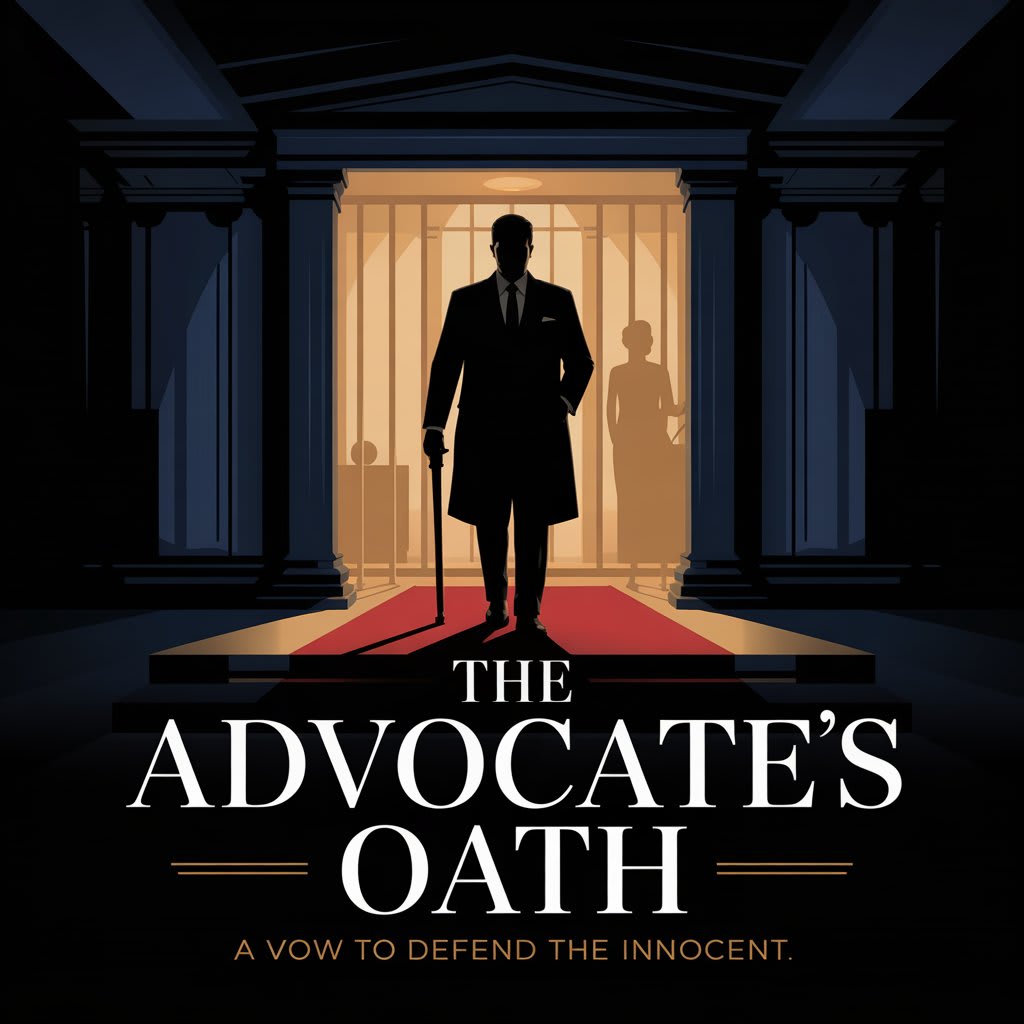
n the quiet corners of the justice system, there lived a man who still believed in truth—not the kind that sat on paper, bound in legal codes, but the kind that was felt deep in the soul. His name was Barrister Asim Raza, a seasoned advocate known not for his victories, but for the cases he chose to fight—ones others wouldn’t touch.
He believed justice wasn’t about statistics or reputation. It was about conscience.
It was a foggy morning in Lahore when a new case landed on his desk. A young woman, Mahira Gul, had been accused of poisoning her employer—a retired judge named Hammad Basra. She was his housemaid, barely educated, from a rural village in South Punjab. The prosecution painted her as a cunning woman who had poisoned the old man over a land dispute. The press fed on the scandal—"The Servant Who Bit the Hand That Fed Her."
But Asim saw what others ignored: Mahira had no criminal record, no history of theft, no signs of rebellion. When he visited her in prison, she sat quietly, her wrists bruised from handcuffs, her eyes hollow from sleepless nights.
“I didn’t kill him, sir,” she said, barely above a whisper. “He was kind to me. Like a father.”
Those were the words that broke him. He remembered his own daughter, now studying law abroad, and he thought of how easily power could silence the powerless.
Asim took the case.
The courtroom was a battlefield, and Asim knew he was fighting uphill. The prosecution brought forth a toxicology report, a neighbor’s testimony, and a so-called confession Mahira had signed—under pressure, without a lawyer present.
He could feel the judge’s skepticism. But Asim wasn’t there to impress anyone. He was there to uncover the truth.
Piece by piece, he dismantled the prosecution’s case.
The confession? Extracted after 13 hours of interrogation without legal counsel.
The neighbor’s testimony? He owed the deceased judge a large sum and stood to benefit from Mahira’s conviction by inheriting a portion of the estate.
The toxicology report? Real—but Asim found another crucial detail. Judge Hammad had a terminal illness, one he had kept private. His autopsy showed signs of advanced organ failure. The poison might have hastened his death, but it wasn’t what ended it.
Then came the twist.
Asim discovered the judge had recently changed his will to leave a piece of land to Mahira’s village school—a fact hidden from public record. That same land was now being claimed by the deceased judge’s distant nephew, who stood to gain everything if Mahira were removed from the picture.
The motive was never Mahira’s—it was theirs.
In his final address, Asim stood before the court, his voice unwavering.
“In this country, justice does not always wear the robe of fairness. It often favors the eloquent, the wealthy, and the connected. But law—true law—is blind to power. It listens only to truth. Today, you are not deciding the fate of a servant girl. You are deciding whether the poor in this country can still expect justice in the face of power. If she walks free, it is not just a victory for Mahira Gul—it is a victory for the idea that truth, even when whispered by the weak, is louder than a lie shouted by the strong.”
Silence followed.
The judge gave his verdict the next day: not guilty.
Mahira wept, not from joy but relief. Asim didn’t say much. He simply walked out of the courtroom and looked up at the sky.
Outside, the media tried to surround him, asking, “How does it feel to win again?”
But Asim didn’t answer. He never measured justice in wins.
That night, he sat in his study, thinking. He pulled out the oath he had written long ago, framed in his handwriting:
"I vow to defend not just the innocent, but the silenced. I vow to see truth where others see burden. And I vow never to confuse law with justice, nor victory with virtue."
He had lived by that oath. And tonight, like many nights before, he would sleep with a quiet heart.
Moral of the Story:
True justice demands courage, not just competence. To defend the innocent is not merely a legal duty—it is a moral calling. In a world where the voiceless are often ignored, it takes strength to speak for them, and integrity to keep believing in the truth.
About the Creator
The Pride Flag and the Diversion
For nearly a decade, the LGBTQIA Pride Flag rippled in the wind at Christopher Park, a kaleidoscope of color staked into the soil of America’s first national monument to LGBTQIA+ liberation. That flag came down this week. Federal officials, citing new guidance from the Trump Administration, silently lowered the rainbow flag from its pole across the street from the Stonewall Inn. The birthplace of the modern gay rights movement now flies only the United States flag.
By Tim Carmichael27 days ago in Pride
The Quiet Systems That Decide Whether People Trust You at Work
Shane Windmeyer is a North Carolina–based DEI strategist, speaker, and advisor who helps organizations build inclusive cultures grounded in trust, fairness, and measurable outcomes. And in almost every organization I’ve worked with, trust is not lost in one dramatic blow-up. It fades through patterns that repeat so often they start to feel normal.
By Shane Windmeyerabout 3 hours ago in Pride



Comments
There are no comments for this story
Be the first to respond and start the conversation.