
Taboo of Gay Signet Rings To Popular Heterosexual Piercings
How fashion and accesories shape identity in a changing world

This Article was Previously published on Medium.com and was boosted by the Medium Curation Team.
I notice many signals in everyday life. How are you dressed, or what kind of jewelry do you wear? What meaning lies behind the specific pieces of jewelry you choose? In this article, I want to look at some signals from the past.
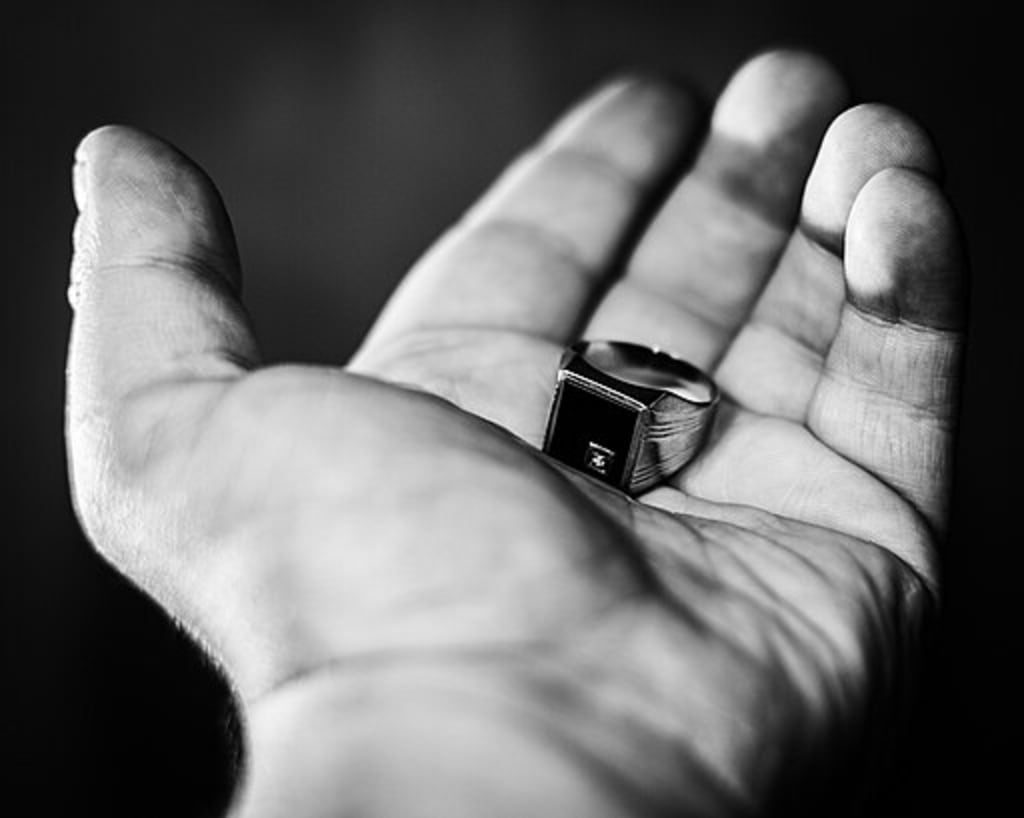
When I was a child in the 1970s, I often noticed that certain single men wore a specific ring. It was a gold ring with a black onyx inlay, a so-called signet ring. I didn’t think much more of this phenomenon.
My uncle wore such a ring. He always had it on when he visited. We children loved our uncle; he wasn’t like any other men we knew. He liked spending time with us kids. He would play with us, play ball, and give us gifts, even when it wasn’t our birthday or Christmas.
Suddenly, he stopped visiting. He lived far away, and no one in the family knew why he no longer came. He kept sporadic contact with my aunt a few years later, but we never saw him when we visited, even if he was spending the weekend at my aunt’s house.
We thought it was very strange that he would rather go out into the forest, which belonged to my aunt, chopping down trees, than come inside and be with us. No one ever talked about why.
I can think of different reasons for this. He might have become mentally ill and suffered from social anxiety. He could also have been homosexual, with a preference for younger men.
Maybe I should connect it with the ring, a signal that he was a single guy who didn’t want to be linked to a woman.
When my uncle died, I helped clear out his house. For the last many years of his life, he had kept in superb shape by cycling long distances every day, and much longer trips on weekends.
There were no pictures of him from the last years of his life. I remember him as a slightly burly guy with a cheeky mustache. Had I met him today, I would probably have hit on him. He was a handsome man. And with all that exercise in his later years, he must have been in amazing shape.
He kept a journal of his bike rides. But from the data he provided, I couldn’t determine if he sought out known places where men met to have sex with men. I suspect that might have been the case.
Maybe he had been caught in a sexual encounter with a young man around the time he stopped visiting us. It was illegal to have sexual contact with guys under 18 until 1976. He could have been given a sort of restraining order, barring him from being near or associating with anyone under 18. My aunt had one son who wasn’t yet 18 at the time, but she and my uncle lived quite isolated, deep in a forest. Maybe my uncle fled into the forest as soon as a car approached the property? I don’t know, and I’ll never find out. I’ve often felt sorry for him and his life in hiding.
Later in my life, I noticed that only older single men wore this type of ring. Generations after them didn't take over this signal.
I’ve often thought that maybe it was some kind of secret signal. “I’m single and wish to remain that way.” It was also respected. At family parties, for example, I often saw that these men weren’t invited to dance. They were allowed to sit and chat with the women, while the married men tended to gather and discuss business or whatever, usually accompanied by a cigar and a glass of alcohol. But the men with this ring were accepted and tolerated without further questioning.
There must have been a code, one I don’t know and that likely remained mostly unspoken.
Facepicture of the Author showing his right ear with ear ring:

When I became a young man, I got my right ear pierced and proudly wore a stud with a sparkling imitation diamond. It was my generation’s code to signal that I was gay. Straight men only wore an earring in the left ear!
I often encountered the question, “Are you gay?” from men. From women, the question was more like, “Do you suffer from headaches since you wear an earring in your right ear?” A very innocent way of prying. The woman asking this knew well that it meant something else and would immediately read the discomfort when I fumbled with an answer. I became really good at lying about this when I didn’t think it was any of their business. But it worked, and the number of women who tried to flirt with me was almost zero. However, I did occasionally receive advances from men, who may have been bisexual, picking up on the signal that I might be open to an adventure.
And of course, from other guys with an earring in their right ear — it was home ground where the signal was understood, saving a lot of anxiety about hitting on a man who wasn’t into men.
The right ear earring is still somewhat reserved for gay men today. But now I see that many gay men wear earrings in both ears, and many straight men do as well. The signal value no longer exists.
It used to be that straight men got tattoos, and gay men rarely did. But today, tattoos are absolutely in, and both groups of men get impressive ink. No signal value here.

Photo by Glib Albovsky on Unsplash
For a while, gay men led the way with nipple piercings. I had one too. The signal was that if you wore it in your left nipple, you were sexually active; in the right nipple, you were passive. Or you had both and were into a bit of everything. The “Prince Albert” piercing was especially unique, giving the wearer certain limitations.
But nipple piercings no longer hold a clear signal either, as many straight men now wear them too.
Certain groups of gay men were also pioneers in makeup and using exclusive skincare products. That has also crossed over into the straight male world. It’s become a fashion phenomenon, perhaps subtle makeup, but definitely high-quality skincare products have become a daily routine for many straight men.
Gay men were also first to adopt new colors and styles in fashion. At one point, you could easily spot a gay man because his clothing style was so extravagant. That, too, has rubbed off on straight men today. Fashion is no longer an indicator of signal value.
I often think about whether, in today’s world — at least in our Western world — it has become unnecessary to signal that you’re gay in such a subtle way, like when my uncle and many others in his generation wore signet rings, or the slightly more daring right-ear earring in my own case.
I still have my earring in my right ear. It’s now a less prominent silver hoop with a small glimmering stone. It’s just part of me and my identity.
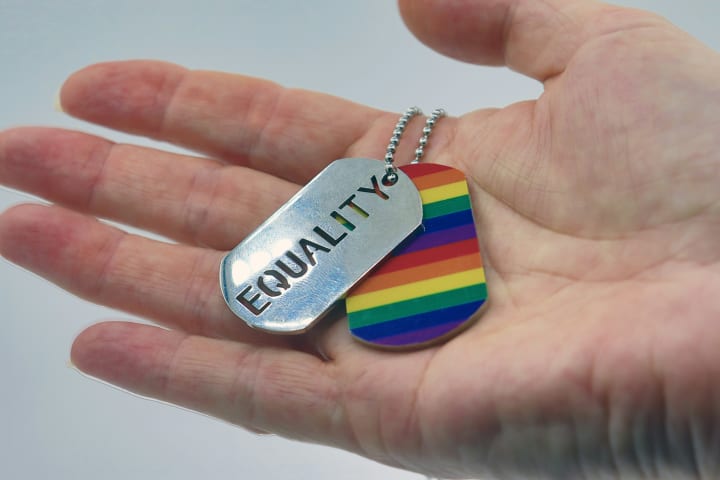
Photo by Michele Wales on Unsplash
Younger generations enjoy more freedom, and I notice that more people define themselves as bisexual, which has diminished the need for clear signals to define identity. I haven’t figured out whether there are still signals that make this clear, but I’m sure there are.
I think each generation has its way of expressing its affiliation with a group or “tribe.” In today’s gender-correct interactions, signals are even more downplayed. So much has become “allowed,” which once served as signals. I think it’s a good thing. Love between two people is love, regardless of whether you’re gay or straight. You are human and express your humanity in a mix of signals that used to be “reserved” for certain gender definitions.
About the Creator
Henrik Hageland
A poet, a writer of feelings and hope. A Dane and inhibitant of the Earth thinking about what is to come.
A good story told or invented. Human all the way through.
Want to know more? Visit Substack , my YouTube Channel or TikTok.
Keep reading
More stories from Henrik Hageland and writers in Pride and other communities.
“Friendship or Kindness”
The Court of Satan They were all five standing with their heads bowed. Satan’s disciples had captured them and brought them before the court of Satan. All five were confused, wondering what crime had led them to this dark place. The courtroom was silent, except for the occasional sinister laugh echoing from behind a black curtain.
By Sudais Zakwan5 days ago in Pride



Comments
There are no comments for this story
Be the first to respond and start the conversation.