
Pandora's Box
Is Opening Pandora's Box Always a Bad Idea? - Greek Mythology Explained


The myth of Pandora's Box is one of the most well-known tales from Greek mythology, often referenced as a cautionary tale about curiosity and unintended consequences. But is opening Pandora’s Box always a bad idea? To understand the true implications of this ancient legend, we need to explore its origins, the motivations behind Pandora's actions, and the deeper symbolic meaning behind the infamous box—or rather, jar.
The Origin of Pandora’s Box
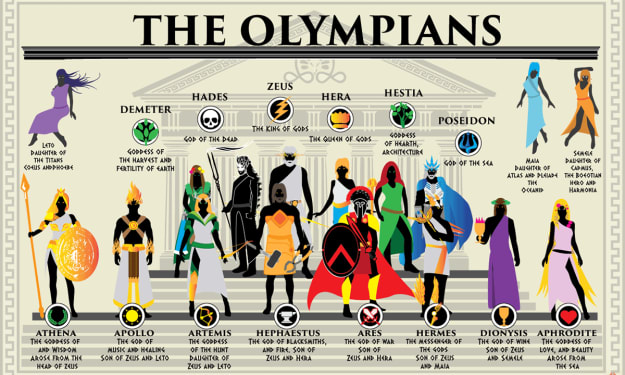
The story of Pandora originates from the ancient Greek poet Hesiod, who first introduced her in Theogony and later expanded on her tale in Works and Days. Pandora was crafted by Hephaestus on the orders of Zeus as a punishment for humanity, following Prometheus’ theft of fire. While Prometheus provided humanity with the gift of fire, an act of defiance against the gods, Zeus sought to retaliate by creating the first woman, Pandora, whose very existence would bring suffering to mankind.
Pandora was endowed with gifts from various gods: beauty from Aphrodite, wisdom from Athena, and cunning from Hermes. However, she was also given a mysterious jar—commonly mistranslated as a “box” due to an error attributed to 16th-century humanist Erasmus. This jar contained all the evils of the world, and Pandora was explicitly warned not to open it.
The Act of Opening the Jar
Driven by curiosity, Pandora eventually succumbed to temptation and opened the jar, releasing all manner of suffering—disease, sorrow, and despair—into the world. By the time she managed to close the lid, only one entity remained trapped inside: Hope.
This act of curiosity is often portrayed as a tragic mistake, painting Pandora as the catalyst for human suffering. However, an alternative interpretation suggests that Pandora’s actions were not purely driven by foolishness but by an inherent human trait: the desire to know and understand.
The Dual Nature of Pandora’s Box
The myth’s complexity lies in the duality of what Pandora released. While the evils of the world escaped, Hope remained within the jar. This detail implies that even in the darkest moments, humanity retains the capacity for optimism and resilience. The presence of Hope challenges the idea that opening Pandora’s Box was entirely negative.
Moreover, some versions of the myth suggest that Pandora acted out of compassion rather than mere curiosity. By releasing suffering, she allowed humanity to grow, adapt, and ultimately find meaning in overcoming adversity. In this sense, Pandora’s actions can be seen as an essential step in the evolution of human experience.
Modern Interpretations
In contemporary contexts, “opening Pandora’s Box” is often used to describe situations where a seemingly small action leads to unforeseen and uncontrollable consequences. However, this interpretation overlooks the potential for positive outcomes that arise from confronting difficult truths.
For instance, scientific breakthroughs often come with ethical dilemmas and unintended side effects. Yet, these advancements also lead to progress and innovation. Similarly, addressing social injustices or uncovering hidden truths can initially cause turmoil but ultimately pave the way for positive change.
Conclusion
Is opening Pandora’s Box always a bad idea? The myth’s enduring relevance suggests otherwise. While it serves as a warning against reckless curiosity, it also highlights the importance of hope and resilience in the face of adversity. By embracing the complexities of the human experience, we can better navigate the challenges that come with seeking knowledge and truth.
In the end, perhaps the true lesson of Pandora’s Box is that even when we confront the darkest aspects of existence, the hope that remains within allows us to persevere and grow.
About the Creator
Horace Wasland
Research analyst, writer & mystical healer. Exploring the edge where science meets mystery. From mystery/the mystical, to facts, news & psychology. Follow for weekly insights on all four and please leave a tip if you like what you read :)
Keep reading
More stories from Horace Wasland and writers in Pride and other communities.
Greek Gods Ranked
1. Zeus The king of the gods and ruler of Mount Olympus, Zeus commands the skies and wields the power of thunder and lightning. Known for his justice and authority, he ensures the balance of the cosmos and maintains order among both gods and mortals. His thunderbolt is a symbol of divine power and unyielding strength, making him the ultimate authority in the Greek pantheon.
By Horace Wasland12 months ago in Pride
The Pride Flag and the Diversion
For nearly a decade, the LGBTQIA Pride Flag rippled in the wind at Christopher Park, a kaleidoscope of color staked into the soil of America’s first national monument to LGBTQIA+ liberation. That flag came down this week. Federal officials, citing new guidance from the Trump Administration, silently lowered the rainbow flag from its pole across the street from the Stonewall Inn. The birthplace of the modern gay rights movement now flies only the United States flag.
By Tim Carmichael27 days ago in Pride



Comments
There are no comments for this story
Be the first to respond and start the conversation.