
Oliver "Billy" Sipple: The Man Who Saved The President
The tragic story of a reluctant gay hero


Oliver "Billy" Wellington Sipple was born in Detroit, Michigan, in 1941. He was born into a large family, with eight siblings and was raised by devoutly religious Baptist parents.
Growing up, Sipple's life was internally difficult. He struggled in school because of his dyslexia and also came to realise that he was gay at a young age, which would present a challenge for his religious parents. As such, Sipple decided to conceal his true self from his family.
Yet, from an early age, Sipple displayed a deep commitment to his country and a strong sense of responsibility, which ultimately led him to join the U.S. Marine Corps. As a Marine, Sipple demonstrated exceptional courage and unwavering commitment during his service in the Vietnam War, which resulted in him receiving multiple commendations for his actions.
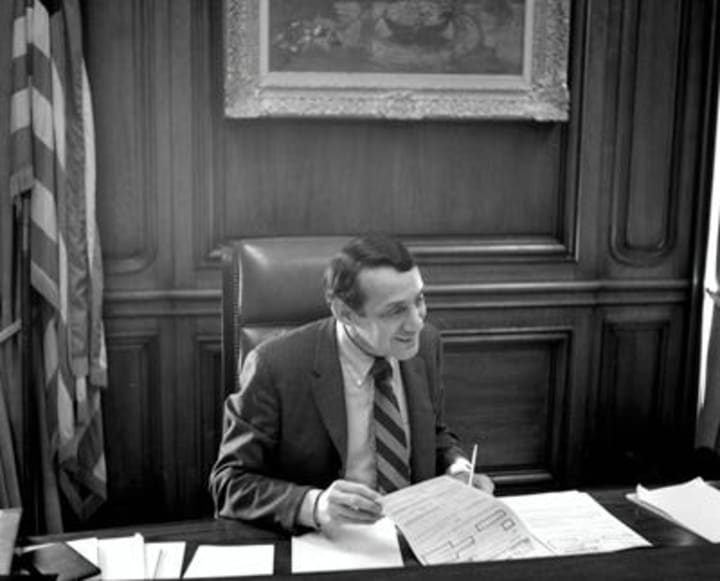
After his discharge from the Marines, Sipple moved to California and became deeply involved in the vibrant gay community of the Bay Area. He immersed himself in politics, becoming involved in the political campaign of Harvey Milk, who went on to make history as the first openly gay elected official in California.
The Life Saver
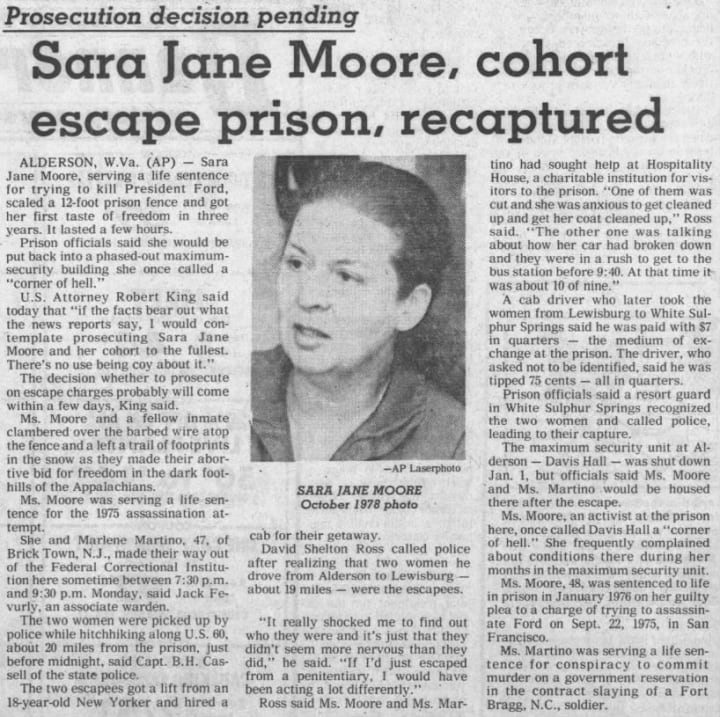
Sara Jane Moore's journey towards that fateful day began long before September 22nd, 1975. On February 15, 1930, Sarah was born in Charleston, West Virginia. She discovered her passion for acting during her high school years and aspired to make a name for herself in the world of film.
By the 1970s, the ex-aspiring actress' life was a fascinating blend of social engagement and moments of letdown. She had gone through five marriages and divorces and had four children. However, she effortlessly blended into the lively ambience of San Francisco, a city renowned for its dynamic past of social movements and political involvement.
Moore quickly found herself socialising with a wide range of individuals, including those with radical political views, former prisoners, and other members of San Francisco's alternative culture. During this period, Moore decided to work with the Federal Bureau of Investigation as an informant.
In the early months of 1974, Sarah, while working as an FBI informant, volunteered as an accountant for People in Need, a programme that provided free food to those in need. This programme was created by Randolph Hearst, a wealthy individual, in response to an agreement made to ensure the safe return of his daughter Patty, who was kidnapped by the Symbionese Liberation Army in 1974.
However, after Moore openly revealed that she was an FBI informant in interviews, the bureau decided to sever their connection with her, approximately four months before the assassination attempt. It seems that she had abandoned her disguise to solidify her reputation as a radical.
In 1975, Sarah Moore caught the attention of the Secret Service. However, after a thorough evaluation, agents concluded that she did not pose any danger to the president. Ironically, a day before the assassination attempt, law enforcement had actually apprehended her for being in possession of an illegal handgun.
Law enforcement, however, decided to let her go, but not before confiscating her items, which happened to include a .44-calibre revolver and 113 rounds of ammunition.
Now without a gun, Moore quickly acquired a .38 calibre revolver on the morning of the assassination attempt, but crucially, she was not aware that the sights were significantly misaligned.
Around 10:00 am, Sipple and Moore fatefully crossed paths outside San Francisco's St. Francis Hotel. They were among a crowd eagerly waiting to catch a glimpse of President Ford as he left the building.
When Ford made his appearance, Moore, who was standing just a few feet away from Sipple, drew her revolver and fired at the president. The shot came agonisingly close to hitting its mark, falling just six inches short.
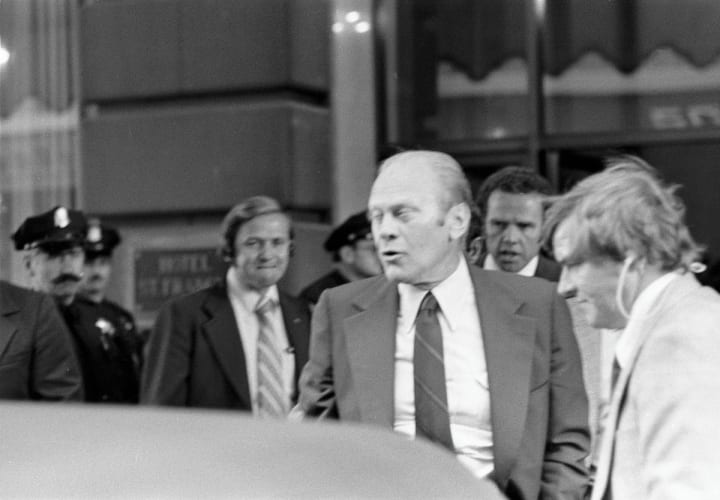
Moore attempted to fire a second shot, but Sipple quickly grabbed her arm, causing her second shot to widely miss its intended target and instead hit John Ludwig, a 42-year-old taxi driver. Ludwig, fortunately, would survive the shooting.
What was the reason behind her actions? Moore later expressed her conviction in the ideologies of the Symbionese Liberation Army and other radical left groups, believing that a violent revolution was necessary for America to overcome its challenges. She saw herself as a catalyst for this revolution through assassination.
Sipple's brave action most likely prevented harm and possible death to President Ford, and as a result, he was hailed as a hero on a national scale, given his military background as a Marine and a disabled veteran of the Vietnam War. However, it was an honour that would soon completely change his life.
Media Attention
Sipple, modest about his heroic act, remarked that anyone else in his position would have done the same. However, the media quickly painted him as a national hero, a role he never sought but found himself thrust into.
In a fairer universe, this might have been the end of Sipple's brief brush with fame, but fate had other plans.
Herb Caen, a columnist for the San Francisco Chronicle, was alerted to a significant piece of information: Oliver Sipple was gay. This information was shared by the gay rights activist Harvey Milk without Sipple's consent. Milk wanted to use Sipple's actions to highlight the bravery of a gay former Marine in a society that was deeply homophobic.
On September 24, 1975, two days after the assassination attempt, Caen outed Sipple in his column. The news sent shockwaves through the media, with the New York Times dubbing it a "homosexual controversy." Outraged, Sipple declared his private life irrelevant to his heroic act. "I feel that a person's worth is determined by how he or she responds to the world in which they live, not on how or what or with whom a private life is shared," he said. "These are my words and they're my feelings. This is all I have to say on this subject."
When the news reached Sipple's family back in Detroit, it shattered the fragile peace he had maintained. His mother, upon learning of his sexuality, severed all communication with him. His father's response was equally harsh, vowing to break the neck of anyone who mentioned him having a son named Oliver.
"It was partly the neighbours, partly the reporters, partly the papers," George Sipple, Oliver's brother says. "For two days they hassled her, wanting to know about her gay son and all this stuff. . . . And they didn't believe her when she said he was in the Marines." - George Sipple recounting the alleged harassment Ethel Sipple endured from neighbours.
Overwhelmed by a sense of betrayal and vulnerability, Sipple took legal action against seven newspapers, seeking a substantial sum of $15 million for the violation of his privacy. However, his quest for justice was thwarted when a judge dismissed the case. The mental scars from his combat experiences in Vietnam, combined with the public outing and subsequent familial rejection, drove Sipple into a destructive pattern of heavy drinking. His physical and mental health deteriorated rapidly, and he became a shadow of the man he once was.
Wayne Friday, a close friend, recounted how Sipple often lamented that people remembered him more for his sexual orientation than for his act of bravery. "I'd sit there in the bar with him, and I'd talk to him about it. 'Hey, man, it is what it is,'" Friday recalled. "But he was just - he was just - down to nothing. This thing happened, and it overcame him."
On February 2, 1989, Friday discovered 47-year-old, Sipple's lifeless body in his San Francisco apartment. A bottle of Jack Daniel's lay nearby, the television still flickering in the background. The coroner estimated that he had been dead for about ten days. He had died of pneumonia. Among his possessions was a framed letter from President Ford that read, "I want you to know how much I appreciated your selfless actions last Monday."
Oliver Sipple's story provides a poignant insight into the challenges faced by LGBTQ+ individuals during the 1970s. His courageous act and the subsequent revelation of his true self brought attention to the prevalent discrimination and prejudice of that time. Despite the obstacles he encountered, Sipple's courage continues to serve as a strong emblem of the significance of embracing change and societal progress.
About the Creator
Chelsea Rose
I never met a problem I couldn't make worst.
Keep reading
More stories from Chelsea Rose and writers in Pride and other communities.
Hottest in the Office
Dear Rafi, You’re very distracting to work around. For the first second I saw you the other day, I thought you were some type of executive. It took a moment to realize no, you were just the new guy, dressed up for the job he wants. Be still, my heart.
By Gabriel Shames2 days ago in Pride
The Quiet Systems That Decide Whether People Trust You at Work
Shane Windmeyer is a North Carolina–based DEI strategist, speaker, and advisor who helps organizations build inclusive cultures grounded in trust, fairness, and measurable outcomes. And in almost every organization I’ve worked with, trust is not lost in one dramatic blow-up. It fades through patterns that repeat so often they start to feel normal.
By Shane Windmeyer3 days ago in Pride



Comments (1)
OMG, this is such a sad true story! People are so horrid so much of the time. You laid this story out well and I couldn't stop reading; thanks for sharing. I knew of Harvey Milk but nothing about Sipple who saved Ford's life! I knew about Squeaky Fromm but not this other whacko!