
NASA’s SpaceX Crew-10 Mission Unveiled: Behind-the-Scenes of the ISS Science Expedition, Astronaut Insights, and Future Mars Preparation
Exclusive Breakdown of the Falcon 9 Launch, Crew-10’s Groundbreaking Research, and How This Mission Paves the Way for Lunar and Deep Space Exploration

Table of Contents
Introduction: Why Crew-10 Marks a New Era in Space Collaboration
Meet the Crew-10 Astronauts: Profiles, Backgrounds, and Roles
Commander Anne McClain: Veteran Leadership for a Critical Mission
Pilot Nichole Ayers: A Trailblazer’s First Flight
JAXA’s Takuya Onishi and Roscosmos’ Kirill Peskov: Strengthening Global Partnerships
Launch Day Breakdown: The Falcon 9’s Journey to Orbit
Countdown Timeline: From T-24 Hours to Liftoff
Engineering Marvel: Reusability of SpaceX’s Falcon 9 Rocket
Dragon Spacecraft Autonomy: How Docking Works Without Human Intervention
Mission Objectives: Science, Education, and Preparing for Mars
Material Flammability Tests: Designing Safer Spacecraft
ISS Ham Radio: Bridging Students and Astronauts
Lunar Navigation Experiments: A Backup for Artemis Missions
Life Aboard the ISS: Daily Routines, Challenges, and Innovations
Expanding the Crew: Transitioning from Expedition 72 to 73
Psychological and Physiological Studies: Insights for Deep Space
Behind the Scenes: NASA and SpaceX’s Commercial Crew Partnership
Janet Petro’s Vision: Strengthening America’s Space Economy
Mission Control Roles: SpaceX in California vs. NASA in Houston
The Return Journey: Splashdown Preparations and Handover Protocols
Future Implications: How Crew-10 Informs Artemis and Mars Missions
How to Follow the Mission: Live Coverage, Social Media, and Educational Resources
1. Introduction: Why Crew-10 Marks a New Era in Space Collaboration
NASA’s SpaceX Crew-10 mission represents a pivotal moment in modern space exploration. As the 10th crewed rotation under NASA’s Commercial Crew Program, this launch underscores the success of public-private partnerships in advancing human spaceflight. With an international crew—NASA astronauts Anne McClain and Nichole Ayers, JAXA’s Takuya Onishi, and Roscosmos’ Kirill Peskov—the mission highlights global cooperation amid geopolitical tensions. Deep dive explores the science, technology, and human stories behind Crew-10, revealing how it bridges low Earth orbit (LEO) operations with future lunar and Martian ambitions.
2. Meet the Crew-10 Astronauts: Profiles, Backgrounds, and Roles
Commander Anne McClain: Veteran Leadership for a Critical Mission
A former Army helicopter pilot and seasoned astronaut, McClain brings prior ISS experience (Expedition 58/59) to Crew-10. Her role as commander emphasizes leadership in overseeing experiments and ensuring crew safety.
Pilot Nichole Ayers: A Trailblazer’s First Flight
Selected in NASA’s 2021 class, Ayers is the youngest American woman to pilot a Crew Dragon. Her background in fighter aviation and STEM advocacy positions her as a role model for future astronauts.
JAXA’s Takuya Onishi and Roscosmos’ Kirill Peskov: Strengthening Global Partnerships
Onishi (Japan) and Peskov (Russia) symbolize enduring international collaboration. Despite terrestrial conflicts, their joint participation reflects the ISS’s legacy as a diplomacy-driven endeavor.
3. Launch Day Breakdown: The Falcon 9’s Journey to Orbit
The Falcon 9 rocket’s 7:03 p.m. EDT liftoff from Kennedy Space Center’s Launch Complex 39A was a spectacle of engineering precision. This section details:
Booster Reusability: How SpaceX’s first-stage landing saves costs.
Dragon’s Upgrades: Enhanced life support systems for extended missions.
5. Mission Objectives: Science, Education, and Preparing for Mars
Material Flammability Tests
Crew-10 will study how materials burn in microgravity, informing safer designs for future lunar habitats.
ISS Ham Radio: Inspiring the Next Generation
The crew will connect with students globally, testing a backup navigation system for Artemis moon missions.
9. Future Implications: How Crew-10 Informs Artemis and Mars Missions
Crew-10’s physiological studies and material tests directly feed into NASA’s Moon-to-Mars roadmap. By simulating long-duration missions, the crew’s findings will address challenges like radiation exposure and isolation.
10. How to Follow the Mission
Live Coverage: Tune into NASA+ for docking and hatch-opening events.
Social Media: Follow @AstroAnnimal (McClain) and @NicAyersNASA for real-time updates.
Educational Resources: Explore lesson plans at NASA.gov/commercialcrew.
About the Creator
Keep reading
More stories from bipul biswas and writers in Pride and other communities.
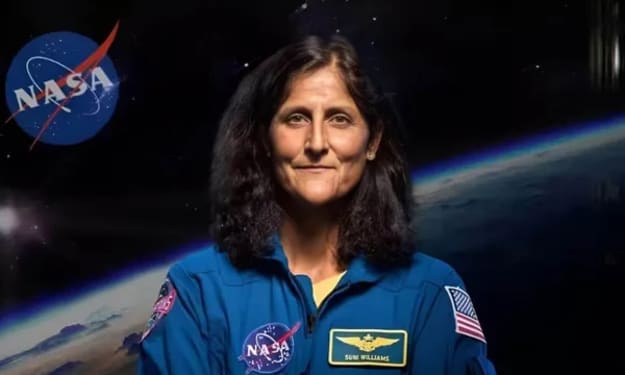
Sunita Williams Biography
Introduction: Who Is Sunita Williams? Sunita “Suni” Williams is not just a NASA astronaut; she’s a symbol of perseverance, innovation, and breaking barriers. Born to an Indian-American family in Euclid, Ohio, and raised in Needham, Massachusetts, Williams has carved her name into history as one of the most accomplished female astronauts. With 322 days in space, 50+ hours of spacewalks, and a pivotal role in Boeing’s first crewed Starliner mission (2024–2025), her journey is a masterclass in defying limits. This article uncovers her untold stories, from naval aviation to interstellar glory, and why her legacy matters in today’s space race.
By bipul biswas11 months ago in History
“Friendship or Kindness”
The Court of Satan They were all five standing with their heads bowed. Satan’s disciples had captured them and brought them before the court of Satan. All five were confused, wondering what crime had led them to this dark place. The courtroom was silent, except for the occasional sinister laugh echoing from behind a black curtain.
By Sudais Zakwan5 days ago in Pride



Comments
There are no comments for this story
Be the first to respond and start the conversation.