
My Teacher Hated Me Because I Was Muslim — No One Stopped Her
How silence in the classroom taught me more than the curriculum ever could.


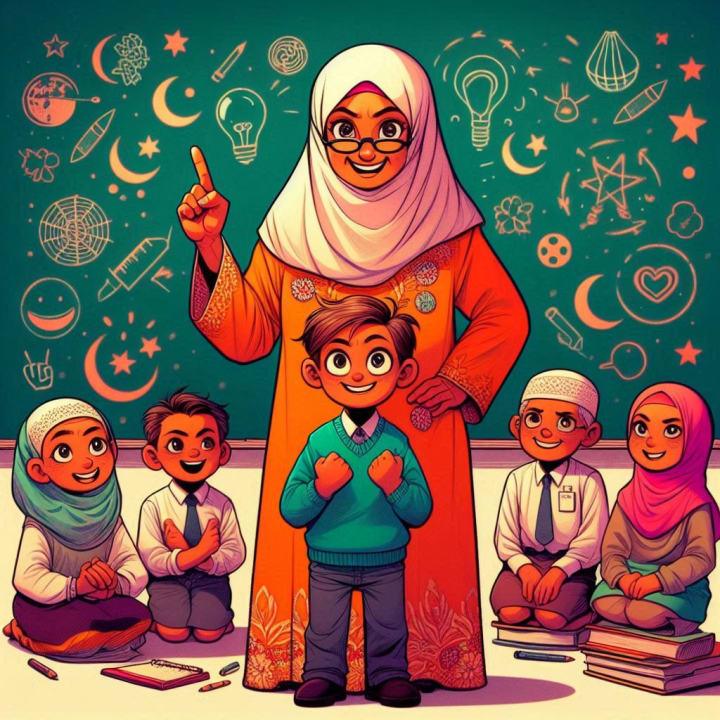
I didn’t expect middle school to be easy, but I also didn’t expect it to feel like something I had to survive.
It started on the very first day of seventh grade. I walked into my homeroom with my brand new backpack, freshly sharpened pencils, and a scarf wrapped around my head in a style I was proud of. It was light blue — my favorite color — and matched the shirt my mom ironed for me the night before.
I was excited. Nervous, but excited.
Then I met Mrs. D.
She stood at the front of the room in a blazer and heels, holding a clipboard and giving every student a quick once-over as they walked in. When she saw me, her eyes paused just a second longer. Her smile didn’t quite reach her eyes.
That was the first clue.
At first, I brushed it off. Maybe she was just serious. Maybe I was overthinking it. But little things kept happening. And it didn’t take long before I realized it wasn’t just my imagination.
When we had group discussions, she’d skip over me. When I raised my hand, she’d choose someone else — even if my hand was the only one up. When I spoke anyway, her responses were clipped, cold, dismissive.
Other students started to notice too.
“She never calls on you,” one of them whispered to me during lunch. “What’s her problem?”
I didn’t know how to explain it. I hadn’t done anything wrong. I was quiet. I turned in all my homework. I followed every rule. But it didn’t matter.
I was different.
I was Muslim.
One day in class, we were reading a passage about world cultures. The word “Islam” appeared in the text, and I felt a mixture of dread and curiosity. I always wanted to see myself reflected in lessons, but whenever we got close to anything related to my religion, it felt like walking into a trap.
Mrs. D cleared her throat and said, “Let’s talk about this. Islam. Anyone want to share what they know?”
No one moved.
I hesitated, then slowly raised my hand.
Her eyes landed on me, sharp and unwelcoming. “Not you,” she said flatly. “Let’s hear from someone else.”
The class was silent. Embarrassed, I lowered my hand and stared down at my desk.
That night, I went home and cried. Not just because I was humiliated, but because no one said anything. Not my classmates. Not the other teachers. Not the guidance counselor I eventually told.
Everyone stayed quiet.

Over time, her words became more pointed.
During a discussion on women’s rights in other countries, she said, “Some people don’t believe in freedom, especially when it comes to women.” Then she looked straight at me.
My cheeks burned. I wanted to speak. I wanted to tell her that my hijab was my choice — that I felt empowered by it, not oppressed. But I knew it wouldn’t matter. Not in that room. Not to her.
What hurt most wasn’t even her comments.
It was the silence.
The silence of the students who looked away.
The silence of the adults who heard my complaints but did nothing.
The silence that followed me home and made me question who I was and whether I really belonged.
Eventually, I stopped raising my hand.
I stopped trying.
In Mrs. D’s class, I made myself small. Invisible. I gave short answers. I sat in the back. I learned how to disappear.
But outside her classroom, I refused to let her win.
I found strength in other places — in books, in my faith, in friends who listened even when they didn’t fully understand. I leaned on my family, especially my mom, who told me, “Sometimes people fear what they don’t understand. But that doesn’t mean we stop being who we are.”
Her words reminded me that I wasn’t the problem.
Years later, I look back at that time with mixed emotions.
Sadness, yes — because a teacher who should have nurtured me instead made me feel ashamed of my identity.
Anger — because the system let her do it.
But also strength — because I came through it. And I’m still standing.
I wear my hijab with pride. I speak up when I see injustice. And I’ve promised myself that if I ever become a teacher, I will make sure no student ever feels the way I did.
Because every child deserves to feel safe. To feel seen. To feel like they belong.
Moral of the Story:
Discrimination doesn't always shout — sometimes it whispers through silence, subtle exclusions, and cold stares. But silence in the face of injustice is never neutral. If you're a witness, speak up. If you're a victim, hold on to your truth. Your identity is not a burden — it's a badge of strength. And you are never alone, even when the world tries to make you feel otherwise.

------------------------------
Thank you for reading...
Regards: Fazal Hadi
About the Creator
Fazal Hadi
Hello, I’m Fazal Hadi, a motivational storyteller who writes honest, human stories that inspire growth, hope, and inner strength.
Keep reading
More stories from Fazal Hadi and writers in Pride and other communities.
“Friendship or Kindness”
The Court of Satan They were all five standing with their heads bowed. Satan’s disciples had captured them and brought them before the court of Satan. All five were confused, wondering what crime had led them to this dark place. The courtroom was silent, except for the occasional sinister laugh echoing from behind a black curtain.
By Sudais Zakwan3 days ago in Pride


Comments
There are no comments for this story
Be the first to respond and start the conversation.