
Love and Identity is not Stationary
What would you say when the topic of love and identity in the 21st century came up versus what love and identity looked like in your parents' or grandparents' time?


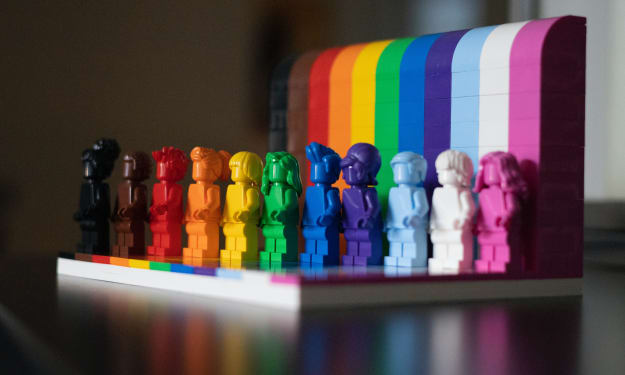
When something is stationary, it means that it does not move or change, but we need to learn to know that someone's sexuality or identity is not stationary, it can change and in most cases, it will change. Everything is always changing, which is good because years ago you couldn't talk about something much less someone who was part of LGBTQ+, but gradually things came to change. Now you can, but you can't just stop change when it gets to be too much and you don't understand it anymore, because when that happens people don't get the representation they need and deserve.
We say that this world is great and they love change, but when things change too much for them, they try to silence change. An example of this is in the 90s and early 2000s the only things talked about were Gay, Lesbian, or Transgender; and if you tried to say that you were something different from those then you were incorrect. Even now in 2022 if you try to come out and it differs from what or how someone thinks then you are incorrect and wrong. Now there are twenty-nine different sexualities and twenty different gender identities.
There are twenty-nine different sexualities and most people don't get represented because people feel like it's more of a burden to them to learn more and educate themselves and would rather tear down people who are something other than what they believe. The twenty-nine different sexualities are 1 - Abrosexual which describes someone whose sexuality is fluid or changeable. For example, one day they may identify as asexual, the next as lesbian, and the next as pansexual. Abrosexual people can fluctuate between all sexualities, or just a few. The timing between fluctuations can also vary. 2 - Androphilic / Androsexual which describes someone who is primarily attracted to masculinity, be this sexually, romantically, or aesthetically. These terms are useful for people who identify outside of the gender binary as unlike terms like gay or lesbian, they refer only to the presentation of the person someone is attracted to and not the person themselves. For example, both heterosexual women and homosexual men can be referred to as androphilic or androsexual. 3 - Aroace which is short for Aromantic Asexual, which means someone who experiences little or no romantic and sexual attraction. 4 - Aroflux is a person whose romantic orientation fluctuates but generally stays on the aromantic spectrum. They may feel strongly aromantic one day, and less so on another day. 5 - Aromantic refers to someone who does not experience romantic attraction. They may experience sexual and/or aesthetic attraction, but not romantic attraction. 6 - Asexual is someone who does not experience sexual attraction. They may experience romantic and/or aesthetic attraction, but not sexual attraction. 7 - Bisexual is someone who is attracted to more than one gender. 8 - Demisexual is someone who only experiences sexual attraction to someone once they have created a romantic or platonic relationship with them. 9 - Demiromantic is someone who does not experience romantic attraction until they have formed a strong connection with a partner. 10 - Finsexual is the exclusive attraction to those who are feminine in nature (FIN). This means finsexual people are attracted to women, feminine aligned and/or feminine presenting non-binary people, and potentially feminine men. 11 - Gay is someone who is attracted to the same gender as themselves. 12 - Gay Male / Vincian is a term used to describe gay men or men-aligned people. Often used as the masculine equivalent of lesbian. 13 - Greysexual are people who experience limited sexual attraction. They experience sexual attraction very rarely, or with very low intensity. Also known as gray-ace. 14 - Gynephilic / Gynesexual is someone who is primarily romantically, sexually, or aesthetically attracted to femininity. 15 - Lesbian is most often used to refer to women who are solely attracted to other women however some non-binary people can also identify as lesbian. 16 - Lithosexual is a person who may experience sexual attraction but does not want it reciprocated. Also known as Akoisexual. 17 - Lithoromantic is A person who may experience romantic attraction but does not want it reciprocated. Also known as Akoiromantic. 18 - Minsexual is the exclusive attraction to those who are masculine in nature (MIN). This can include men, masculine aligned and/or masculine-presenting non-binary people, and potentially masculine women. 19 - Multisexual is an umbrella term for any form of attraction to more than one gender. Also known as Plurisexuality. 20 - Neptunic is the attraction to women, feminine non-binary people, and neutral non-binary people. Can also be described as an attraction to all except men and/or masculine-aligned non-binary people. 21 - Ninsexual is the exclusive attraction to those who are non-binary in nature (NIN). This includes people who are non-binary, neutrois, androgyne, agender, and anyone whose gender or presentation is androgynous. 22 - Omnisexual is a person who is attracted to all genders or any gender, while still having a preference. 23 - Pansexual is someone who is attracted to all genders, the pre-fix 'pan' meaning 'all' in Latin. Many Pansexual people also describe themselves as being attracted to others based on their personality, not gender. 24 - Polyamorous is someone who is, or desires to be in, a consensual relationship with multiple partners. Polyamory is the opposite of monogamy. 25 - Polysexual is someone who is attracted to multiple genders, but not all genders. 26 - Queer is an umbrella term for someone whose sexuality and/or gender is not heterosexual, cisgender, and/or allosexual. Queer has been used as a term of abuse against the LGBTQ+ community but is now often used by members of the LGBTQ+ who have reclaimed it. 27 - Sapphic is a woman or the woman-aligned person who is attracted to other women or woman-aligned people. Also known as a woman-loving woman (WLW). 28 - Saturnic is the attraction to androgynous-aligned non-binary people. Mostly used by non-binary people to describe their attraction without relying on the gender binary. 29 - Uranic is the attraction to men, masculine non-binary people, and neutral non-binary people. Can also be described as an attraction to all except women and/or feminine-aligned non-binary people.
There are twenty different gender identities and most people don't get represented because people feel like it's more of a burden to them to learn more and educate themselves and would rather tear down people who are something other than what they believe. The twenty different gender identities are 1 - Intersex is someone who is born with a variation of sex characteristics that do not fit the typical male and female. These variations can be chromosomes, gonads, sex hormones, or genitals. Some people may be identified as intersex from birth, others may find out later in life, and some people may never learn that they are intersex. 2 - Cisgender is a term for people whose gender identity fits with the sex they were assigned at birth. Cisgender can therefore be used to describe people who are not transgender. 3 - Transgender is someone whose gender identity does not match the sex they were assigned at birth. Some trans people transition and change their name, are prescribed hormones, and have surgery to align their bodies with their gender identity. Some trans people may only do some of those things, whereas other trans people may not transition at all. A trans person's identity is not determined by how, or if, they transition. 4 - Non-Binary is someone who does not identify with the binary genders of male and female. Non-binary is often used as an umbrella term for someone who does not fit the gender binary. Other terms such as ‘agender’ and ‘genderqueer’ may come under the non-binary umbrella but are also terms in their own right. 5 - Genderfluid is someone whose gender is not fixed but can move fluidly along the spectrum from masculinity to femininity. Their gender may fluctuate throughout the day, over weeks or months, or depending on their environment. 6 - Genderqueer is a term used by those who identify outside of the binary genders of male and female. Genderqueer can be used as an umbrella term for people whose gender expression and/or identity rejects the gender binary. 7 - Greygender / Graygender is someone who is ambivalent about their gender and who usually identifies outside of the gender binary. Greygender people are not entirely without a gender identity, they may just not be invested in the concept of gender and therefore feel less of an inclination to express it. 8 - Genderflux is someone whose gender varies in intensity over time. Genderflux can be seen as a form of gender fluidity and genderflux people may also identify as transgender, genderqueer, or non-binary. 9 - Boyflux is someone who mostly identifies as male but also experiences fluctuation in their gender identity. For example, sometimes they may feel strongly masculine and other times less so. Other terms for boyflux include guyflux and manflux. 10 - Girlflux is someone who mostly identifies as female but whose gender intensity fluctuates. Sometimes they may feel strongly feminine and other times less so. Girlflux can also be referred to as womanflux. 11 - Demigender is someone who experiences only a partial connection to a specific gender identity. Many demigender people also consider themselves to be non-binary. 12 - Demigirl is someone who partially identifies as a woman or girl, but not wholly. They may also identify as non-binary, genderqueer, or transgender. 13 - Demiboy is someone who partially, but not wholly, identifies as a man or boy. They may identify as non-binary, genderqueer, or transgender. 14 - Demiandrogyne is someone whose gender identity partially connects to being androgynous. A demi-androgynous person may also identify as non-binary, genderqueer, or transgender. 15 - Bigender is someone who identifies as two distinct genders. They may identify as both genders at once, or they may switch between the two. 16 - Agender is a person who identifies as not having a gender identity. Some agender people may identify as non-binary, whereas others may identify as gender lacking, gender neutral, or as not having a gender at all. 17 - Neutrois is a non-binary gender identity that is associated with having a neutral or null gender. It is an umbrella term, with each person experiencing neutrois differently. 18 - Androgyne is a person who identifies as simultaneously male and female or in between male and female. Androgyne is an identity under the non-binary umbrella. 19 - Trigender is someone who experiences three distinct gender identities, either simultaneously, or moving fluidly between them. The three genders can be both binary or non-binary and trigender people can also identify as transgender, non-binary, or multigender. 20 - Metagender has had many varying definitions and was initially used as a technical term for something being outside of or transcending the gender binary. It is currently used to refer to someone who does not identify with the gender they were assigned at birth but who also does not identify as transgender.
With the percentage of people who are part of LGBTQ pride being at the highest it's been at 10% of the population is part of pride, we can't just sit around and be quiet. We can't silence change, we have to be a part of the change, educate yourselves and be open about it because whether some people like it or not, the world is always changing and we can't just sit and silence it because then no one gets represented and it hurts everyone in the process.
About the Creator
Gracie Keener
I'm an aspiring writer, photographer, and LGBTQ+ activist
If you want to change the world, pick up your pen and write. - Martin Luther
Keep reading
More stories from writers in Pride and other communities.
Review of 'Man on the Run'
My wife and I saw Man on the Run, a nearly 2-hour documentary on Amazon Prime, about Wings, Paul McCartney's group that flew around the world from shortly after The Beatles broke up in early 1970 to shortly after John Lennon was murdered at the end of 1980, making a Beatles reunion forever impossible.
By Paul Levinson7 days ago in Beat



Comments
There are no comments for this story
Be the first to respond and start the conversation.