
LoC (Lion of Control) Victory’s
Diplomacy and Confidence-building Measures after the Kargil War: Resolving the Kashmir Dispute.


LoC (Lion of Control) Victory’s
• The Kargil War of 1999 was a conflict between India and Pakistan that took place in the Kargil district of the Indian-administered state of Jammu and Kashmir. The war began in May 1999 and ended in July of the same year, resulting in an Indian victory.
• The conflict was triggered by the infiltration of Pakistani soldiers and Kashmiri militants into Indian territory, with the aim of severing the link between Kashmir and the rest of India. Pakistan's aim was to seize strategic high points on the Indian side of the Line of Control, which would give them an advantage in any future negotiations on the Kashmir dispute.
• The conflict between India and Pakistan during the Kargil War was triggered by the infiltration of Pakistani soldiers and Kashmiri militants into Indian territory. The infiltrators were aiming to sever the link between Kashmir and the rest of India by occupying strategic high points on the Indian side of the Line of Control (LoC).
• The LoC is a de facto border that divides the Indian-administered Kashmir and Pakistan-administered Kashmir. The conflict in the region dates back to the partition of India and Pakistan in 1947, which led to the creation of the two countries and the formation of the Kashmir dispute.
• Pakistan has always maintained that the Kashmiri people have the right to self-determination, and have supported the cause of Kashmiri separatists. India, on the other hand, claims that Kashmir is an integral part of its territory, and any movement for independence or self-determination is viewed as a threat to its national security.
• In the context of the Kargil War, Pakistan's aim was to seize strategic high points on the Indian side of the LoC, which would give them an advantage in any future negotiations on the Kashmir dispute. By occupying these high points, Pakistan would be able to control the strategic heights, which would make it easier for them to launch attacks on the Indian side of the border.
• The infiltrators were a mix of Pakistani soldiers and Kashmiri militants, who had crossed over to the Indian side of the LoC in disguise. They had taken control of several strategic high points, including Tiger Hill, Tololing, and Point 5353, which were located in the Drass, Kargil, and Batalik sectors of the LoC.
• India's response to the infiltration was initially limited to a defensive operation to drive out the infiltrators, without escalating the situation. However, as the infiltration continued and the scale of the operation became apparent, India launched a full-scale offensive to regain control of the occupied high points.
• The Kargil War was fought on treacherous terrain, with both sides using heavy artillery and air support. The conflict was marked by intense fighting, with both sides suffering significant casualties. Despite the initial setbacks, India's military strength and strategic planning eventually turned the tide of the war.
• The conflict in the Kargil War was triggered by the infiltration of Pakistani soldiers and Kashmiri militants into Indian territory. The aim was to seize strategic high points on the Indian side of the LoC, which would give Pakistan an advantage in any future negotiations on the Kashmir dispute. The war was fought on difficult terrain, with both sides suffering significant losses, and India eventually emerged victorious. The Kargil War highlighted the ongoing tensions between India and Pakistan over the Kashmir dispute, and the need for a permanent solution to the conflict.
• India responded with Operation Vijay, a military operation that involved ground forces, air support, and artillery. The Indian army made significant gains in the early days of the war, but faced difficulties due to the difficult terrain and the presence of well-entrenched Pakistani forces.
• However, the Indian army persevered and slowly regained control of the strategic high points. The Indian Air Force played a significant role in the war, providing air support to the ground troops and disrupting Pakistani supply lines.
• Despite the initial setback, India's military strength and strategic planning eventually turned the tide of the war. The Indian army achieved a significant victory in the war, and the Pakistani forces were forced to retreat back to their side of the Line of Control.
• The victory was a significant moment in India's military history, showcasing the country's ability to defend itself against external threats. The Kargil War also had significant geopolitical implications, with both India and Pakistan coming under international scrutiny for their actions during the conflict.
• India's success in the war was due to a number of factors, including superior military strength, strategic planning, and the dedication and bravery of its soldiers. The Indian army was able to adapt to the difficult terrain and overcome the challenges posed by the Pakistani forces.
• The Kargil War also highlighted the importance of diplomatic efforts in resolving conflicts between neighboring countries. After the war, both India and Pakistan engaged in a series of talks aimed at resolving the Kashmir dispute, although a permanent solution has yet to be found.
• The Kargil War, which was fought between India and Pakistan in 1999, highlighted the importance of diplomatic efforts in resolving conflicts between neighboring countries. The war demonstrated that military force alone cannot solve complex geopolitical issues and that a diplomatic approach is necessary to find a lasting solution.
• After the Kargil War, both India and Pakistan engaged in a series of talks aimed at resolving the Kashmir dispute. In July 1999, just a few weeks after the end of the war, Indian Prime Minister Atal Bihari Vajpayee and Pakistani Prime Minister Nawaz Sharif met in the city of Lahore for a historic summit aimed at reducing tensions between the two countries. The summit resulted in the Lahore Declaration, which called for increased trade and cultural exchanges, as well as a commitment to resolve the Kashmir dispute through dialogue.
• However, the peace process was short-lived. In October 1999, a military coup in Pakistan ousted Sharif from power, and the peace talks were suspended. The situation worsened in 2001, when a terrorist attack on the Indian Parliament, which India blamed on Pakistan-based militant groups, led to a military buildup on both sides of the border.
• Despite the setbacks, efforts to resolve the Kashmir dispute continued. In 2004, India and Pakistan resumed peace talks, which resulted in a number of confidence-building measures, such as the opening of cross-border trade and the resumption of bus services between the two countries. In 2006, the two countries launched a joint mechanism to monitor and investigate incidents along the LoC, which aimed to reduce tensions and prevent future conflicts.
• However, a permanent solution to the Kashmir dispute has yet to be found. The main stumbling block remains the issue of sovereignty over the region, with India maintaining that Kashmir is an integral part of its territory and Pakistan insisting that the Kashmir people have the right to self-determination. The issue is further complicated by the involvement of China, which controls a portion of the region.
• In conclusion, the Kargil War highlighted the importance of diplomatic efforts in resolving conflicts between neighboring countries. Although the war resulted in a temporary setback in the peace process between India and Pakistan, both countries resumed talks after the conflict and engaged in confidence-building measures aimed at reducing tensions. However, a permanent solution to the Kashmir dispute has yet to be found, and the issue remains a significant source of tension between India and Pakistan.
• The victory of the Indian army in the Kargil War of 1999 was a significant moment in India's military history, showcasing the country's ability to defend itself against external threats. The conflict also had important geopolitical implications, highlighting the importance of diplomatic efforts in resolving conflicts between neighboring countries.
Important topics:
1. Causes of the Kargil War: The infiltration of Pakistani soldiers and militants into Indian territory, and the strategic importance of the high points on the Indian side of the Line of Control.
2. Military strategies and tactics employed by India and Pakistan during the Kargil War, including ground forces, air support, and artillery.
3. The role of the Indian Air Force in the Kargil War, including its air support to the ground troops and disruption of Pakistani supply lines.
4. The challenges posed by the difficult terrain and well-entrenched Pakistani forces, and how the Indian army was able to overcome these obstacles.
5. The impact of the Kargil War on India's military history, including its ability to defend itself against external threats.
6. The geopolitical implications of the Kargil War, including the international scrutiny faced by both India and Pakistan for their actions during the conflict.
7. The importance of diplomatic efforts in resolving conflicts between neighboring countries, and the talks between India and Pakistan after the Kargil War aimed at resolving the Kashmir dispute.
8. The dedication and bravery of the Indian soldiers who fought in the Kargil War, and their contributions to India's victory in the conflict.
9. The long-term impact of the Kargil War on India-Pakistan relations, and the ongoing tensions between the two countries over the Kashmir dispute.
10. Lessons learned from the Kargil War, including the importance of strategic planning, military strength, and adaptation to challenging terrain and circumstances.
About the Creator
Keep reading
More stories from SM Vagabond and writers in Pride and other communities.
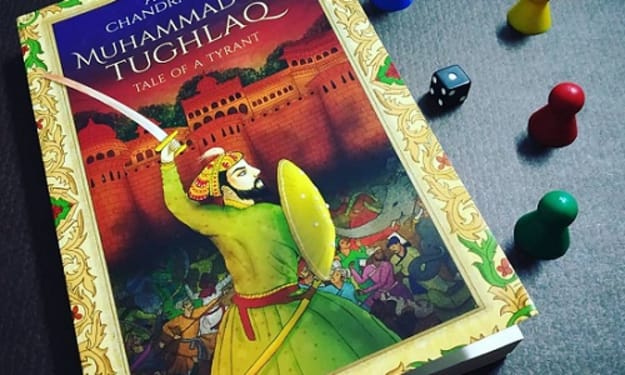
Biography of Muhammad bin Thulaqh
Muhammad bin Thulaqh, also known as Muhammad bin Thulaitha Al-Qudaihi, was a prominent Islamic scholar, jurist, and Sufi mystic who lived in the 13th century CE. He was born in Qudaih, a small town in the eastern region of Saudi Arabia, and spent most of his life in the Arabian Peninsula, where he became known for his teachings and writings on Islamic law, Sufism, and spirituality.
By SM Vagabond3 years ago in Pride



Comments
There are no comments for this story
Be the first to respond and start the conversation.