
Juneteenth: A Celebration of Freedom, Reflection, and the Ongoing Struggle for Justice
Honoring the End of Slavery and the Endurance of the African American Spirit

Introduction
Juneteenth, celebrated annually on June 19, is a momentous occasion in the United States that commemorates the end of slavery — one of the darkest chapters in American history. Also known as Freedom Day, Emancipation Day, Jubilee Day, or Black Independence Day, Juneteenth marks the day in 1865 when Union soldiers arrived in Galveston, Texas, and announced to the last remaining enslaved African Americans that they were free — more than two years after President Abraham Lincoln’s Emancipation Proclamation had legally freed them.
Today, Juneteenth has evolved from a regional celebration in Texas to a nationally recognized holiday that celebrates African American resilience, honors historical truth, and promotes a continued commitment to racial justice, equality, and healing.
The Historical Background
To fully understand the importance of Juneteenth, we must revisit the events leading up to it. On January 1, 1863, President Lincoln issued the Emancipation Proclamation, declaring that all enslaved people in Confederate states were to be freed. However, the proclamation was not immediately enforced across the entire country — particularly in states like Texas, where slavery had continued under minimal federal oversight.
It wasn’t until June 19, 1865 — over 900 days later — that Union General Gordon Granger arrived in Galveston with approximately 2,000 federal troops to enforce the Emancipation Proclamation. Upon arrival, he issued General Order No. 3, which stated:
"The people of Texas are informed that, in accordance with a proclamation from the Executive of the United States, all slaves are free."
This marked the official end of slavery in the United States, although the social, economic, and cultural legacies of slavery would linger for generations.
The Birth of Juneteenth Traditions
The first Juneteenth celebrations began in Texas in 1866, just one year after the announcement. Formerly enslaved people and their families gathered to honor their freedom with community events, church services, music, food, and storytelling. These gatherings served not only as celebrations but as acts of cultural preservation, education, and unity.
Over time, Juneteenth celebrations spread across the country as African Americans migrated north and west, bringing their traditions with them. Despite segregation, economic hardship, and systemic racism, African Americans continued to hold Juneteenth gatherings as a form of resistance, joy, and collective memory.
Symbolism and Cultural Significance
Juneteenth is not just a historical anniversary; it is a powerful symbol of freedom delayed but not denied. It reminds us of the long struggle for Black liberation — from the horrors of slavery to the victories of the Civil Rights Movement, and the ongoing fight against systemic racism.
The colors and foods associated with Juneteenth hold deep symbolic meaning. Red foods like barbecue, watermelon, red velvet cake, and strawberry soda are commonly served, symbolizing the bloodshed of enslaved ancestors and the resilience of the African American community.
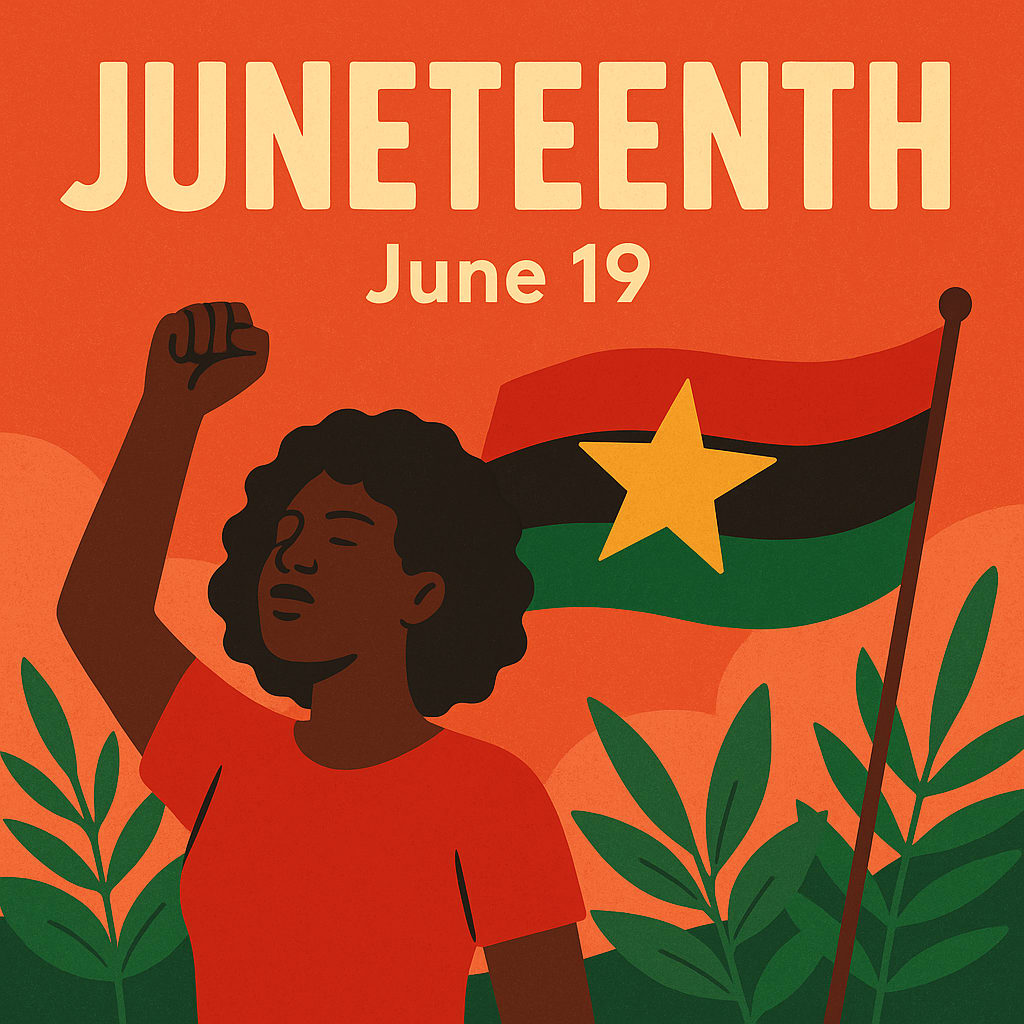
The Juneteenth flag, featuring a bursting star surrounded by an arc on a blue and red field, represents a new beginning and hope for Black Americans throughout the United States.
Recognition as a Federal Holiday
After decades of advocacy by African American communities, educators, and activists, Juneteenth was finally recognized as a federal holiday on June 17, 2021, when President Joe Biden signed the Juneteenth National Independence Day Act into law. This official designation was not only a historic milestone but also a reflection of America’s growing recognition of Black history as central to the American story.
The legislation came during a time of national reckoning with racial injustice, especially following the tragic deaths of George Floyd, Breonna Taylor, and others. Making Juneteenth a national holiday was seen by many as a step forward in acknowledging the past and working toward a more equitable future.
Modern-Day Observances and Educational Importance
Today, Juneteenth is celebrated across the country in a variety of ways — from parades, freedom walks, and educational forums to music festivals, cookouts, and spiritual ceremonies. Many institutions, corporations, and schools use Juneteenth as a time to reflect on history, promote conversations about race and inclusion, and commit to actionable change.
In addition to celebration, Juneteenth is a powerful teaching moment. It highlights the gaps between freedom in law and freedom in reality, and it prompts conversations about slavery’s lasting effects on modern society — including wealth inequality, mass incarceration, and educational disparities.
For younger generations, Juneteenth provides a vital opportunity to learn about African American contributions to science, politics, art, and culture — achievements often overlooked in traditional education.
The Continued Fight for Equality
While Juneteenth celebrates a monumental victory, it also reminds us that the fight for equality is far from over. The legacy of slavery is still visible in many facets of American life. Juneteenth encourages reflection on where the nation has been, but more importantly, where it must go.
It is a call to action — to fight for voting rights, economic justice, police reform, and educational equity. It is an invitation for all Americans to stand in solidarity against racism, and to actively build a future where freedom and justice are real for everyone.
Conclusion
Juneteenth is more than a date on the calendar — it is a powerful celebration of freedom, history, identity, and hope. It honors the strength of those who endured the inhumanity of slavery and laid the foundation for generations to rise. It is a time for joy, reflection, education, and action.
As the nation continues to reckon with its past and strives toward a fairer future, Juneteenth stands as a beacon — reminding us that while freedom was delayed, it must never again be denied.
Let Juneteenth not only be a celebration of the past but a commitment to a just and inclusive tomorrow.
About the Creator
Keep reading
More stories from Dot Stories and writers in Pride and other communities.
Anne Burrell : The Flame-Haired Chef Who Changed the Culinary World
Anne Burrell is a name that commands attention in the culinary world — not just for her unmistakable wild blonde hair and dynamic personality, but for her unwavering passion for food and teaching. With a career that spans high-end kitchens, culinary classrooms, and popular television shows, Burrell has become a symbol of energy, excellence, and authenticity in the world of cooking.
By Dot Stories9 months ago in Pride
Hottest in the Office
Dear Rafi, You’re very distracting to work around. For the first second I saw you the other day, I thought you were some type of executive. It took a moment to realize no, you were just the new guy, dressed up for the job he wants. Be still, my heart.
By Gabriel Shames2 days ago in Pride
Rani Vanouska T. Modely : Building a Humanitarian Vision Through Football
In an era defined by rapid visibility and short attention cycles, few figures attempt to build projects designed to outlast their own presence. Rani Vanouska T. Modely belongs to that rare category.
By Mark Walker6 days ago in Pride
Becca
"Everything is so... flat." Denille said stupidly as she looked around her new neighborhood. She looked around at the muted desert where even the smallest sign of life seemed to have given up. The plant life was shrubs that were half cooked by the heat and where there should have been a lawn, a mess of white rocks laid glistening in the sun. Even the sky looked stretched thin, like the sun had ironed it smooth. She’d moved from Riverside, where at least there were hills, but here in Barstow, everything felt baked and brittle.
By Sara Wilson7 days ago in Fiction




Comments (1)
Juneteenth's evolution from a local event to a national holiday is inspiring. It's crucial to remember history and keep pushing for racial justice.