
How many lgbtq flags are there
How Many LGBTQ+ Flags Are There? The Ultimate Guide to Pride Flags and Their Meanings


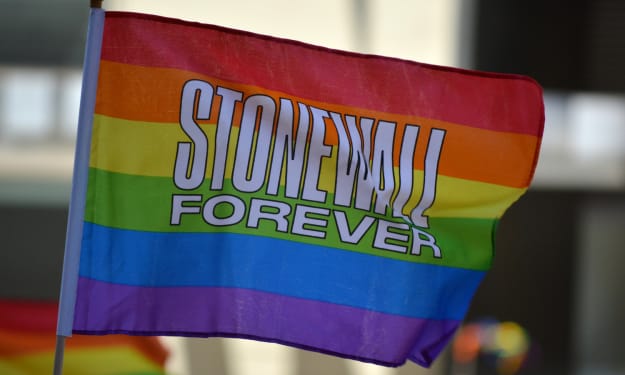
The rainbow flag is one of the most recognizable symbols in the world, a vibrant beacon of LGBTQ+ pride and solidarity.
But if you’ve ever browsed a Pride merchandise shop or scrolled through social media during June, you’ve likely noticed a beautiful array of other flags in a spectrum of colors and patterns. This sight often leads to a common, and fascinating, question: Just how many LGBTQ+ flags are there?
The short, surprising answer? There is no single, definitive number. The LGBTQ+ community is beautifully diverse, and as our understanding of identity, sexuality, and gender expression has evolved, so has the creation of symbols to represent them.
We’re talking about dozens of flags, each with its own unique history, design, and meaning, with new ones occasionally emerging to represent specific identities or communities.

Think of it less as a fixed list and more as a living, growing tapestry of symbols. In this ultimate guide, we’ll explore the origins of the most iconic flags, break down the meanings of the most widely recognized banners, and explain why this ever-expanding collection is a sign of progress, not confusion.
The Foundation: The Rainbow Pride Flag
Our story begins in 1978. Artist and activist Gilbert Baker, challenged by Harvey Milk, created the first rainbow flag as a symbol of hope and inclusivity for the gay community. The original design had eight colors, each with a specific meaning:
- Hot Pink: Sex
- Red: Life
- Orange: Healing
- Yellow: Sunlight
- Green: Nature
- Turquoise: Magic/Art
- Indigo: Serenity
- Violet: Spirit
Due to production constraints, the flag was soon simplified to the six-color version we know best today: red, orange, yellow, green, blue, and violet.
Evolution for Greater Inclusivity: The Progress Pride Flag
While the rainbow flag represents the entire community, some felt it could better acknowledge its diverse parts. In 2018, designer Daniel Quasar created the Progress Pride Flag. This powerful redesign adds a chevron on the hoist side featuring:

Black and Brown: To represent LGBTQ+ people of color and to honor those lost to the HIV/AIDS crisis.
Light Blue, Pink, and White: The colors of the Transgender Pride Flag.
This flag is now one of the most common variants, emphasizing inclusion and ongoing progress within the movement.
Flags for Specific Identities: A Spectrum of Symbols
This is where the count grows. As communities formed around specific identities, they created flags to foster visibility and unity. Here are some of the most prominent:

1. Transgender Pride Flag
Designed by Monica Helms in 1999, its light blue (traditional color for baby boys), pink (for baby girls), and white (for those who are intersex, transitioning, or have a non-binary identity) stripes symbolize the trans experience.
2. Bisexual Pride Flag
Created by Michael Page in 1998, the pink represents attraction to the same gender, blue represents attraction to different genders, and the overlapping purple stripe symbolizes attraction to multiple genders.
3. Pansexual Pride Flag
The flag features pink (attraction to women), yellow (attraction to non-binary, genderqueer, and agender people), and blue (attraction to men). It emphasizes attraction regardless of gender.

4. Non-Binary Pride Flag
Designed by Kye Rowan in 2014, the yellow stripe represents genders outside the binary, white for those with many or all genders, purple for a mix of male and female, and black for agender identities.
5. Asexual Pride Flag
The black stripe represents asexuality, grey for grey-asexuality and demisexuality, white for allies and non-asexual partners, and purple for community.
6. Lesbian Pride Flag
There have been several iterations. The most common modern version features shades of orange (for gender non-conformity and community) and pink (for love and femininity), often in a seven-stripe design.

7. Genderfluid, Agender, Intersex, and More
The list continues: the Genderfluid Flag (pink, white, purple, black, blue), the Agender Flag (black, grey, white, green), and the Intersex Flag (a yellow field with a purple circle) are just a few more examples of highly recognized flags.
8. Aromantic, Polyamorous, and Other Communities
Flags also exist for aromantic people (green, light green, white, grey, black), the polyamorous community (blue, red, black, with a gold pi symbol), and many others, including flags for specific gender identities like bigender, demigirl, and demiboy.

So, How Many Are There Really?
If we count the widely recognized and used flags those you’re likely to see at a major Pride event or find on mainstream educational resources we can identify around 20-25 primary flags.
However, if we delve into the full, beautiful depth of the community, including flags for more specific microlabels, regional communities, and historical variants, the number easily climbs into the dozens, potentially over 50.
Why So Many Flags? Understanding the Importance
You might wonder: doesn't this proliferation dilute the message? From within the community, the answer is a resounding no. Here’s why this diversity of symbols is so vital:

Visibility and Validation: For someone who doesn’t see themselves fully in the rainbow flag, a specific flag can be a powerful tool for self-identification and feeling seen. It says, "You exist, and you belong here."
Community Building: These flags act as beacons, helping people find their specific community for support, conversation, and solidarity.
Education: Each flag is a conversation starter. It prompts questions and learning about identities others may not be familiar with, fostering greater understanding.

Historical Recognition: Flags like the Progress Pride ensure we remember the struggles and contributions of marginalized people within the larger LGBTQ+ community.
The Bottom Line: A Celebration of Diversity
Asking "how many LGBTQ+ flags are there?" is like asking how many colors are in a rainbow. Just as light refracts into an endless spectrum, human identity is brilliantly complex. The growing pantheon of Pride flags isn't about division; it's a visual celebration of the intricate tapestry of human experience.
The next time you see a flag you don't recognize, see it as an opportunity. A chance to learn, to ask respectful questions, and to appreciate the ongoing journey of a community that continues to strive for a world where everyone can proudly declare exactly who they are.
What’s your favorite Pride flag, and what does it mean to you? Share your thoughts in the comments below!
About the Creator
David Femboy
David here. Sharing my authentic femboy journey the outfits, the lessons, the life. For anyone exploring gender expression. Let’s redefine masculinity together. 💖
Keep reading
More stories from David Femboy and writers in Pride and other communities.
Is thailand lgbtq friendly
Thailand, often dubbed “The Land of Smiles,” has long held a reputation as one of the world’s most welcoming destinations for LGBTQ+ travelers. With vibrant pride parades, a visible queer culture, and a general atmosphere of tolerance, it’s easy to see why. But is this famed friendliness reflective of daily life for locals, and does it translate into meaningful legal and social progress? The answer is a fascinating, nuanced mix of yes, but with room for growth.
By David Femboy2 months ago in Pride
The Pride Flag and the Diversion
For nearly a decade, the LGBTQIA Pride Flag rippled in the wind at Christopher Park, a kaleidoscope of color staked into the soil of America’s first national monument to LGBTQIA+ liberation. That flag came down this week. Federal officials, citing new guidance from the Trump Administration, silently lowered the rainbow flag from its pole across the street from the Stonewall Inn. The birthplace of the modern gay rights movement now flies only the United States flag.
By Tim Carmichael19 days ago in Pride



Comments
There are no comments for this story
Be the first to respond and start the conversation.