
From Taliban Target to Nobel Laureate: The Unstoppable Journey of Malala Yousafzai
How a Schoolgirl’s Defiance Ignited a Global Crusade for Education
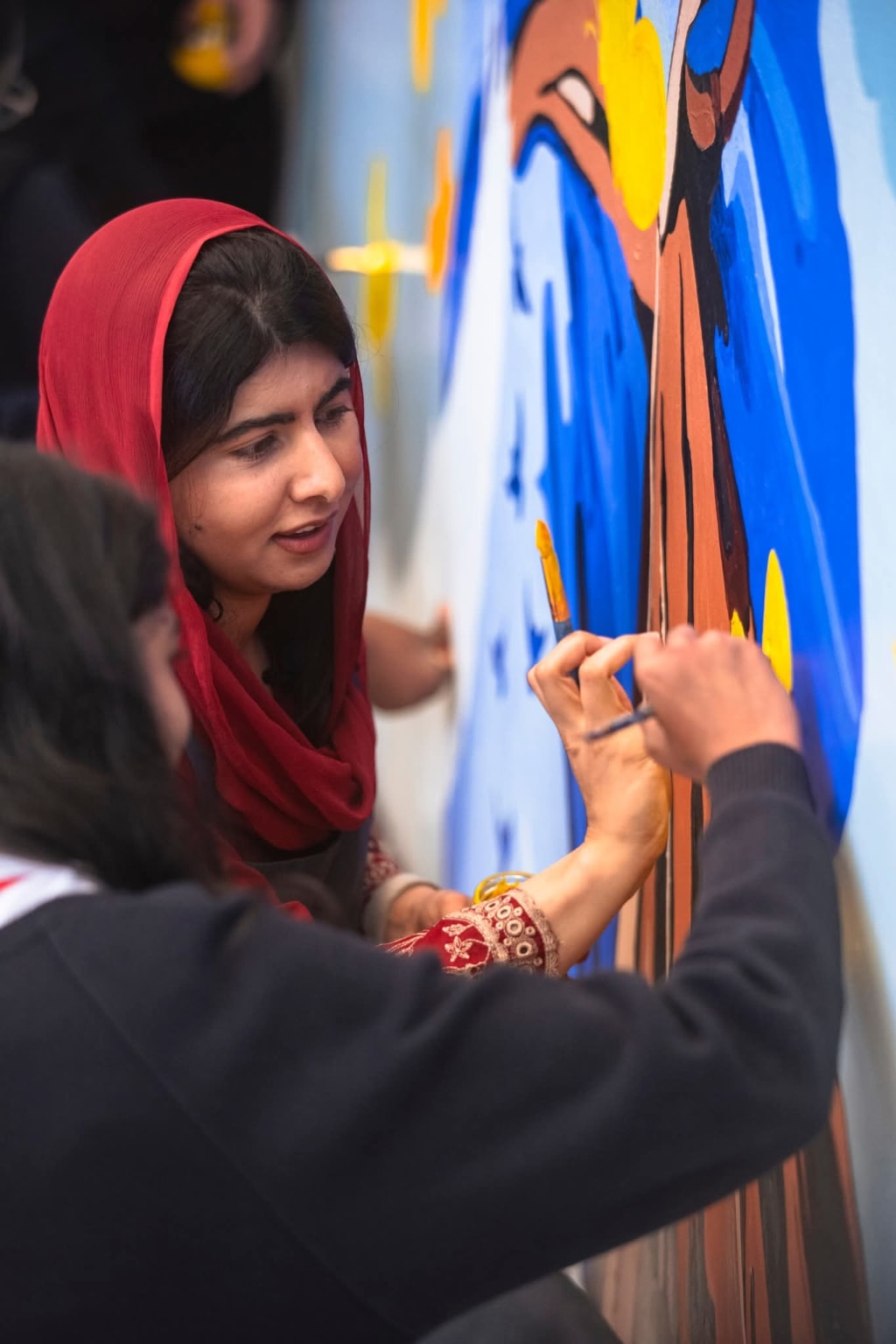
### 🌄 Roots of Rebellion: A Girl Named After a Heroine
Born July 12, 1997, in Pakistan’s Swat Valley, Malala Yousafzai entered a world where girls’ births were often met with silence. Yet her father, educator Ziauddin Yousafzai, declared: "I did not clip her wings" . Named after Malalai of Maiwand – an Afghan poet-warrior who inspired battlefield victory – Malala grew up amidst books and progressive ideals at her father’s Khushal Girls School . By age 10, her world darkened. The Taliban seized Swat in 2008, banning music, destroying over 400 girls’ schools, and imposing brutal punishments. "I had nightmares about war," she confessed in her first anonymous BBC Urdu diary entry at age 11, writing under the pseudonym *Gul Makai* ("cornflower") . Her January 2009 entry captured a child’s terror: *"Only 11 out of 27 pupils attended class... My three friends fled after the Taliban’s edict"* .
### 🔥 The Bullet That Echoed Worldwide: Assassination and Aftermath
As Taliban violence intensified, Malala’s identity as the BBC blogger emerged. She gave interviews, won Pakistan’s first National Youth Peace Prize (2011), and became a target. On October 9, 2012, a masked gunman boarded her school bus. "Who is Malala?" he demanded. Recognizing her, he fired three shots. One bullet pierced her left temple, exiting below her shoulder .
* **Fighting for Life**: Airlifted to a Pakistani military hospital, then to England’s Queen Elizabeth Hospital, she awoke 10 days later. "Where is my father?" were her first words . Facing facial paralysis and traumatic injury, she endured multiple surgeries but refused silence.
* **Defiant Recovery**: Nine months after the attack, on her 16th birthday, she stood before the United Nations wearing Benazir Bhutto’s scarf . "They thought bullets would silence us," she declared. "But nothing changed except this: weakness, fear, and hopelessness died. Strength, power, and courage were born" . The UN declared it "Malala Day."
### 📚 Building a Movement: The Malala Fund and Global Advocacy
With her father, Malala co-founded the **Malala Fund** in 2013, dedicated to "12 years of free, safe education for every girl" . Their approach fused grassroots activism with high-level diplomacy:
- **Grassroots Impact**: Funded schools for Syrian refugees in Lebanon and 40 Swat Valley girls .
- **Policy Advocacy**: Lobbied world leaders to fund global education initiatives.
- **Personal Testimony**: Met displaced girls in Nigeria, Iraq, and Kenya, amplifying their stories .
Her memoir, *I Am Malala* (2013), became a global bestseller, transforming her into a symbol. Yet she insisted: *"I tell my story not because it is unique, but because it is the story of many girls"* .
### 🏆 Nobel Glory: "A Girl with a Book" Makes History
On October 10, 2014, Malala sat in a Birmingham chemistry class when summoned by her deputy headteacher. "She usually calls you when you’re in trouble," Malala recalled. Instead, she learned she’d won the Nobel Peace Prize at age 17 – the youngest laureate in history .
* **Historic Significance**: Shared with India’s Kailash Satyarthi, the award bridged religions (Muslim/Hindu) and generations (17/60). The Committee honored their "struggle against suppression... for every child’s right to education" .
* **Unshakeable Focus**: After the announcement, Malala returned to physics class. "When you get the Nobel Prize for education," she explained, "you have to finish your school day" .
In her acceptance speech, she reframed the honor: *"This award is not just for me. It is for those forgotten children who want education... I am here to stand up for their rights"* .
### 🌍 Beyond the Prize: The Unfinished Revolution
Malala’s post-Nobel life merges normalcy with relentless advocacy:
- **Education First**: Graduated from Oxford University in 2020 with a degree in Philosophy, Politics, and Economics .
- **Targeted Campaigns**: In 2024, Malala Fund’s 10th anniversary spotlighted Afghanistan, where the Taliban again banned girls from secondary schools. She declared gender apartheid a global crisis .
- **Cultural Influence**: Executive-produced Oscar-nominated documentaries and authored children’s books like *Malala’s Magic Pencil* (2017) .
*Table: Malala’s Journey in Key Dates*
| **Year** | **Milestone** | **Impact** |
|----------|---------------|------------|
| **1997** | Born in Mingora, Pakistan | Named after Afghan folk heroine Malalai |
| **2009** | BBC Urdu blog as "Gul Makai" | Exposed Taliban brutality to the world |
| **2012** | Shot by Taliban on school bus | Survival catalyzed global education movement |
| **2013** | UN Speech on Malala Day | Declared education a universal human right |
| **2014** | Co-wins Nobel Peace Prize | Youngest laureate in history |
| **2020** | Graduates from Oxford | Embodied her mission: "education transforms" |
| **2025** | Leads Malala Fund advocacy | Fighting for 122 million out-of-school girls |
### 💫 The Unbroken Spirit: Why Malala’s Voice Endures
Malala’s power lies in transforming trauma into universal hope:
1. **Courage as Habit**: "When the world went silent, I chose to speak" .
2. **Education as Liberation**: "Pens are mightier than weapons... The extremists fear books" .
3. **Compassion as Weapon**: "I don’t want revenge. I want education for the sons *and* daughters of the Taliban" .
Today, as executive chair of Malala Fund, she battles for 122 million girls denied schooling . Her 2013 UN cry – *"One child, one teacher, one book can change the world"* – remains a battle standard. On her Nobel medal, three words echo her father’s defiance: *"Peace," "Dignity," "Education."* The girl the Taliban silenced now speaks for generations. Her story confirms: **One voice, armed with truth and books, can shake empires.**
> *"The terrorists thought they would change my aims and stop my ambitions. But nothing changed in my life except this: weakness, fear and hopelessness died. Strength, power and courage was born."*
> — Malala Yousafzai, UN Address, July 12, 2013
About the Creator
Keep reading
More stories from Danyal Hashmi and writers in Pride and other communities.
The Final Obsession: Joe Goldberg's Last Stand in *You* Season 5
You* Season 5, the final chapter of Netflix’s psychological thriller, brings Penn Badgley’s Joe Goldberg full circle to New York City—the origin of his bloody saga. Married to billionaire CEO Kate (Charlotte Ritchie) and reunited with his son Henry, Joe appears reformed. But beneath his curated "happily ever after," his compulsions simmer, igniting a chain of events that culminate in his poetic downfall .
By Danyal Hashmi5 months ago in Fiction
“Friendship or Kindness”
The Court of Satan They were all five standing with their heads bowed. Satan’s disciples had captured them and brought them before the court of Satan. All five were confused, wondering what crime had led them to this dark place. The courtroom was silent, except for the occasional sinister laugh echoing from behind a black curtain.
By Sudais Zakwan5 days ago in Pride
Miss Persephone's Manual to a Seemingly Ordinary Life
Miss Persephone was found at the dining table, her blue eyes swollen, her tears arriving and retreating like the tides of the ocean. Earlier that day, her family had visited her in the retirement home where she had lived for eight years. It was her eightieth birthday.
By Imola Tóth4 days ago in Fiction


Comments
There are no comments for this story
Be the first to respond and start the conversation.