
Committed people
More Than a Victory: The Lesson Japan’s Fans Gave the World at the 2022 World Cup


When the final whistle blew on November 23, 2022, the football world erupted in disbelief. Japan, a team that many had underestimated, had just pulled off a stunning upset over Germany in the FIFA World Cup. It was a result that made headlines around the globe, celebrated not just in Tokyo but in every corner of the sporting world where underdog victories are cherished. Yet, what followed after the match was something that lingered far longer than the scoreline. As the crowds poured out of the stadium in Doha, a group of Japanese fans quietly stayed behind. They began picking up trash, not just their own, but anything left behind by strangers. With blue trash bags in hand, they moved through the rows of seats, collecting cups, wrappers, and bottles. In the midst of global fanfare, they reminded the world of a different kind of victory: the triumph of respect, humility, and community spirit.
For most audiences watching from afar, this behavior was surprising, even shocking. Fans around the world are often associated with loud celebrations, messy stands, and sometimes even destructive behavior. Yet here was a group of supporters who turned celebration into stewardship. They showed that their responsibility to the stadium and to the wider community did not end with the game. The message was clear: it wasn’t their mess, but they made it their responsibility.
This gesture of respect is deeply rooted in Japanese culture. From an early age, Japanese children are taught the values of cleanliness, consideration for others, and collective responsibility. In Japanese schools, it is common for students to clean their classrooms, hallways, and even bathrooms, instilling the idea that no space is too small to deserve care and no task is beneath anyone. This cultural practice translates into adulthood, creating a society where order, respect for shared spaces, and community-mindedness are second nature. The behavior of the fans in Qatar was not a one-time spectacle but a reflection of lifelong values.
The world took notice, and rightly so. Videos and images of Japanese fans tidying the stadium went viral across social media platforms, sparking admiration and introspection. Commentators praised their humility, and fans of other nations expressed both amazement and respect. Some even admitted that they could not imagine their own country’s supporters behaving in such a manner. The act became more than just a cultural curiosity; it became a mirror held up to the world, asking all of us what it truly means to be a fan, a guest, and a citizen.
But the story did not end with the supporters. In the Japanese locker room, the national team also left behind a lesson. After their historic victory, the players could have left the space in celebratory disarray. Instead, they cleaned the room thoroughly, leaving it spotless. On the table, they left a note of gratitude in Japanese and Arabic: “Thank you.” It was a simple act, but it resonated across cultures, proving that humility is not confined to the stands but extends to the very heart of the team.
What makes this story powerful is not only the act itself but the contrast it highlighted. In an era where headlines are often dominated by division, conflict, and excess, here was a moment of quiet integrity. The Japanese fans and players reminded the world that true greatness is not just measured in goals or trophies but in the values that outlast the final whistle. Respect for others, humility in victory, and care for shared spaces, these are qualities that can inspire not just football fans but societies at large.
The act of cleaning a stadium may seem small, even mundane. Yet, in its simplicity lies its power. It demonstrated that responsibility is not confined to personal gain but extends to the collective good. It told a story of gratitude: gratitude to the host nation, to fellow fans, and to the game itself. In a sense, it was an expression of reverence, reverence for the space that gave them joy and for the community that shared in that joy.
The viral images also sparked important conversations about cultural values and global responsibility. Some observers asked whether such behavior could ever become the norm elsewhere. Could fans from other countries adopt similar habits of respect, or is this unique to Japan? The answer lies not in cultural essentialism but in the willingness to learn. Every society has traditions of hospitality, respect, and stewardship, though they may express them differently. What the Japanese fans did was to model those values on a global stage, offering a living example for others to follow.
It is also worth noting that this was not the first time Japanese supporters had made headlines for their cleanliness. At the 2018 World Cup in Russia, similar scenes unfolded when Japan’s fans picked up trash after matches, even after their heartbreaking loss to Belgium. That consistency proves that these actions were not for show but part of a deep-rooted ethic. The 2022 World Cup simply amplified the message because of the scale of Japan’s victory and the global attention it attracted.
For teachers, parents, and community leaders, the story carries educational value. It is a reminder that values are best taught through action rather than words. The Japanese fans did not lecture anyone on respect; they demonstrated it. The players did not demand recognition for their humility; they lived it. In doing so, they taught a lesson more powerful than any classroom could convey: that integrity is not situational but constant, and that small actions can ripple outward to inspire global admiration.
The media coverage also highlighted an important truth about humanity: people are hungry for stories of goodness. In a world saturated with conflict and negativity, the simple act of cleaning a stadium resonated so deeply because it offered hope. It reassured people that kindness still exists, that humility still matters, and that respect can be as contagious as excitement. When shared widely, such stories do more than entertain; they elevate the global conversation.
Looking back, Japan’s victory over Germany will always stand as a historic sporting moment, but its true legacy may not be in the scoreline. It may be in the images of blue-shirted fans with trash bags, in the spotless locker room left behind by grateful players, and in the inspiration that spread across borders. That legacy is about redefining victory. Winning a game is fleeting; winning respect through humility is eternal.
The 2022 World Cup was filled with drama, goals, and surprises, but few moments were as enduring as the quiet dignity of Japan’s fans and team. They showed that football is not just about competition but about community. They proved that respect can be louder than chants and that gratitude can echo longer than cheers. Their example challenges all of us, whether we are fans, players, or ordinary citizens, to consider what kind of legacy we leave behind in the spaces we occupy.
In the end, the Japanese fans and players gave the world more than a lesson in football; they gave us a vision of what humanity could look like at its best. A vision where joy is paired with responsibility, where victory is celebrated with humility, and where respect for others defines the true spirit of community. The world took notice, and rightly so.
About the Creator
Lifehub
Some stories fade, but some stay forever, shaping how we feel, think, and see the world. Here, we share the ones that matter most: stories of love, hope, and humanity 💙. Subscribe and be part of a journey that inspires and connects. ✨
The Pride Flag and the Diversion
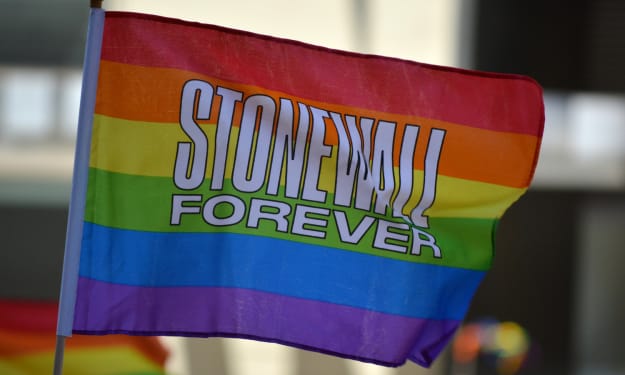
For nearly a decade, the LGBTQIA Pride Flag rippled in the wind at Christopher Park, a kaleidoscope of color staked into the soil of America’s first national monument to LGBTQIA+ liberation. That flag came down this week. Federal officials, citing new guidance from the Trump Administration, silently lowered the rainbow flag from its pole across the street from the Stonewall Inn. The birthplace of the modern gay rights movement now flies only the United States flag.
By Tim Carmichael19 days ago in Pride



Comments
There are no comments for this story
Be the first to respond and start the conversation.