
Tokyo’s Smart Farming Revolution: A Potential Solution to the Global Food Crisis
Harnessing 5G Technology and Innovation to Transform Agriculture
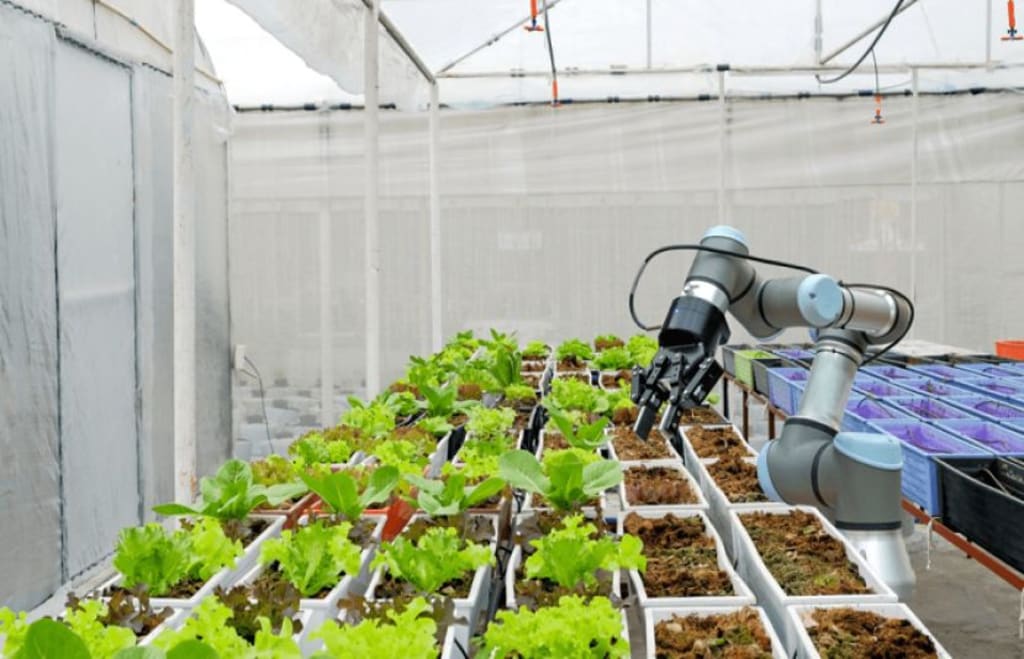
In the bustling metropolis of Tokyo, Japan, a groundbreaking smart farming initiative is capturing global attention as a potential blueprint for addressing the world’s looming food security challenges. By integrating cutting-edge 5G technology, advanced information systems, and innovative agricultural practices, this project is revolutionizing farming in a country grappling with a shrinking workforce and an aging population. As the world faces increasing pressures from climate change, population growth, and resource scarcity, Tokyo’s smart farming model offers a glimpse into a sustainable, tech-driven future for global agriculture.
The Crisis Facing Japanese Agriculture
Japan’s agricultural sector is under strain, primarily due to a severe shortage of labor. Official statistics paint a stark picture: between 2015 and 2020, the number of key agricultural workers in Japan’s private farms plummeted by 22.4%. This decline is largely attributed to Japan’s demographic challenges—an aging population and a declining birth rate. Approximately 70% of the country’s agricultural workforce is now aged 65 or older, raising concerns about the sustainability of traditional farming practices. With fewer young people entering the sector, Japan has been forced to seek innovative solutions to maintain its food production capacity.
Enter the smart farming revolution, a collaborative effort spearheaded by NTT AgriTechnology, the Tokyo Development Foundation for Agriculture, Forestry, and Fisheries, and NTT East. Launched in 2020, this initiative has transformed a section of Tokyo’s Chofu City into a hub for high-tech agriculture, leveraging the power of 5G to address labor shortages and boost productivity.
The Role of 5G in Smart Farming
At the heart of this initiative are state-of-the-art greenhouses equipped with advanced technologies designed to optimize crop growth and streamline farming operations. These facilities incorporate ultra-high-definition cameras, smart glasses, automated temperature and CO2 monitoring systems, and other cutting-edge tools. The integration of 5G technology enables real-time data collection and analysis, allowing farmers to monitor and manage their crops with unprecedented precision. For instance, these systems optimize photosynthesis by ensuring ideal environmental conditions, resulting in healthier plants and higher yields.
One of the standout achievements of this project is its ability to empower individuals with no prior farming experience to produce high-quality crops. According to Nakanishi Masahiro, a key figure in the initiative, “People with no agricultural background have successfully grown high-quality tomatoes by receiving remote guidance, and the results have improved even further in the second year.” This democratization of farming knowledge is a game-changer, as it reduces dependency on skilled labor and makes agriculture more accessible.
Local Impact and Scalability
The smart farming project in Chofu has already shown tangible results. The tomatoes grown in these 5G-enabled greenhouses are sold in local markets and even supplied to schools in Chofu, creating a sustainable model of local production and consumption. This approach not only strengthens food security at the community level but also reduces the carbon footprint associated with long-distance food transportation.
The success of the Chofu project has attracted global attention, with agricultural experts and researchers flocking to Tokyo to study the application of 5G technology in farming. Nakanishi notes, “The fact that this project is taking place in a major, accessible city like Tokyo has helped it gain worldwide recognition.” The project’s visibility in a global hub underscores its potential as a scalable model for other urban centers facing similar agricultural challenges.
A Solution to the Global Food Crisis?
The implications of Tokyo’s smart farming initiative extend far beyond Japan. The global food system is under increasing strain, with the United Nations estimating that food production must increase by 70% by 2050 to feed a projected population of 9.7 billion. At the same time, climate change, land degradation, and labor shortages threaten agricultural productivity worldwide. Tokyo’s model offers a promising solution by combining technology with sustainable practices to maximize efficiency and output.
NTT AgriTechnology is already taking steps to export this model to other countries, offering training and support to help nations adapt these systems to their local contexts. By leveraging 5G and smart farming technologies, countries with limited arable land or aging workforces can enhance their agricultural resilience. The ability to remotely monitor and manage crops also makes this approach viable for regions with labor shortages or harsh environmental conditions.
Challenges and Future Prospects
While Tokyo’s smart farming initiative is a beacon of hope, it is not without challenges. The high cost of implementing 5G infrastructure and advanced technologies may pose barriers for developing nations or small-scale farmers. Additionally, widespread adoption will require significant investment in training and education to ensure that farmers can effectively use these systems. However, as technology becomes more affordable and accessible, the scalability of this model is likely to improve.
Looking ahead, the integration of artificial intelligence (AI) and machine learning could further enhance the capabilities of smart farming systems. AI-driven analytics could predict crop yields, detect diseases early, and optimize resource use, making agriculture even more efficient and sustainable. Tokyo’s project serves as a testing ground for these innovations, paving the way for a new era of agriculture that is resilient, inclusive, and environmentally friendly.
Conclusion
Tokyo’s smart farming revolution is a testament to the power of technology to address pressing global challenges. By harnessing 5G, advanced sensors, and remote guidance systems, this initiative is not only tackling Japan’s agricultural labor crisis but also offering a scalable solution to the global food crisis. As NTT AgriTechnology expands its reach, the lessons learned in Chofu could transform farming practices worldwide, ensuring a more secure and sustainable food future. For now, Tokyo stands as a beacon of innovation, proving that even in the face of daunting challenges, human ingenuity and technology can pave the way for a brighter, greener tomorrow.
About the Creator
Keep reading
More stories from Muhib Ullah and writers in Potent and other communities.
Rezvani Night SUV: Redefining Luxury with Bulletproof Power
In a groundbreaking move that redefines luxury and security in the automotive world, California-based Rezvani Motors has introduced its latest creation, the Rezvani Night, a bulletproof and bombproof SUV designed for those who seek both elegance and unmatched protection. This exclusive vehicle, built with advanced materials and engineering, is set to make a mark in the high-end automotive market, with only 100 units planned for production worldwide. Blending the style of Italian supercars with military-grade strength, the Rezvani Night showcases innovation, power, and exclusivity.
By Muhib Ullah 7 months ago in Wheel
Tyson Fury: The Impossible Silence of the Gypsy King
Deep down, Tyson Fury has never truly known how to "retire." His announcements of hanging up the gloves? Mere interludes, at best. They are desperate attempts to muffle a voice that has been echoing in his head forever. An ancient, visceral voice that couldn't care less about championship belts or multi-million dollar purses. What it craves is the heat of the battle. For Fury, boxing has never been a job. It’s his only way to keep from drowning.
By Laurenceau Porte6 days ago in Potent
Europe in the Vise: Chronicle of a Continent Facing the Three Wills of the World
Every morning, Europe wakes up with the lingering sensation of having shrunk during the night. Not geographically, nor demographically, but symbolically, strategically, and existentially. Around it, three distinct "wills" have risen—three ways of wielding power and relating to the world that have little to do with European slowness, its internal debates, or its moral hesitations. Vladimir Putin, Donald Trump, and Xi Jinping do not form an official alliance, let alone a coordinated conspiracy. Yet, they embody something deeper and more unsettling for the Old Continent: the brutal return of raw, unabashed power, while Europe continues to view itself as a historical exception—a "post-tragic" space that has supposedly moved beyond the law of the strongest. The rest of the world, however, never signed up for this fiction.
By Laurenceau Porte5 days ago in Potent
'20/20'
"Do It Again" the track that would ultimately open the Beach Boys final album on Capitol Records which was released on February 10th 1969 had originally been released as a single in August of 1968. The track was the first of many post-Pet Sounds era throwbacks to the early Beach Boys sound which would become continually more cliched and eventually lead the Beach Boys to the level of self-parody they would eventually succumb to in the 1980s while their closest contemporaries The Beatles nearing the end of their run in 1969 would go on to be viewed as the most influential band of all time. However, the song itself is not bad on its surface, and it opens with a futuristic sounding (for 1969) drumbeat captured by then-Beach Boys engineer Stephen Desper using tape delays on the drums performed by Dennis Wilson and John Guerin. The song has been re-recorded numerous times over the years on various Beach Boys-related projects most notably the 2011 re-recording at Capitol studios featuring the five surviving Beach Boys at the time backed instrumentally by various members of both the Brian Wilson Band and Mike Loves touring "Beach Boys" to promote the then upcoming Beach Boys 50th Anniversary reunion tour in 2012. The hammering and power drill sound at the end of the song was an excerpt from a track called "Workshop" that was to be a part of the uncompleted "SMiLE" album.
By Sean Callaghan6 days ago in Beat


Comments
There are no comments for this story
Be the first to respond and start the conversation.