
The Conflict in Ukraine: Understanding the Root Causes of the Russian-Ukrainian War
Exploring the Historical, Political, and Geopolitical Factors that Led to the Escalation of the Conflict between Russia and Ukraine
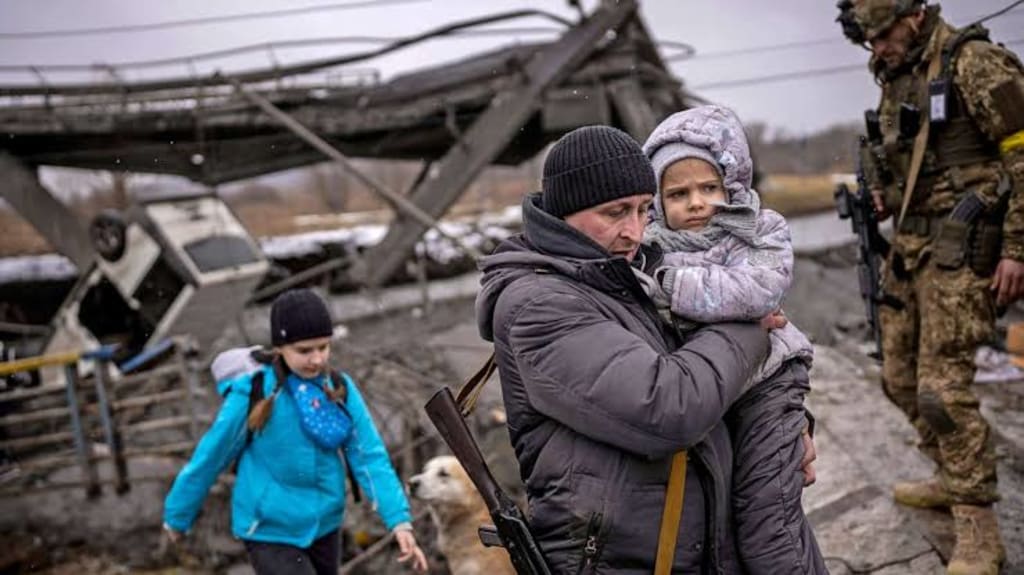
The conflict between Russia and Ukraine is a significant geopolitical issue that has been ongoing for several years. While the conflict may appear to be a recent development, its roots can be traced back to a complex and multifaceted set of historical, political, and geopolitical factors.
Historical Factors
The history of Ukraine is a key factor in understanding the conflict with Russia. Ukraine has been a contested region for centuries, with various empires and states vying for control over the territory. This history of conflict and occupation has left deep scars on the Ukrainian psyche, and it has contributed to a strong sense of national identity and a desire for sovereignty.
One of the key historical events that contributed to the current conflict was the annexation of Crimea by Russia in 2014. Crimea had historically been part of Russia, but it was transferred to Ukraine in 1954 during the Soviet era. The annexation of Crimea was seen by many as a blatant violation of Ukraine's sovereignty and territorial integrity, and it was a major factor in the escalation of tensions between Russia and Ukraine.
Political Factors
The political factors that contributed to the escalation of the conflict between Russia and Ukraine are complex and intertwined. One of the key issues was the ousting of Ukrainian President Viktor Yanukovych in 2014. Yanukovych was a pro-Russian leader who had won the presidency in 2010 with strong support from Russia. His ousting was seen as a blow to Russia, and it was a trigger for the escalation of tensions between Russia and Ukraine.
Another significant political factor was the decision by Ukraine to seek closer ties with the European Union. This decision was seen by Russia as a threat to its influence in the region, and it was a major contributing factor in the decision to annex Crimea.
Geopolitical Factors
The geopolitical factors that contributed to the escalation of the conflict between Russia and Ukraine are also significant. Ukraine is strategically located between Europe and Russia, and both countries have long vied for influence in the region. Russia sees Ukraine as a buffer zone between itself and NATO, and the prospect of Ukraine joining NATO has been a significant concern for Russia.
Additionally, Ukraine is a vital transit route for Russian gas to Europe, and any disruption to this supply chain could have significant implications for Russia's energy exports. This has been a key factor in Russia's decision to use its energy exports as a tool of political pressure in the region.
The ongoing conflict in Ukraine has also been influenced by the changing balance of power in the region. The collapse of the Soviet Union in 1991 left a power vacuum in the region, which Russia has sought to fill. The expansion of NATO and the European Union eastward has been seen by Russia as a direct threat to its security and influence in the region.
Another key factor in the conflict has been the role of the media. The Russian media has played a significant role in shaping public opinion in Russia, and it has portrayed the conflict in Ukraine as a struggle against fascism and Western imperialism. The Ukrainian media, in turn, has portrayed Russia as an aggressor and a threat to Ukraine's sovereignty.
The Way Forward
In conclusion, the conflict between Russia and Ukraine is a complex issue that has been fueled by a variety of historical, political, and geopolitical factors. While a peaceful resolution to the conflict remains elusive, efforts must be made to address the root causes and find a path to peace that respects the sovereignty of both countries.
The international community must play a constructive role in promoting a peaceful resolution to the conflict. This includes supporting diplomatic efforts to find a negotiated settlement, providing humanitarian assistance to those affected by the conflict, and imposing targeted economic sanctions on those responsible for the escalation of the conflict.
Ultimately, the only way to end the conflict is through dialogue and a commitment to finding a peaceful and mutually beneficial
About the Creator
Keep reading
More stories from Sivasankar N and writers in Potent and other communities.
The Importance of Sustainable Agriculture in a Changing Climate
The world is currently grappling with the challenges of climate change and food security. With a growing population and increasing demand for food, traditional farming practices are no longer enough to meet the needs of the global community. However, a promising solution may lie in regenerative farming practices, which not only help mitigate climate change but also ensure food security for future generations.
By Sivasankar N3 years ago in Earth
5 Kitchen Upgrades That Will Last a Lifetime
Introduction In today’s fast-moving world of home design, trends come and go faster than ever. But when it comes to your kitchen the heart of your home longevity matters far more than fleeting style. The best kitchens are not only beautiful on day one but remain functional, stylish, and durable for decades to come.
By Dilip Kumara5 days ago in Potent
Robert Jenrick
Introduction Robert Jenrick is a well-known British politician. He belongs to the Conservative Party in the United Kingdom. Over the years, he has worked in many important government roles. He is especially known for his views on housing, immigration, and law. Some people support his ideas, while others criticize them, but there is no doubt that he is an important figure in modern British politics.
By Farhan Sayed4 days ago in Potent



Comments
There are no comments for this story
Be the first to respond and start the conversation.