
Does Marijuana Make You Lazy?
Though a classic stoner stereotype, we have to wonder, "does marijuana make you lazy?"


2017 is a big year for anyone concerned about marijuana. It may well be the breakthrough year, the time when the fight to decriminalize the up-to-now “evil" weed turns the corner. Lengthy and exhaustive scientific studies are beginning to appear that strenuously challenge our current beliefs and fears about marijuana.
There are currently a number of bills stalled in Congress that would decriminalize marijuana possession in any cases handled at both the state and the federal level.
Changes
This signals an amazing change in American politics.
Many years ago, Presidential candidate George McGovern's lukewarm support of marijuana decriminalization was considered a severe political handicap. Today, many governors and senators are building a platform on pro-marijuana policies.
There are many reasons for the change. One is that marijuana smoking has now reached into every level of society, on an even wider scale than it had five years ago. The statements of major celebrities who had smoked pot also helped legitimize the decrim movement.
And just as importantly, medical research over the past five years has generally been unable to show that marijuana is any more dangerous or harmful than alcohol or tobacco.
This change in medical attitudes towards marijuana is a vital new development. Three examples of this new approach to the pot question come to mind readily.
Years ago, the American Medical Association's Committee on Drug Dependence said that “physical dependence such as exists with barbiturates... and alcohol does not exist with marijuana...'
The committee further noted that they had found “no evidence supporting the idea that marijuana leads to violence, aggressive behavior, or crime."
Then recently, a number of major studies announced that marijuana presents far less of a health hazard than either tobacco or alcohol.
The Final Word
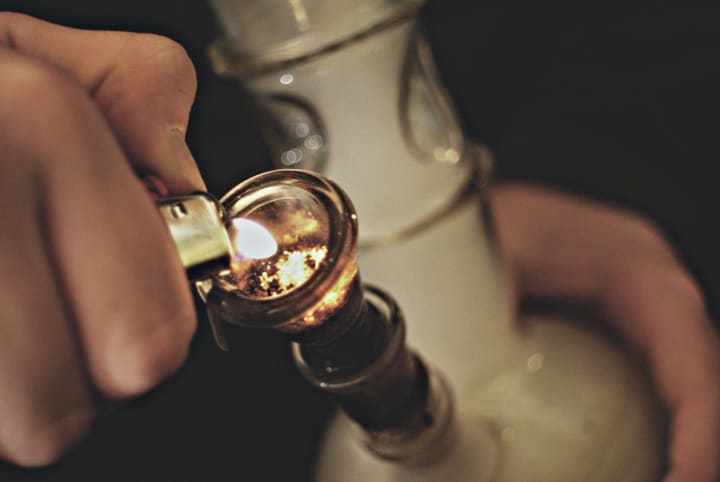
The biggest stigma that marijuana users tend to face is the idea that they are less motivated, less willing to work, and less focused than their sober counterparts.
Many physicians have even accepted it, calling it "The Amotivational Syndrome." A prestigious Canadian Commission, "Inquiry on the Non-Medical Uses of Drugs," defined the syndrome as "a set of symptoms including apathy, ineffectiveness, and non-productiveness ... it has been suggested that such a syndrome may result from the chronic use of certain drugs."
In fact, even many marijuana smokers themselves might agree that smoking pot creates resistance to jobs and work. But there have been a number of studies done in this country and abroad, which have raised the possibility that this is in error.
One of the first surprising sources of this support is a very straight-laced organization, the New York Academy of Sciences. In the 70s, a conference on chronic cannabis use, was held there, sponsored by the New York Medical College of Psychiatry, and the National Institute on Drug Abuse.
More than 30 papers were presented on the effects of long-term marijuana use and a number of these challenged the long-held assumption that pot makes you lazy and ineffective.
Some of the findings presented at the conference:
- A study done at the University of California at Berkeley tried to find a connection between pot-smoking and dropping out of college. The conclusion was that “socio-cultural” factors accounted for drop-out problems far more than any connection with dope smoking.
- Two independent studies, one done in Costa Rica and one in Jamaica, found that there was no significant difference between the productivity of field hands who were heavy marijuana smokers and those who did not smoke at all.
- A 94-day cannabis study, which had subjects performing mechanical and mathematical tasks, found that “correct responses increased. regardless of whether the subjects were in an intoxication or non-intoxication phase.”
Taken as a whole, these results present a very different image of marijuana than the currently accepted one. If further research bears out these studies one of the last overwhelming roadblocks to acceptance of marijuana may well have fallen.
What the Researchers Found
The methods used varied in each experiment. In the California survey, called “The Amotivational Syndrome and the College Student,” the scientists tried to discover whether smoking pot would “reduce motivation to stay in school, especially in a competitive academic situation."
An earlier study had already concluded “that there was no relation at all between drug use and dropping out among the majority of men in the sample, who, as entering freshmen, appeared to be committed to traditional academic goals and standards."
There were, however, still questions about the 38 percent who entered with “lower academic drive." The researchers were certain that “socio-cultural” factors were important in the decision to stay in or drop out, but they wanted to determine whether or not they were also connected to drug use.
“After extensive examination of the data available to us, our conclusion is that sociocultural factors account for most of the relation to drug use,” concluded the paper.
Their studies found that drugs here cannot be considered a major factor, that a person's background and lifestyle determine far more clearly what they would do.
In other words, if your parents were college graduates, you're more likely to finish college. Or, if you're intent on going to law school later, chances are your dedication will see you through, pot or no pot.
Marijuana, while it may distract you, won't essentially deprive you of your ability or inclination to work hard in school — you either want it to begin with or you don't.
Ganja Journalism
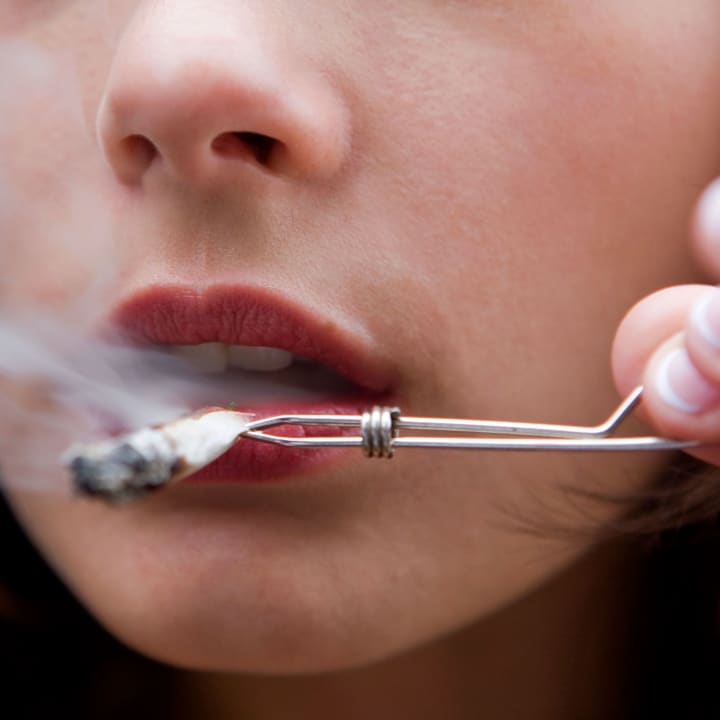
The studies conducted in Jamaica were underwritten by the National Institute of Mental Health, and were conducted by two professors at Columbia University in New York City. The results were considered so startling that they have now been published in a paperback book, Ganja in Jamaica: The Effects of Marijuana Use by Vera Rubin and Lambros Comitas.
Based on a group of 60 adult males, evenly divided between smokers and non-smokers, the study gave scientific backing to the popular Jamaican belief that ganja helps many to work better. No significant abnormalities, clinical or otherwise, were found to result from the smoking of marijuana, even though some of the subjects had been smoking for more than 30 years.
The study showed how much the attitudinal differences of researchers and society can color our understanding of the use of marijuana. As our view of marijuana changes, so does its effects on users.
In Jamaica, the researchers found, marijuana users work better together, relate better as a group interpersonally, and feel no central ostracism.
These conclusions were even more startlingly supported in the Costa Rica study. One group found that heavy marijuana smokers were those who held their jobs longer, treated their spouses better, and generally exhibited more stable characteristics — much the way many have tried to characterize non-users in the U.S.
What it All Means
None of the results in these studies are definitive, and not one of the papers recommended uninhibited pot smoking, nor do they suggest that marijuana will make your life more productive or meaningful.
But, they do add to the literature that is calling into question our preconceptions about marijuana. And they do put a very big hole in the “Amotivational" argument that many people use when they call stoners lazy.
Finally, what these reports do is add another weapon in the fight to decriminalize marijuana possession. As more and more scientific support lines up, as fewer and fewer medical or psychological reasons for banning marijuana remain unchallenged, as the society continues to change, the push for decriminalization gains strength. More and more it appears to be an idea whose time is near.
2017 may well be the beginning.
About the Creator
Parag Patel
Born in the United Kingdom. He was conceived on a pot plantation and hasn't left since.
Keep reading
More stories from Parag Patel and writers in Potent and other communities.
This 1969 Pamphlet is the Ultimate Guide to Growing Cannabis
Back in the 1960s and 1970s, cannabis cultivation was as taboo as it got. No respected book publisher would talk about how to grow marijuana - let alone describe the steps in detail. For the most part, it was one of those topics that was never broached except in closely guarded circles, in hushed voices.
By Parag Patel9 years ago in Potent
How Can I Stop Receding Hairline
The first time I noticed it, I thought it was the lighting. I was seventeen, standing in the bathroom before school, pushing my hair back the way I always did. The corners at my temples looked… different. Slightly higher. Slightly thinner.
By Emma Smith4 days ago in Potent
The Hidden Power of Mindfulness
Unlocking the secrets of mindfulness Minds race these days- tapping defenses, tangled in studies, caught in what- ifs or what was. Life slips forward into hereafter or back into history, nearly noway staying right then. Only when everything slows does attention settle on now. That settling? It has a name some call awareness. Curiosity grows around it recently- what it really means keeps coming up.
By Abdul Lateefa day ago in Potent
Review of 'Man on the Run'
My wife and I saw Man on the Run, a nearly 2-hour documentary on Amazon Prime, about Wings, Paul McCartney's group that flew around the world from shortly after The Beatles broke up in early 1970 to shortly after John Lennon was murdered at the end of 1980, making a Beatles reunion forever impossible.
By Paul Levinsonabout 23 hours ago in Beat


Comments
There are no comments for this story
Be the first to respond and start the conversation.