Potent logo

-150 degree C freezer "revives" players at EURO?

Football teams use whole-body cryotherapy to help players recover after matches. But how does it work and is it really effective?

By Ken DaklakPublished about a year ago 3 min read

Football teams use whole-body cryotherapy to help players recover after matches. But how does it work and is it really effective?

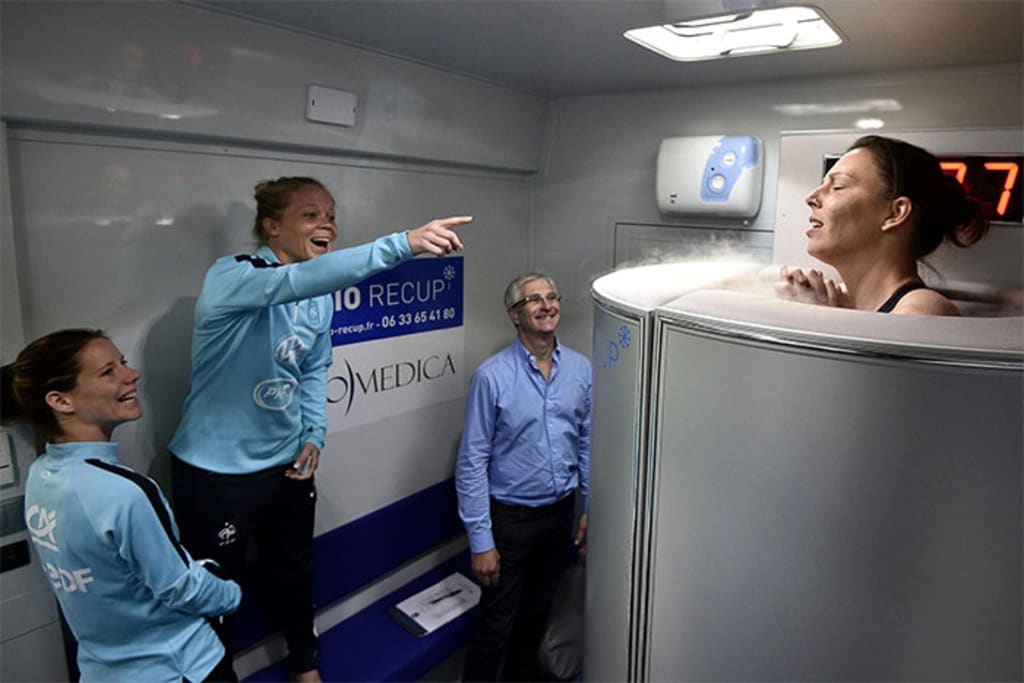
England players queue up in front of a mobile van for cryotherapy . Those who finish the 150-second treatment appear to be more alert.

"Physically, I always feel better. I'm not sure if it's the mental recovery of the cold, but I always feel really refreshed ," said midfielder Jude Bellingham.

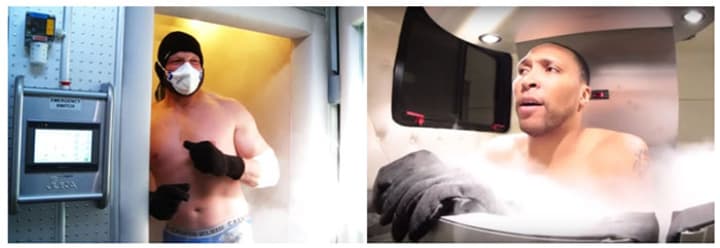
Whole-body cryotherapy (WBC) involves exposing the entire body to extremely cold temperatures, typically ranging from -200°F to -250°F (-130°C to -150°C) for 2-3 minutes. During a WBC session, the athlete typically wears only shorts, possibly gloves, and a mask, and stands in a sealed chamber where the temperature is rapidly lowered.

Fitness issues at EURO

Cryotherapy is hailed as a tool to help athletes recover faster , reduce muscle inflammation and soreness. WBC is said to shorten injury recovery time and increase muscle strength and energy in players.

According to the manufacturer CryoLabs website, the treatment has been “proven to jump-start recovery after exercise.” “These treatments stimulate blood flow, reduce swelling, and relieve muscle pain, so you can get back to your competitive form faster.”

At EURO 2024, coach Gareth Southgate admitted that England have physical "limitations" that prevent them from pressing high. While sleep and nutrition are considered key factors in helping players recover between matches, whole-body cryotherapy has also been applied to 26 players over the past three weeks.

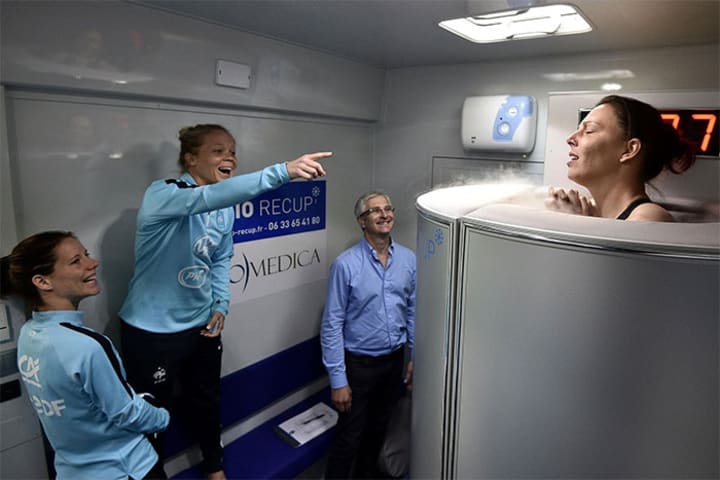
Cryogenic chambers help athletes recover.

The lorry carrying the freezer travelled 700 miles from Poole, Dorset, to the resort of Blankenhain, where England are training.

In addition to the Three Lions, the Spanish team also applies WBC in the process of helping players recover after each match at EURO this year.

Whole body cryotherapy first appeared in rugby, before spreading to other sports.

In football, this method is becoming more and more popular and is gradually replacing the traditional ice bath method, where players soak in ice water for 10-20 minutes to reduce muscle pain after a match. Many big clubs in Europe such as Manchester City and Liverpool have also applied this therapy in the hope that players can recover faster amid a busy match schedule in the past few years.

Compared with ice bath, whole body cryotherapy is expensive but faster, more effective, convenient, and more comfortable.

More research needed

However, Dr James Malone, senior lecturer in training science at Liverpool Hope University, said more research was needed into the long-term effects of WBC. He said WBC should not be “deified” and the routine use of this extreme cold treatment needed to be re-evaluated.

Over nearly two seasons, Mr Malone followed a group of 16 Premier League players. Despite being split into three groups – exposed to low, medium and high temperatures in a cryo-chamber – there was no real difference in the players’ recovery rates.

The adage "more is better" may not be true when it comes to WBC, as higher doses do not provide any additional benefit, says Dr. Malone .

Whole body cryotherapy is popular among athletes.

Whole-body cryotherapy has not been approved by the FDA (Food and Drug Administration) because the freezing chambers are not medical devices and do not treat any medical conditions. Prolonged exposure to low temperatures can lead to frostbite. People who are pregnant or have high blood pressure are advised not to use this therapy.

"Cryotherapy definitely shocks you and increases adrenaline (a hormone produced by the adrenal glands and released into the bloodstream, which affects sympathetic nerve activity), but medically, it doesn't make any sense," says Houman Danesh, a pain management specialist at Mount Sinai Hospital.

“There is very little evidence to support the effectiveness of WBC,” added Joe Costello, senior research associate in sports medicine at the University of Portsmouth.

A 2014 study, which Costello co-authored, concluded that whole-body cryotherapy "causes equivalent or significantly less tissue temperature reduction than traditional cooling methods ," including ice packs or cold baths.

A 2007 study found that athletes who took cold showers after running felt less sore, but it had no effect on reducing muscle damage.

" Whole body cryotherapy also doesn't follow a clear protocol for optimal timing and ideal chamber temperature because of a lack of research. I'm not saying it doesn't work. I'm saying more scientific evidence is needed," Costello said.

celebritiesfeaturegrowinghealthsciencevirtuosos

About the Creator

Ken Daklak

Telling stories my heart needs to tell <3 life is a journey, not a competition

If you like what you read, feel free to leave a tip,I would love some feedback

https://s.shopee.vn/VwwLTGLe9

Reader insights

Be the first to share your insights about this piece.

How does it work?

Add your insights

Comments (1)

Sign in to comment
  • Dharrsheena Raja Segarranabout a year ago

    Hey, just wanna let you know that this is more suitable to be posted in the Cleats community 😊

Find us on social media

Miscellaneous links

  • Explore
  • Contact
  • Privacy Policy
  • Terms of Use
  • Support

© 2026 Creatd, Inc. All Rights Reserved.