
Words I Never Said Out Loud
A poetic letter to the parts of me I kept hidden

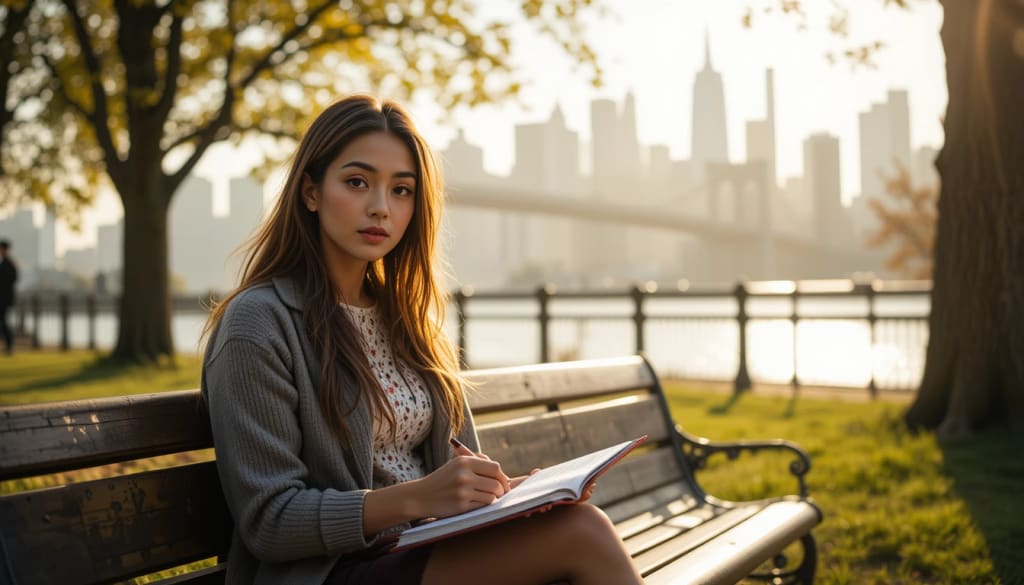
The morning light slipped through the blinds of Amara’s Brooklyn apartment, casting thin stripes across her hardwood floor. She sat cross-legged on a faded rug, a notebook open in her lap, her pen heavy with ink and hesitation. At 27, Amara was a social worker by day, a poet by night—or she had been, before the weight of her unspoken truths silenced her words. Today, though, the dawn felt like a quiet invitation, a chance to write the letter she’d never dared, to the parts of herself she’d kept hidden for too long.
Amara’s mornings were a race against time. She woke at 6:30 a.m., gulping coffee while checking emails from her supervisor at the community center. Her job was demanding—counseling teens, navigating their crises, holding space for their pain. She was good at it, her empathy a bridge between their worlds and hers. But her own world felt like a locked room, its walls lined with words she’d never said out loud: her fears, her dreams, her shame. The notebook, once her refuge, had been untouched for months, its pages a reminder of the voice she’d buried.
Today, she’d woken with a restlessness she couldn’t shake. The city was stirring outside—car horns, dog walkers, the distant rumble of the subway. Amara opened her notebook, its spine creaking, and wrote: Dear me, the one I’ve hidden. The words felt like a confession, a crack in the dam. She’d always been the “strong” one—daughter of Haitian immigrants, first in her family to graduate college, the one who held it together. But strength came at a cost, and the hidden parts of her—the dreamer, the doubter, the girl who loved too fiercely—were begging to be seen.
She dressed quickly, pulling on jeans and a sweater, and walked to a café in Bed-Stuy, her notebook tucked in her bag. The air was crisp, the streets alive with murals and morning joggers. At the café, she ordered a chai latte and claimed a corner table, the hum of conversation grounding her. She opened X on her phone, scrolling through posts of poets and dreamers, their words raw and unfiltered. One post stopped her: a line in looping handwriting, “The words you don’t say become the chains you wear.” Amara copied it into her notebook, her pulse quickening. She wrote: I’ve chained you, haven’t I? The me who wanted more.
The café filled with regulars—students, artists, an older man reading a newspaper. Amara watched them, wondering what words they held back. Her job taught her to listen, to hear the unsaid in her clients’ silences, but she rarely listened to herself. She thought of her teens at the center—Jayden, who hid his poetry behind bravado; Lila, who masked her fear with defiance. Amara saw herself in them, her own truths locked away. She wrote: I’m sorry for silencing you, the me who loves without fear, who writes without shame.
A barista, a woman with dreadlocks and a warm smile, noticed Amara’s notebook. “You a writer?” she asked, wiping down a nearby table.
Amara hesitated, the old doubt creeping in. “I used to be. Trying to find it again.”
The barista nodded. “I sing. Stopped for a while, thought I wasn’t good enough. But you gotta let it out, you know? Even if it’s messy.” She moved on, leaving Amara with her words, a small gift.
Amara wrote again: Messy is honest. I’ve been too afraid to be honest. She thought of her childhood, growing up in a house where love was fierce but expectations were fiercer. Her parents had worked tirelessly, their dreams pinned on her success. She’d become what they needed—reliable, accomplished—but at the cost of the girl who wrote poems about the sea, who wanted to dance, to love without restraint. Those parts were hidden, locked behind the fear of disappointing anyone.
By 9:00 a.m., Amara was at the community center, her notebook stashed in her bag. Her day was packed—meetings, a counseling session with Jayden, paperwork. But the letter she’d started burned in her mind. During a break, she sat in the center’s courtyard, a patch of green amid Brooklyn’s concrete. She opened her notebook and wrote: Dear hidden me, you wanted to dance under the stars, to write poems that bleed, to love someone without holding back. Why did I bury you?
Jayden’s session was at noon. He slouched in the chair across from her, 16 and guarded, his hoodie pulled low. “You ever feel like you’re faking it?” he asked, his voice low. “Like you’re not who everyone thinks?”
Amara’s breath caught. “All the time,” she said, surprising herself. “I used to write poetry, like you. But I stopped, because I thought… I don’t know, that it wasn’t enough.”
Jayden’s eyes flicked up, curious. “You? You seem like you got it together.”
She laughed, soft and honest. “I’m good at pretending. But I’m trying to stop.” She paused, then added, “You should share your poems sometime. They’re good.”
He shrugged, but a small smile broke through. “Maybe. If you share yours.”
The challenge lingered as Amara left the session. She felt exposed, but not in a bad way. Jayden’s words, the barista’s encouragement, the X post—they were all threads, pulling her toward the hidden parts of herself. She wrote: You’re not a secret to be kept. You’re a song to be sung.
After work, Amara didn’t go home. She walked to Prospect Park, where the afternoon light dappled the grass. She sat by a tree, her notebook open, and let the letter pour out. Dear me, I hid you because I thought you were too much—too loud, too soft, too wild. I thought the world wouldn’t love you. But I was wrong. You’re the truth I need. The words were raw, a poetic apology to the girl she’d silenced. She wrote of her dreams—to publish her poetry, to travel to Haiti and dance in its streets, to love without fear of breaking. Each line was a step toward freedom.
The park was alive—kids on bikes, couples laughing, a drummer playing a beat that felt like her pulse. Amara thought of her last poetry reading, two years ago at a small bookstore. She’d been nervous, her voice shaky, but the crowd had listened, their eyes holding her words. A woman had approached her after, saying, “Your poem made me feel seen.” Amara had carried that moment like a talisman, but fear had still won, locking her words away.
She opened X again, posting a photo of her notebook, the letter’s first line visible. “Words I never said out loud: I’m enough.” She captioned it: “Writing to the me I hid. What’s your unsaid truth?” Comments trickled in—friends, strangers, poets sharing their own silences. One wrote, “This hit me hard. Thank you.” Amara’s eyes stung. Her words weren’t just hers anymore; they were a bridge.
That evening, Amara went to an open mic at a bar in Fort Greene, a place she’d avoided since her last reading. Her notebook felt heavy, alive. She signed up, her hands trembling, and waited as poets and singers took the stage. When her name was called, she stepped to the mic, her letter in hand. “This is for me,” she said, her voice steady despite her racing heart. “And maybe for you.”
Dear hidden me, you are the sea I never sailed,
The dance I never danced, the love I never claimed.
I locked you in silence, afraid of your fire,
But your embers still burn, and they lift me higher.
I’m sorry I hid you, thought you were too much,
But you’re the soft truth in my trembling touch.
I’ll speak you out loud, let your colors unfold,
You’re the story I’m writing, the truth to be told.
The room was quiet, then erupted in applause. Amara stepped off the stage, her cheeks warm, her heart light. Jayden’s words echoed—If you share yours—and she knew she’d read for him next, maybe at the center. She stayed until the bar closed, talking to poets, their stories weaving with hers. For the first time in years, she felt whole, the hidden parts of her no longer shadows but stars.
At home, Amara lit a candle, its glow soft against the dark. She wrote more, pages of poems about her parents’ courage, her teens’ resilience, her own quiet strength. The letter wasn’t finished—it never would be—but it was alive, a conversation with the self she’d buried. She applied to a poetry journal, her submission a love letter to the hidden Amara. It wasn’t about acceptance; it was about claiming her voice.
The next morning, Amara woke to the same Brooklyn dawn, the same city hum. But she was different. She walked to the café, notebook in hand, and wrote: You don’t need permission to shine. The hidden parts of her—the poet, the dreamer, the lover—were no longer silent. They were words she’d finally said out loud, and they were enough.
About the Creator
Shohel Rana
As a professional article writer for Vocal Media, I craft engaging, high-quality content tailored to diverse audiences. My expertise ensures well-researched, compelling articles that inform, inspire, and captivate readers effectively.
Keep reading
More stories from Shohel Rana and writers in Poets and other communities.
The Cage of Comfort
The sun spilled over the city like liquid gold, painting the glass towers in hues of amber and rose. Mia stood at her office window on the 47th floor, her reflection a sharp silhouette against the dawn. At 32, she was the youngest VP at Pinnacle Strategies, a consulting firm that prided itself on sculpting corporate empires. Her office was a shrine to her success: sleek mahogany desk, ergonomic chair, a framed Harvard MBA on the wall, and a view that screamed you’ve made it. Yet, as she stared at the skyline, a hollow ache gnawed at her chest. This was her cage, built with ambition, lined with comfort, and locked by her own choices.
By Shohel Rana8 months ago in Poets




Comments (1)
This story hits home. I've been in that place of hiding parts of myself. It takes guts to start writing those truths like Amara. Can't wait to see where her journey goes.