
Unseen Hands Shaping Tomorrow
Hidden Hope: A Silent Revolution in Coastal Restoration

Hidden Hope: A Silent Revolution in Coastal Restoration
Unseen Hands Shaping Tomorrow
Beneath the radar of global headlines, a quiet yet transformative project is breathing new life into the world’s coastal ecosystems. Hidden Hope, launched in early 2024 by a coalition of local conservationists, marine biologists, and indigenous communities across Southeast Asia, is a lesser-known initiative that has begun to weave a tapestry of resilience along threatened shorelines. With little fanfare but profound impact, this grassroots movement is restoring mangrove forests and coral reefs, offering a beacon of hope in the face of climate change and coastal degradation.
A Silent Force for Nature
Hidden Hope emerged from the collaboration of villagers in Indonesia’s Sulawesi region, supported by a small team of international experts who saw the potential in local knowledge. Unlike high-profile campaigns, this project operates with minimal funding—starting with just $150,000 raised through community donations and microgrants—yet its reach is growing. By July 2025, it has restored over 120 hectares of mangrove forests and replanted 15,000 coral fragments across three coastal sites, from the Philippines to Malaysia. These efforts are not just about greening the coast; they’re about rebuilding livelihoods for fishing communities who depend on these ecosystems for sustenance and protection from storms.
The project’s approach is as unique as it is effective. Local fishers, trained by marine biologists, use traditional planting techniques combined with modern science to nurture mangroves, which absorb up to 10 times more carbon dioxide than other trees. Meanwhile, coral restoration involves low-tech methods like coral gardening, where community members grow fragments in underwater nurseries before transplanting them to damaged reefs. This blend of ancestral wisdom and innovation has sparked a quiet revolution, with over 2,000 families now benefiting from healthier fish stocks and reduced erosion.
Why This Matters
The urgency of Hidden Hope lies in the silent crisis it addresses. Coastal ecosystems are vanishing at an alarming rate—up to 55% of the world’s mangroves have been lost since the 1990s, according to environmental studies—leaving communities vulnerable to rising seas and economic collapse. Climate change amplifies this threat, with stronger storms and warming waters bleaching coral reefs. Hidden Hope’s founders, many of whom are indigenous leaders, recognized that top-down solutions often overlook the needs of those most affected. “We’re not waiting for outsiders to save us,” says Lina Sari, a Sulawesi elder and project coordinator. “We’re saving ourselves.”
The project’s goals are modest yet ambitious: to restore 500 hectares of mangroves and 50,000 coral fragments by 2030, while creating sustainable income through ecotourism and seaweed farming. Its success hinges on community ownership, with profits from these ventures reinvested into further restoration. This model not only combats climate change but also empowers locals, turning environmental stewardship into a source of pride and economic stability.
A Ripple Beyond the Shore
What makes Hidden Hope extraordinary is its invisibility to the global stage. There are no celebrity endorsements or viral campaigns, yet its impact ripples outward. In the Philippines, restored mangroves have reduced flooding in a village that lost 20 homes to a typhoon in 2023. In Malaysia, revived reefs have boosted fish populations, allowing fishers to sell surplus catches at local markets. These stories, shared quietly through word of mouth and small-scale workshops, inspire neighboring communities to join the effort.
Skeptics might wonder if such a small-scale initiative can compete with industrial threats like logging or overfishing. Yet, Hidden Hope’s strength lies in its adaptability—local leaders adjust strategies based on seasonal changes and community feedback, ensuring resilience. Supported by modest grants from regional environmental funds, the project proves that change doesn’t always need a megaphone; sometimes, it thrives in the whispers of collective action.
A Call to Discover
As Hidden Hope grows, it invites the world to look closer at the unsung heroes of environmental progress. There’s no grand website or social media blitz—information spreads through community gatherings and a simple newsletter circulated among participants. For those inspired to learn more, connecting with local conservation groups in Southeast Asia offers a chance to support this hidden gem. In a world of loud causes, Hidden Hope reminds us that true transformation often begins in the quiet corners, where hands work together to heal the earth.
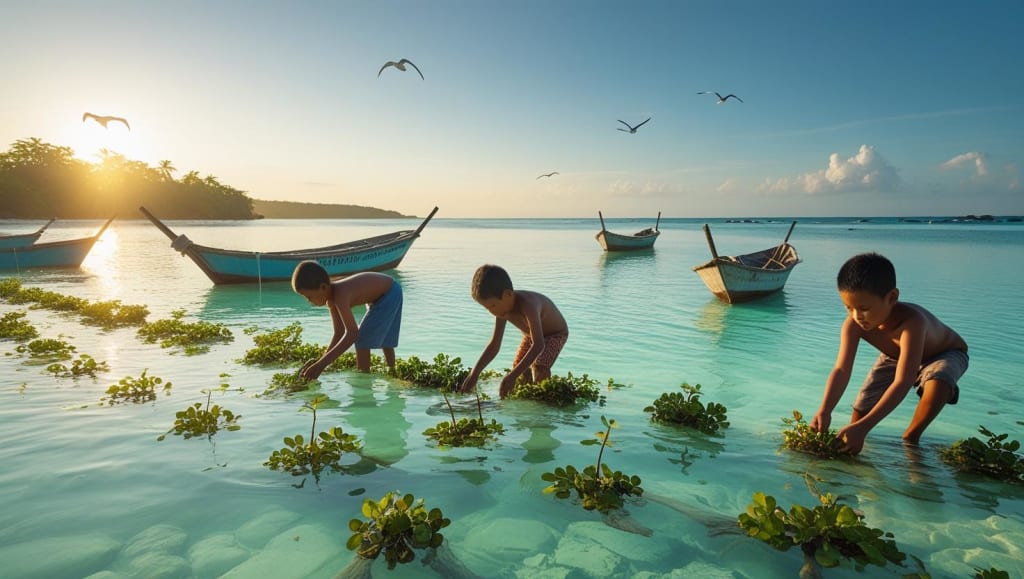
![A serene coastal scene in Southeast Asia, where local fishers and children plant mangrove saplings along a shoreline, with a backdrop of restored coral reefs visible underwater. The golden light of dawn casts a hopeful glow, symbolizing renewal and community strength.]
About the Creator
Shohel Rana
As a professional article writer for Vocal Media, I craft engaging, high-quality content tailored to diverse audiences. My expertise ensures well-researched, compelling articles that inform, inspire, and captivate readers effectively.
Keep reading
More stories from Shohel Rana and writers in Poets and other communities.
MrBeast’s Green Revolution
TeamTrees: Roots of Change MrBeast’s Green Revolution In a world yearning for renewal, Jimmy Donaldson—better known as MrBeast—has once again turned his boundless energy toward a cause that breathes life into the planet. As of August 2025, his ongoing TeamTrees initiative stands as a testament to the power of collective action, building on a legacy that began in 2019 with a bold promise to plant 20 million trees. Now, with over 24 million trees already rooted across the globe, this campaign continues to evolve, weaving a greener future with every sapling that takes hold. It’s a movement that transforms digital influence into tangible hope, proving that even the smallest contributions can shift the course of our world.
By Shohel Rana7 months ago in Poets
Two Grumpy Old Men Solve the Problem
Marty and Steve were two grumpy old men who lived together. They had known each other for years. Marty had been a bachelor all his life. Steve said it was because no one could stand to ever live with. Marty’s standard reply was “Well, you are, so what sort of a moron does that make you!”
By Calvin London3 days ago in Humor


Comments
There are no comments for this story
Be the first to respond and start the conversation.