
TO AUTUMN
To Autumn - Different aspect of Season

INTRODUCTION
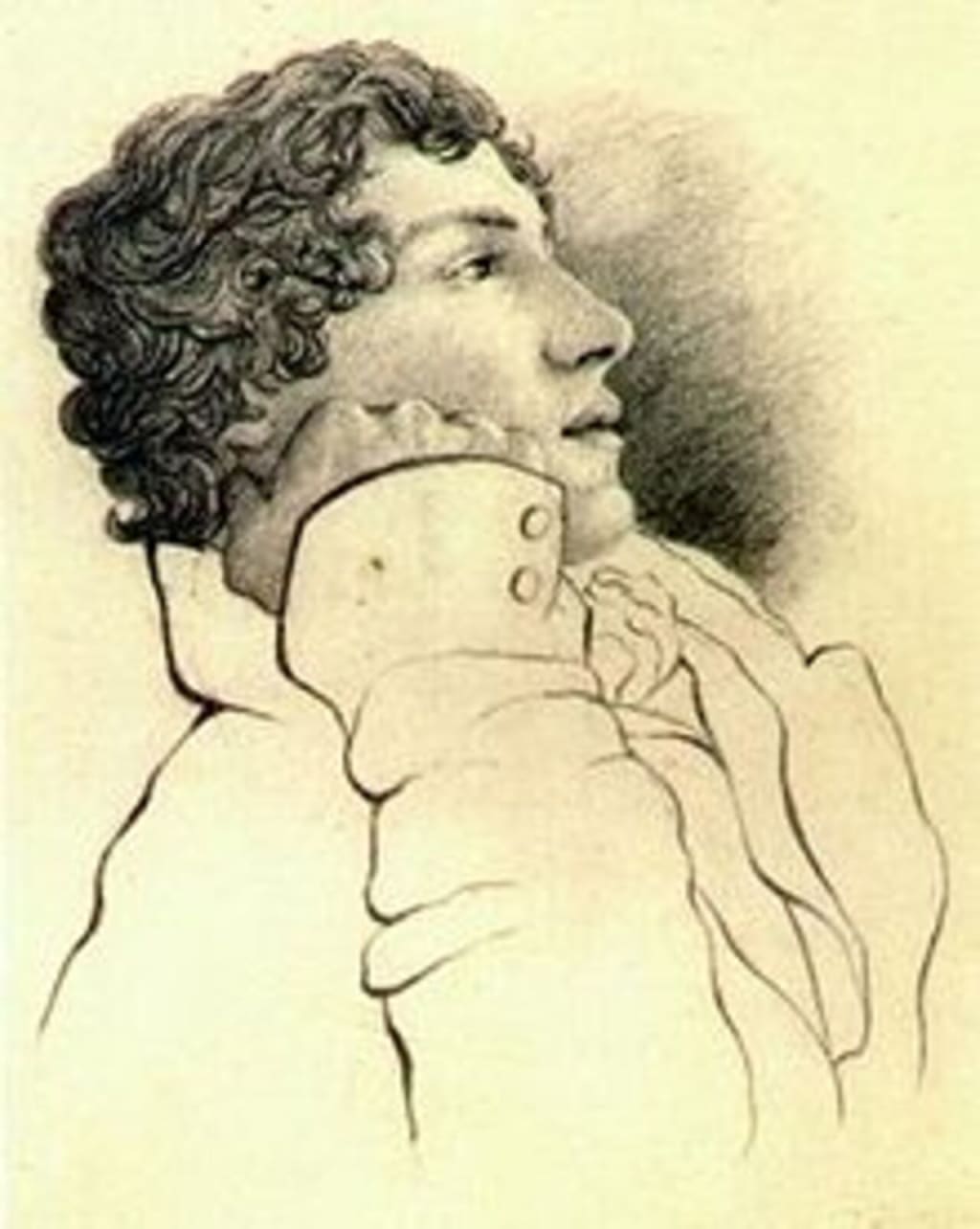
"To Autumn" is a poem by English Romantic poet John Keats (31 October 1795 – 23 February 1821). The work was composed on 19 September 1819 and published in 1820 in a volume of Keats's poetry that included Lamia and The Eve of St. Agnes.
"To Autumn" is the final work in a group of poems known as Keats's "1819 odes". Although personal problems left him little time to devote to poetry in 1819, he composed "To Autumn" after a walk near Winchester one autumnal evening.
EXPLANATION
The poem has three eleven-line stanzas which describe a progression through the season, from the late maturation of the crops to the harvest and to the last days of autumn when winter is nearing.
The imagery is richly achieved through the personification of Autumn, and the description of its bounty, its sights and sounds. It has parallels in the work of English landscape artists,[1] with Keats himself describing the fields of stubble that he saw on his walk as conveying the warmth of "some pictures".
One of the most anthologized English lyric poems, "To Autumn" has been regarded by critics as one of the most perfect short poems in the English language.
POEM
Season of mists and mellow fruitfulness,
Close bosom-friend of the maturing sun;
Conspiring with him how to load and bless
With fruit the vines that round the thatch-eves run;
To bend with apples the moss'd cottage-trees,
And fill all fruit with ripeness to the core;
To swell the gourd, and plump the hazel shells
With a sweet kernel; to set budding more,
And still more, later flowers for the bees,
Until they think warm days will never cease,
For Summer has o'er-brimm'd their clammy cells.
Who hath not seen thee oft amid thy store?
Sometimes whoever seeks abroad may find
Thee sitting careless on a granary floor,
Thy hair soft-lifted by the winnowing wind;
Or on a half-reap'd furrow sound asleep,
Drows'd with the fume of poppies, while thy hook
Spares the next swath and all its twined flowers:
And sometimes like a gleaner thou dost keep
Steady thy laden head across a brook;
Or by a cyder-press, with patient look,
Thou watchest the last oozings hours by hours.
Where are the songs of Spring? Ay, where are they?
Think not of them, thou hast thy music too,—
While barred clouds bloom the soft-dying day,
And touch the stubble-plains with rosy hue;
Then in a wailful choir the small gnats mourn
Among the river sallows, borne aloft
Or sinking as the light wind lives or dies;
And full-grown lambs loud bleat from hilly bourn;
Hedge-crickets sing; and now with treble soft
The red-breast whistles from a garden-croft;
And gathering swallows twitter in the skies..
THEME
Through the stanzas there is a progression from early autumn to mid autumn and then to the heralding of winter. Parallel to this, the poem depicts the day turning from morning to afternoon and into dusk. These progressions are joined with a shift from the tactile sense to that of sight and then of sound, creating a three-part symmetry which is not present in Keats's other odes
As the poem progresses, Autumn is represented metaphorically as one who conspires, who ripens fruit, who harvests, who makes music.
The first stanza of the poem represents Autumn as involved with the promotion of natural processes, growth and ultimate maturation, two forces in opposition in nature, but together creating the impression that the season will not end
In this stanza the fruits are still ripening and the buds still opening in the warm weather. Stuart Sperry says that Keats emphasizes the tactile sense here, suggested by the imagery of growth and gentle motion: swelling, bending and plumping
In the second stanza, Autumn is personified as a harvester, to be seen by the viewer in various guises performing laboring tasks essential to the provision of food for the coming year. There is a lack of definitive action, all motion being gentle.
In lines 14–15 the personification of Autumn is as an exhausted labourer. Near the end of the stanza, the steadiness of the gleaner in lines 19–20 again emphasizes a motionlessness within the poem.
The progression through the day is revealed in actions that are all suggestive of the drowsiness of afternoon: the harvested grain is being winnowed, the harvester is asleep or returning home, the last drops issue from the cider press.
The last stanza contrasts Autumn's sounds with those of Spring. The sounds that are presented are not only those of Autumn but essentially the gentle sounds of the evening. Gnats wail and lambs bleat in the dusk. As night approaches within the final moments of the song, death is slowly approaching alongside the end of the year.
The full-grown lambs, like the grapes, gourds and hazelnuts, will be harvested for the winter.
The twittering swallows gather for departure, leaving the fields bare. The whistling red-breast and the chirping cricket are the common sounds of winter.
The references to Spring, the growing lambs and the migrating swallows remind the reader that the seasons are a cycle, widening the scope of this stanza from a single season to life in general
Others, like Harold Bloom, have emphasized the "exhausted landscape", the completion, the finality of death, although "Winter descends here as a man might hope to die, with a natural sweetness". If death in itself is final, here it comes with a lightness, a softness, also pointing to "an acceptance of process beyond the possibility of grief."
According to Helen Vendler, "To Autumn" may be seen as an allegory of artistic creation. As the farmer processes the fruits of the soil into what sustains the human body, so the artist processes the experience of life into a symbolic structure that may sustain the human spirit.
CONCLUSION
'To Autumn' may be, as other critics have pointed out, his greatest achievement in its ability to redeem the English vernacular as the casual expression of everyday experience, becoming in this his most exterior poem even in all its bucolic charm. In the same year, Thomas McFarland placed "To Autumn" with "Ode to a Nightingale", "Ode on a Grecian Urn", "The Eve of St. Agnes" and Hyperion as Keats's greatest achievement, together elevating Keats "high in the ranks of the supreme makers of world literature". In 2008, Stanley Plumly wrote, "history, posterity, immortality are seeing 'Ode to a Nightingale,' 'Ode on a Grecian Urn,' and 'To Autumn' as three of the most anthologized lyric poems of tragic vision in English.
YOURS SINCERELY,
KAMALI CHANDRASEKAR
About the Creator
Kamali Chandrasekar
Hey Hiii...
Welcome to my profile! I'm a Freelancer and always loves to post about Trending topics. You can see me here as a trend setter
Keep reading
More stories from Kamali Chandrasekar and writers in Poets and other communities.
Fabien Dei Franchi: An Oscar Wilde Masterpiece Analyzed
I am currently reading Oscar Wilde’s most famous works as an attempt to broaden my cultural consciousness. The book is a collection of poems, each wildly different and varying in length. My top three favorites (not in order).
By PhilosophyPathabout 21 hours ago in Poets
One Unchecked Box
"Republished" because it was the only way to add the embed for the newly recorded audio version of this story due to the Top Story badge. Plus it serves as a nice, informal announcement of the podcast's revival for another season (go subscribe!):
By Stephen A. Roddewig3 days ago in Fiction


Comments
There are no comments for this story
Be the first to respond and start the conversation.