


Why DIY Art Still Matters
I found my first zine in the summer of 2020, tucked under a pile of flyers at a protest in Brooklyn. It was a stapled stack of photocopied pages, rough-edged and smudged, screaming with hand-drawn skulls and furious poetry about police brutality. It wasn’t polished or pretty, but it hit like a fist. That zine—called No Quiet Surrender—felt alive, a piece of someone’s soul pressed into my hands. In a world drowned by algorithms and corporate noise, zines like Salt in the Wound are making a comeback, raw and unfiltered, giving voice to those the mainstream ignores. They’re not just art—they’re acts of rebellion, proof that DIY culture still burns bright.
The Roots of Zine Culture
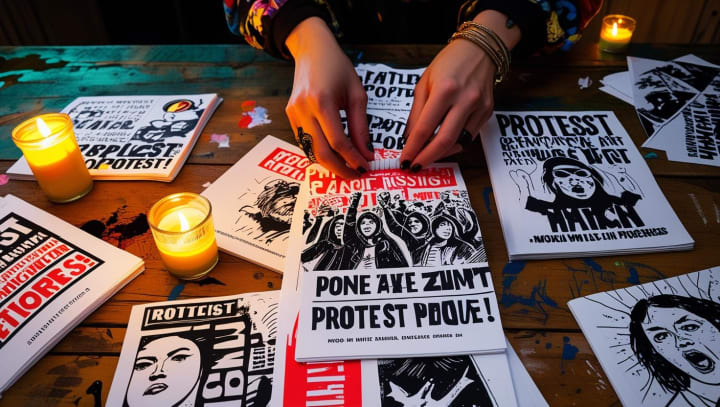
Zines (short for “fanzines” or “magazines”) started as scrappy, self-published booklets in the 1930s, when sci-fi fans mimeographed their stories. By the 1970s, punk rockers hijacked the format, churning out zines with Xerox machines to rant about music, politics, and everything wrong with the system. They were cheap, tactile, and fiercely independent—no editors, no ads, no gatekeepers. The 1990s riot grrrl movement took it further, with feminist zines like Bikini Kill calling out sexism and empowering a generation of women to speak out.
Today, zines are having a renaissance. Salt in the Wound, a zine born in 2023, collects poems, sketches, and stories from crisis zones—Gaza, Haiti, Ukraine—and marginalized communities worldwide. It’s not glossy or digital; it’s photocopied, stapled, and passed hand-to-hand at protests, cafes, and squats. “Zines are for the people who don’t have a platform,” says Kai, a 27-year-old contributor to Salt in the Wound I spoke with over Signal. “They’re our way of saying, ‘We don’t need your permission to be heard.’”
Bypassing the Gatekeepers
In 2025, the internet is a double-edged sword. It’s a megaphone for voices that once would’ve been silenced, but it’s also a walled garden controlled by tech giants. Algorithms bury radical content; shadowbans throttle activists; corporate platforms sanitize anything too raw. Zines cut through that. They’re physical, untraceable, and impossible to censor. You can’t shadowban a stapled booklet passed under a table.
Kai, who grew up in a working-class neighborhood in Detroit, started making zines after their poetry was rejected by literary journals for being “too angry.” “Those editors wanted polished, safe stuff,” they told me. “Zines let me be messy, real. I can scream on the page.” Their contribution to Salt in the Wound—a poem about gentrification scrawled over a collage of eviction notices—took them two nights to create, using a borrowed printer and a stolen stapler. “It’s not about perfection,” Kai said. “It’s about getting it out there.”
Zines also democratize art. You don’t need a degree, a publisher, or a budget—just paper, a pen, and something to say. In Salt in the Wound, a Palestinian teenager’s sketch of a checkpoint sits next to a Ukrainian refugee’s letter to her lost home. There’s no hierarchy, no editorial board deciding who’s “worthy.” The zine’s editors, a loose collective of activists, accept submissions via encrypted email or physical drop-offs at trusted bookstores. “We don’t judge,” one editor told me anonymously. “If it’s from the heart, it’s in.”
The Process: Grit and Glue
Making a zine is as raw as its content. Kai described their process: late nights at a kitchen table, surrounded by coffee mugs and crumpled drafts. They write by hand, cut out images from old magazines, and paste them with glue sticks. “It’s messy,” they laughed. “My fingers are always inked up.” Once the pages are done, they sneak into a community center to use the photocopier, printing 50 copies at a time. Stapling is a group effort—friends gather, music blasting, as they assemble zines to distribute at protests or slip into library books.
The tactile nature of zines is part of their power. Unlike a tweet or a blog post, a zine feels human. The smudged ink, the uneven staples, the faint coffee stain—they’re traces of the hands that made it. “When you hold a zine, you’re holding someone’s fight,” Kai said. They once found one of their zines at a rally, dog-eared and annotated by strangers. “It was like my words had grown legs and walked into the world.”
Salt in the Wound thrives on this intimacy. Its pages are a chaotic mix: handwritten poems, grainy photos of protests, sketches drawn in bomb shelters. One issue features a recipe for tear gas remedies next to a manifesto on mutual aid. Another has a child’s drawing of a dove, sent from a refugee camp. The imperfections—typos, crooked margins—are deliberate. They say, “This is us, unfiltered.”
Nostalgia and Defiance
There’s something nostalgic about zines, a throwback to a pre-digital era when art was physical and rebellion meant getting your hands dirty. But nostalgia doesn’t capture their urgency. Zines aren’t relics; they’re weapons. In a world where surveillance tracks every click, zines are analog, slipping through the cracks of digital control. They’re shared in secret, left in coffee shops, or mailed in plain envelopes. In authoritarian states, where dissent can mean death, zines are a lifeline. A contributor in Myanmar told Salt in the Wound they hid zines under floorboards, passing them to trusted couriers.
Zines also challenge the commodification of art. While corporate platforms monetize creativity, zines are often free or traded for a dollar to cover printing. Salt in the Wound operates on donations and volunteer labor, with copies distributed at cost or given away at protests. “We’re not here to make money,” Kai said. “We’re here to make noise.”
That noise resonates. Zines like Salt in the Wound have sparked solidarity actions—readings in Berlin, art swaps in Mexico City, even a pop-up zine library in Johannesburg. They’ve inspired others to start their own zines, creating a ripple effect of DIY resistance. “Every zine is a seed,” Kai said. “Plant enough, and you’ve got a forest “
Why Zines Still Matter
I keep coming back to that Brooklyn protest, the zine in my hands. It wasn’t just paper—it was a spark, a reminder that art doesn’t need permission to exist. In a world that tries to silence the marginalized, zines are a middle finger to power. They’re proof that you don’t need a platform, a budget, or a gatekeeper’s approval to be heard. All you need is a pen, some paper, and the courage to say something.
Salt in the Wound carries that legacy forward. Its pages hold the voices of people who refuse to be erased—poets in blackouts, artists in war zones, kids in camps. Each zine is a small act of defiance, a claim to existence in a world that often looks away. They’re not perfect, but they’re real, and that’s enough.As I write this, I imagine Kai at their kitchen table, inked hands stapling pages, sending their words into the world. Zines like theirs remind us that art isn’t just for galleries or streaming platforms. It’s for the streets, the shadows, the rubble. It’s for anyone with something to say and the guts to say it.
About the Creator
Shohel Rana
As a professional article writer for Vocal Media, I craft engaging, high-quality content tailored to diverse audiences. My expertise ensures well-researched, compelling articles that inform, inspire, and captivate readers effectively.
Keep reading
More stories from Shohel Rana and writers in Poets and other communities.
Pages of Us
The Open Book In the charming town of Willow Creek, the Willow Creek Library was more than a building—it was a haven for stories and dreamers. Lena Torres, a 29-year-old librarian with a love for storytelling, arrived to lead a community literacy program. Her wavy chestnut hair framed her face, and her dark eyes sparkled with the magic of books. Lena believed stories could bridge hearts, and her program aimed to help adults improve their reading through shared narratives.
By Shohel Rana7 months ago in Poets
The Devil's Cut
“Comrade, finally you’re awake.” The voice was smooth, sensual. A flickering incandescent bar was all that lit the white, sterile room. All Vladimir remembered was everything going black. He tried to move his arms and found them strapped to the gurney.
By Matthew J. Fromm7 days ago in Fiction



Comments
There are no comments for this story
Be the first to respond and start the conversation.