
The Words I Never Sent: A Love Letter I Wrote Too Late
I spent years writing poems for someone who never knew they were about them—until the day my silence finally broke

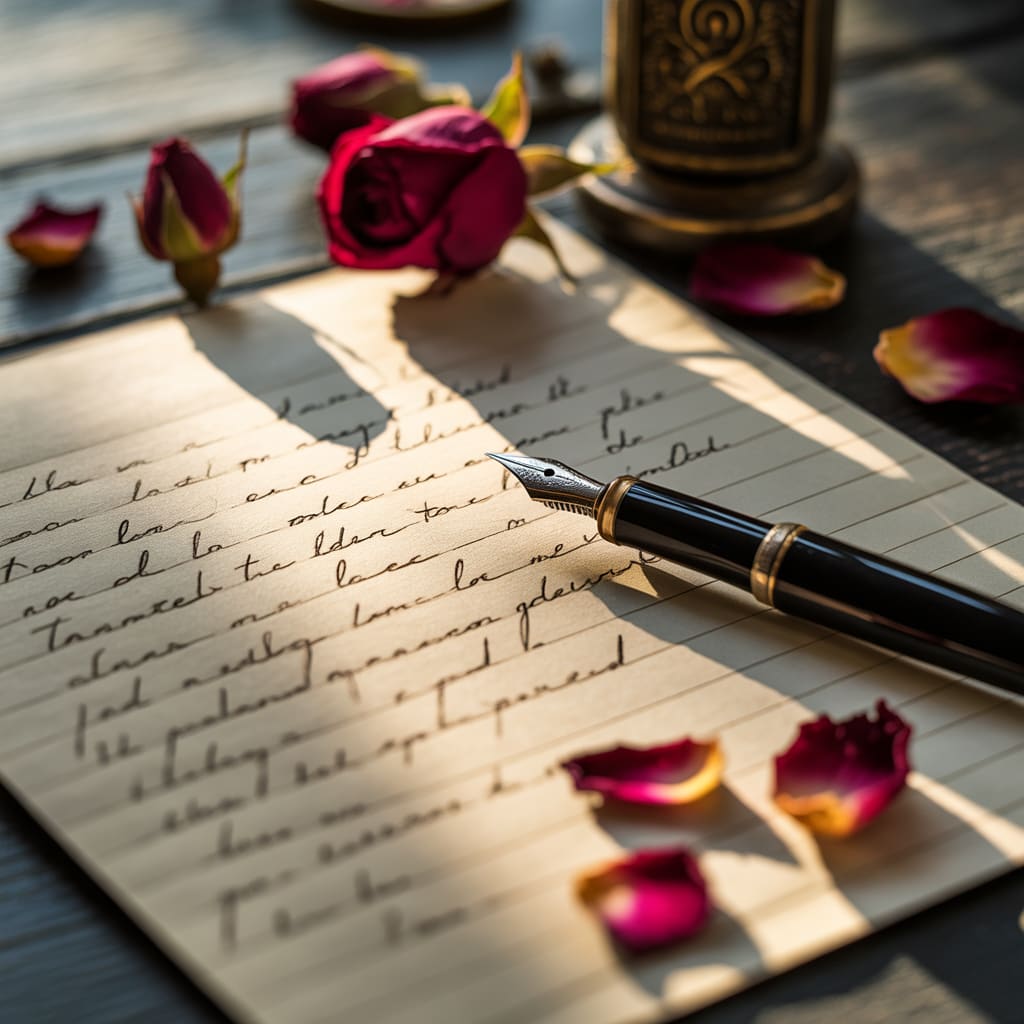
I have written a thousand poems in my life, but only one ever frightened me.
Not because of the words themselves, but because of the truth they carried—truth I never dared to speak aloud.
It started on a winter evening, two years ago, when the world felt heavy enough to collapse on my shoulders. I was sitting at my small wooden desk, the one with old ink stains and half-broken drawers, trying to write something—anything—that didn’t feel empty.
But every line I wrote circled back to the same person.
Her.
The girl with the quiet laugh and eyes full of questions she never asked. The one who always smelled faintly of jasmine and old books. The one who held my heart without ever knowing it.
I told myself it was harmless.
Just poetry.
Just words I would tuck away and never let see daylight.
But poems don’t like to stay hidden.
They sit there, pulsing like a second heartbeat, reminding you of every emotion you tried to bury.
That night, the poem began with a sentence that felt like a confession:
“Some people live in the spaces between my breaths—and you are one of them.”
I stopped writing.
My hands trembled. My chest tightened.
Because suddenly, the words weren’t just pretty metaphors. They were everything I had refused to admit:
I loved her.
Quietly.
Hopelessly.
Completely.
For months, I wrote for her and only her. Not that she ever knew. She thought I wrote about the seasons, or loneliness, or the way time bends and breaks. She never realized she was the reason I believed in softness at all.
I would see her in cafés, her hair tied loosely, pen tapping the notebook she always carried. She wrote lists and reminders. I wrote all the ways she made the world gentler.
Sometimes I wondered what would happen if I told her.
If I said the poems were hers.
If I said I was hers.
But fear is a louder poet than love.
So I stayed silent.
One evening, after weeks of pushing back my emotions, she knocked on my door. Rain soaked her hair. Her voice shook.
“Can I stay for a while?”
I let her in, made her tea, and watched her sit beside my bookshelves, hugging her knees like someone trying to hold themselves together.
She didn’t tell me what had hurt her, only whispered:
“Sometimes I feel like I’m hard to love.”
I felt something inside me break open.
I wanted to say:
“You are the easiest thing in the world to love.”
But the words stayed locked behind my ribs.
Instead, I handed her a blanket. I sat next to her. I listened as she breathed slowly, trying to calm whatever storm lived inside her.
When she finally fell asleep on my couch, I realized something cruel:
The right words at the wrong time are still the wrong words.
So I stayed quiet.
Weeks passed. The distance between us shifted—growing and shrinking like the tide. Some days she felt close enough to touch; other days she felt like a dream I once had but couldn’t remember clearly.
Then came the afternoon that changed everything.
She found my notebook.
Not the one full of random drafts and abandoned ideas—the other one.
The one full of her.
She held it to her chest like something fragile.
“Are these… about me?” she asked.
Her voice was soft, but her eyes were sharp, searching mine for truth.
My lungs forgot how to work.
I nodded.
She opened the notebook and read the first page. Then the second. Then the tenth. Her hands shook. Her lips parted. She inhaled like she had been underwater and finally surfaced.
When she finished, she looked at me with an expression I still struggle to describe. It wasn’t anger. It wasn’t fear.
It was something far more painful:
Wishing.
“M… why didn’t you tell me?” she whispered.
“Because I was afraid,” I said. “And because I thought you deserved someone braver.”
She closed the notebook slowly, like she was trying not to hurt it.
“If I had known,” she said, “maybe everything would have been different.”
Her voice cracked.
“Maybe I wouldn’t have said yes to someone else.”
There it was.
The line that shattered me.
She was engaged.
I knew that.
But hearing it in that moment felt like swallowing broken glass.
We stood there, her holding my poems, me holding everything I never said.
And just like that, she left—with my words pressed against her heart like a wound.
I haven’t written a poem since.
But last week, I received a letter in the mail.
Her handwriting.
Three words:
“I still wonder.”
And now I am here, at my desk again, writing the only poem that still lives inside me.
A poem that is not for hiding.
Not for silence.
Not for fear.
A poem that begins with the truth:
“I loved you then.
I love you still.
And maybe… maybe that will always be my story.”
About the Creator
Keep reading
More stories from TariqShinwari and writers in Poets and other communities.




Comments
There are no comments for this story
Be the first to respond and start the conversation.