
The Voices Beneath the Moonlight
A Circle of Poets Who Found Magic in Their Words
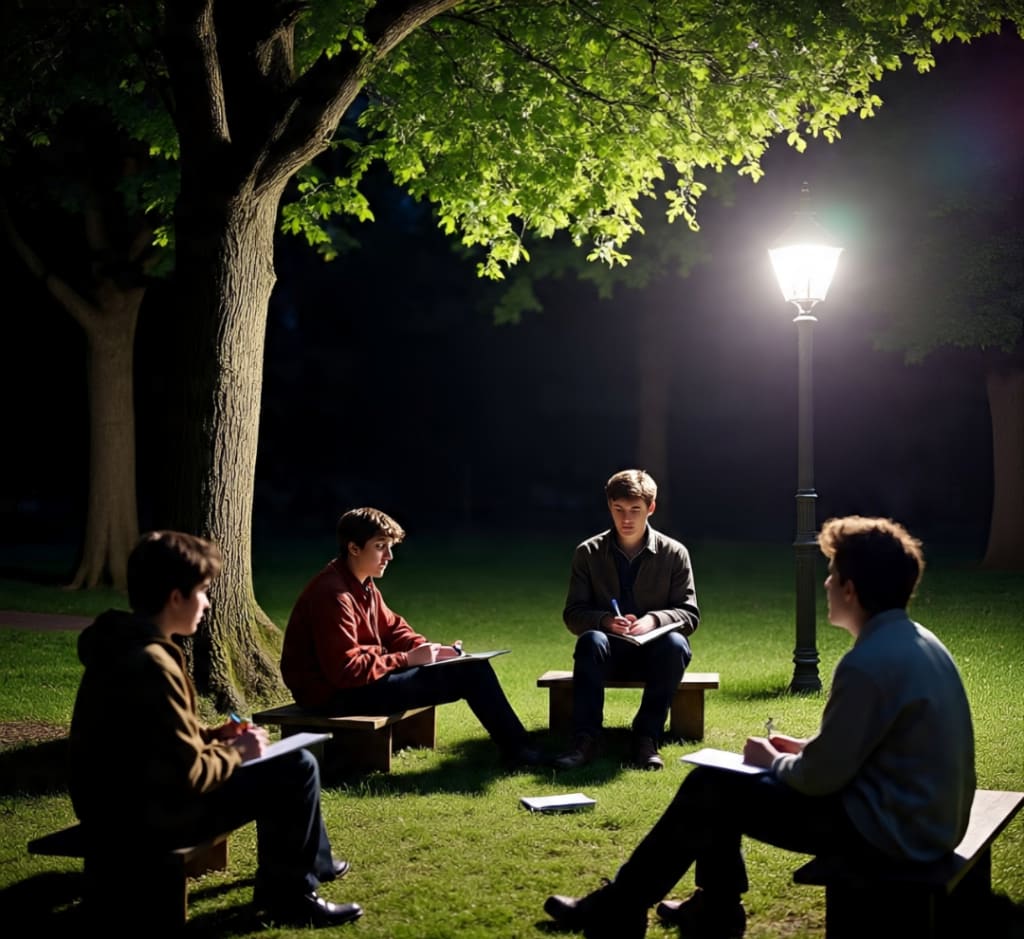
In a small town called Dar-e-Noor, where the streets were lined with quiet tea stalls and dusty bookshops, a group of boys gathered every Friday evening beneath the old banyan tree. They called themselves The Moonlight Poets. None of them were famous, none of them had published books, and most of them were still students trying to balance homework with dreams. Yet, what they shared was greater than fame—they shared a love for words.
Their leader, though he never claimed it, was a calm boy named Umar. He wasn’t older than sixteen, but his confidence made him seem wise. Every week, Umar brought a small lantern which he placed in the center of the circle. “Light for our words,” he would say. They believed him. The lantern had become a symbol of inspiration.
Akbar, sturdy and often shy, wrote poems about rivers and clouds but rarely read them out loud. Bilal, who talked more than he wrote, loved to critique and praise everyone’s work. Haris, the youngest, barely knew how to control rhymes, yet his imagination was endless. And then there was Daniyal, who joined recently and carried a notebook wrapped in cloth as if it were something sacred.
The sky grew deeper as the lantern flickered its warm glow. That night, Umar announced, “We will each read something special, something from our hearts, not from the safe corners we usually write in.”
Akbar trembled. Haris grinned nervously. Bilal sighed dramatically. Daniyal stayed quiet, clutching his notebook tighter.
Umar started first. His poem was short, thoughtful, and soft like a whisper:
> Some hearts break without sound,
yet still beat louder than storms.
The boys clapped gently, not loudly, but with respect. It was their way.
One by one they shared. Haris read about a world floating on clouds. Bilal read a funny poem about a stubborn pencil that refused to write. The laughter shook their circle. Even Akbar found courage to share a poem about a river longing for rain.
Finally, it was Daniyal’s turn.
He stood up slowly. His hands trembled as he opened his wrapped notebook. For a moment, he stared at the moon before speaking. His poem was not like the others. It had sadness and hope mixed together:
> My father sells tea all day,
and dreams he never sips.
He says success is served hot,
but we take cold sips of reality.
Yet, I write his dreams here,
to heat them again,
until one day—
he drinks from a cup full of pride.
The circle fell silent. Even the breeze stopped for a breath. Umar stepped forward, placing a hand on Daniyal’s shoulder. “Your words are heavy, but they fly high,” he said.
Akbar wiped his eyes secretly. Bilal nodded with unusual seriousness. Haris whispered, “Your father will be proud.”
From that night on, Daniyal’s notebook was no longer wrapped in cloth. He let it breathe with the others. The Moonlight Poets grew stronger, not because their poems improved quickly, but because they began to believe in each other.
They continued meeting every week, letting their dreams leak into pages, letting their fears become metaphors, and letting their hopes rise like the moon above them.
In Dar-e-Noor, where nothing big ever seemed to happen, five boys found a way to make their words matter. And under the banyan tree, every Friday evening, the lantern still flickered—lighting the futures they were writing.
About the Creator
Keep reading
More stories from Muhammad Saad and writers in Poets and other communities.
The Circle of Ink
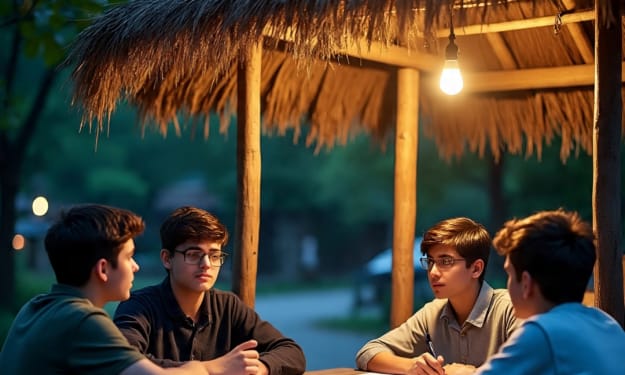
In a quiet corner of the old city, where bicycle bells and street vendors blended into a familiar melody, four boys met every evening at a small tea stall called Chai Baithak. They were not famous poets, not even published writers—just friends with notebooks full of thoughts they believed were too heavy for ordinary conversations.
By Muhammad Saad 3 months ago in Poets
A Historic Declaration
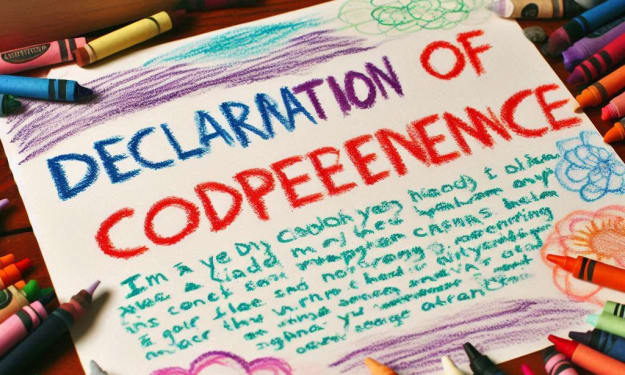
We the People of the Husbands of the United States of America, in Order to form a more perfect Union, and I mean you...with me...establish Justice, insure domestic Tranquility, provide for the common defence, promote the general Welfare, and secure the Blessings of Liberty to ourselves, after Puberty, do ordain and establish this Declaration of Co-Dependence.
By Gerard DiLeo7 days ago in Humans


Comments
There are no comments for this story
Be the first to respond and start the conversation.