
The Room of Shared Questions
Where Interviews Become Conversations and Voices Find Purpose

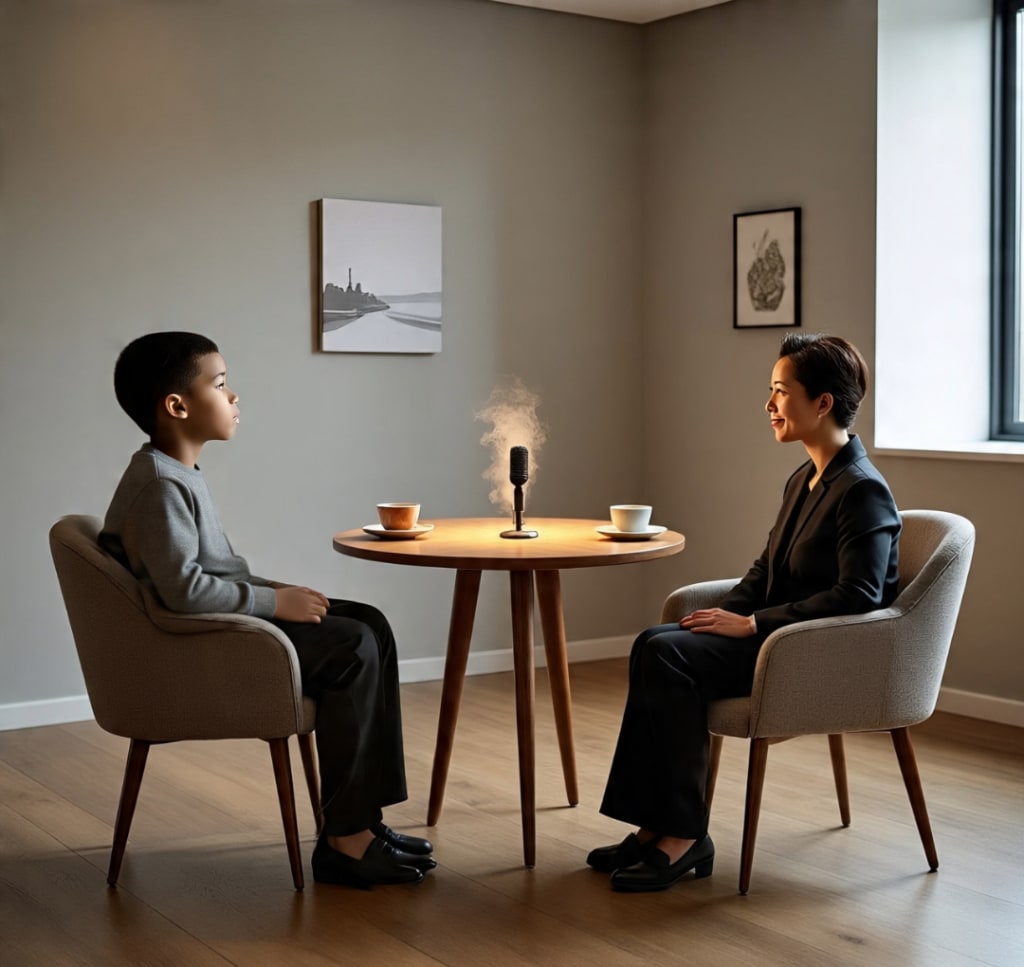
There is a small room at the top floor of the city’s communication center. It is not crowded, not decorated with glamorous posters, and not filled with busy noise. Instead, it is filled with something more powerful—curiosity. People here do not come to shout their opinions; they come to share their voices, and sometimes even discover them for the first time. This place is known by the community as The Room of Shared Questions, where interviewers and interviewees meet with open ears and honest hearts.
Every week, voices from different fields step inside—writers, teachers, mechanics, small business owners, doctors, students, and artists. They all sit in front of the interviewer, uncertain about what will be asked, but ready to unfold who they truly are. For the interviewer, the task is not simply to ask questions; it is to listen deeply, respond wisely, and guide respectfully.
One such interviewer, Zayyan, believes interviews are not investigations but journeys of understanding. He once said, “A good interview is like opening a door. You don’t force it—you turn the handle gently.” To him, every person sitting across the table carries a universe of experiences, and each question acts like a key, unlocking hidden stories, unspoken feelings, and forgotten dreams.
One evening, a guest arrived who had never been interviewed before: an elderly bookseller named Umar. He seemed nervous, carrying a notebook filled with quotes written in faded ink. When asked to introduce himself, he smiled shyly and said, “I don’t know how to talk about myself. I only know how to talk about books.”
Zayyan didn’t rush. He gently asked, “Why do books matter to you?” Umar paused for a moment, opened his notebook, and read a line:
‘Books are houses that hold people’s memories long after their voices disappear.’
His voice trembled, but his eyes sparkled. Zayyan realized the interview had just begun.
The conversation slowly unfolded. Umar shared how he started collecting second-hand books when he had no money to buy new ones; how he learned life lessons from authors he had never seen; how he once repaired a torn book for a child who cried because it was her favorite story. With every answer, his nervousness faded, replaced by pride—not the loud pride of ego, but the quiet pride of passion.
The interview was not just revealing a bookseller’s story; it was reminding everyone listening that ordinary lives carry extraordinary wisdom. At the end, Zayyan asked, “What message would you give to young people?” Umar closed his notebook gently and said, “Do not rush to make your life big. First, make it meaningful.”
The recording ended, but the room was silent with admiration. People who had entered as audience members felt they had read a human book. In The Room of Shared Questions, nothing spectacular happened; yet everything important did. A humble man discovered the strength of his voice, and a community remembered the value of listening.
The interviewer smiled as Umar left the room. Another story had been unlocked. Another voice had been heard. Another ordinary life had become an inspiration—not because someone shouted, but because someone asked, listened, and cared.
This is the power of the interview community. They create a space where every person matters, every story counts, and every question builds a bridge between hearts. Interviews are not just sessions of speaking; they are moments of shared humanity, where a question is not a demand, but a gift, and where answers are not performances, but truths.
About the Creator
Keep reading
More stories from Spotlight stories and writers in Poets and other communities.
The Microphone of Honest Minds
The Microphone of Honest Minds How Voices Build Trust, One Question at a Time In a small community radio station called Echo Voice FM, a man named Rehan always arrived before sunrise. He was not famous, not rich, and not searching for popularity. He only had one passion: listening to people and helping their stories be heard. Rehan was a quiet interviewer, and that quietness made him powerful. He believed that interviews were not just conversations, but bridges that connected human experiences.
By Spotlight stories 4 months ago in Interview




Comments
There are no comments for this story
Be the first to respond and start the conversation.