
The Poet’s Lighthouse
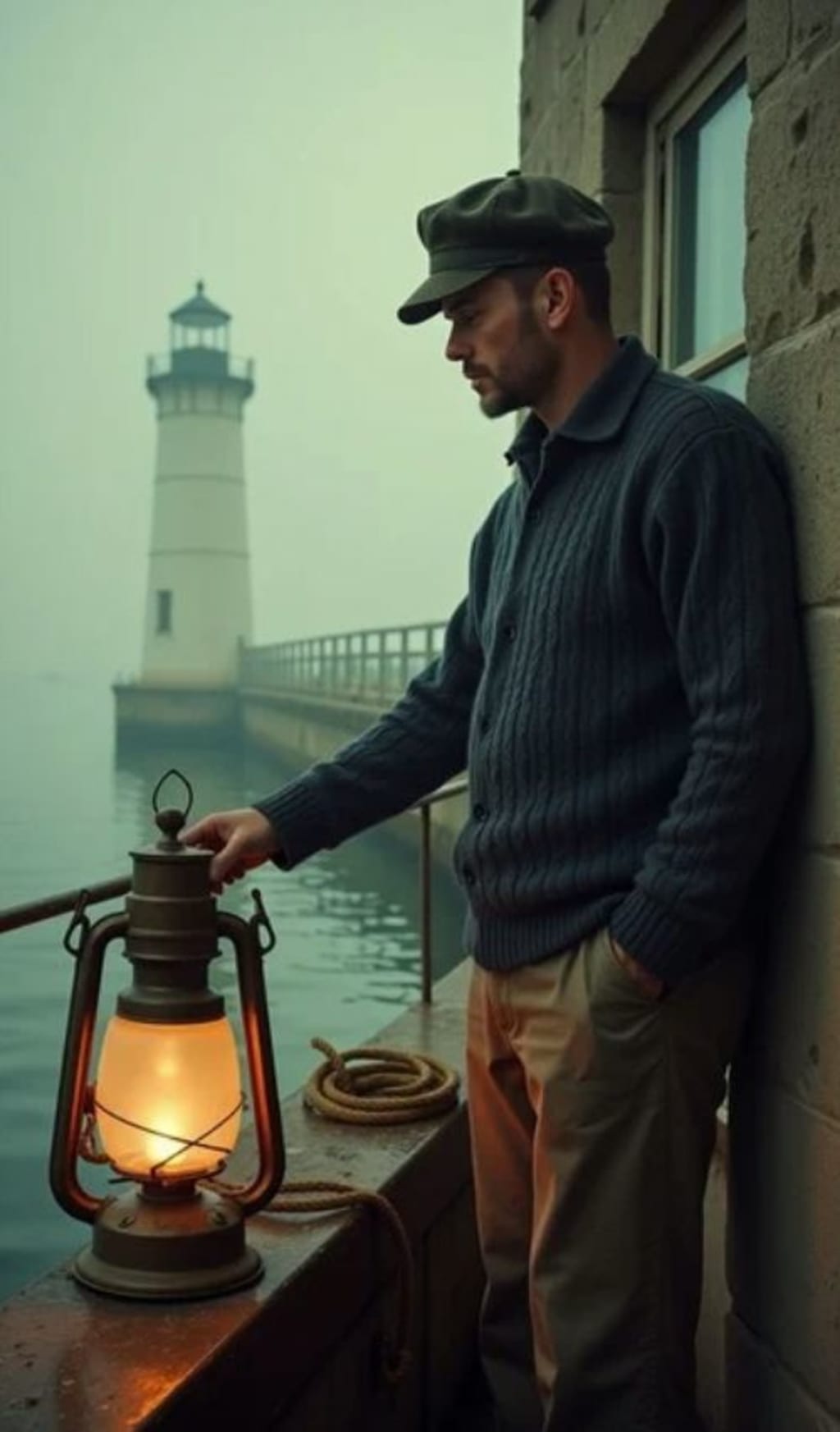
On the edge of a jagged coastline, where waves clashed endlessly against weathered rocks, stood a lighthouse unlike any other
M Mehran
On the edge of a jagged coastline, where waves clashed endlessly against weathered rocks, stood a lighthouse unlike any other. It wasn’t just a beacon for ships; it was a sanctuary for poets, a place where words were as vital as the wind, and silence was never empty.
Evelyn, a poet with a heart that carried both joy and sorrow in equal measure, had arrived one stormy evening. She had left the city behind, the noise, the chaos, the constant rush of life that drowned out the delicate rhythms of thought. The lighthouse, with its peeling white paint and glass lantern glowing faintly against the dark sky, promised solace—and inspiration.
Inside, the walls were lined with notebooks, some stacked in piles, others hung carefully on hooks like ornaments. Each notebook represented a poet who had passed through, leaving behind fragments of their soul. The caretaker, an elderly man named Simon, welcomed Evelyn with a nod. “Words find their way here,” he said simply. “Sometimes they arrive before the poet does.”
Evelyn unpacked her things and sat by a window, watching the storm rage. She had been writing for years, but lately, her words felt heavy, trapped in shadow. She opened her notebook and began to write, letting the wind guide her thoughts. Her pen moved almost on its own, tracing lines about the sea, about loneliness, about longing, and hope that refused to die.
That night, the lighthouse filled with other poets—some seasoned, some tentative, all seeking the same thing: a place where their words could breathe. There was Marcus, whose metaphors were sharp like the rocks below, cutting to the heart; Leila, who wrote with the gentleness of a lullaby, soothing pain with every verse; and Noah, who wielded language like a sword, confronting truths others preferred to ignore.
Evelyn listened to them all, her own insecurities slowly melting in the warmth of their voices. When it was her turn, she read aloud. Her words spoke of storms, of finding light amidst darkness, of the ocean’s endless patience. As she read, the lighthouse seemed to respond—the lantern above pulsed softly, the waves softened, and a hush fell over the room. For a moment, it felt as if the world itself was listening.
Simon smiled. “The lighthouse remembers,” he said quietly. “And it shares its memory with those who speak honestly.”
Over the following weeks, Evelyn discovered a rhythm she had never known. Each morning she wrote, letting the sea inspire her, and each evening she shared her work with the circle. The poets became her companions, her critics, and her cheerleaders. Together, they discovered the truth that poetry was never solitary—it was a conversation, a bridge between hearts.
One evening, during a particularly fierce storm, the lighthouse’s light faltered. Ships could not see its guiding beam, and fear rippled through the poets. Simon asked for volunteers to help keep the light steady. Without hesitation, Evelyn and the others climbed to the top, their poems tucked in their pockets, their hands steady against the wind and rain.
As they worked, Evelyn recited a poem about resilience, about courage in the face of fear. The others joined in, each voice layering over the next, a chorus that defied the storm. The light shone again, strong and unwavering, a beacon not just for ships, but for every poet who had struggled to be heard.
When the storm passed, the poets looked out at the calm sea, and Evelyn realized something profound: poetry was not merely about words on a page. It was about action, about connection, about standing firm in the face of chaos and letting your voice matter.
Years later, Evelyn returned to the city, carrying the lessons of the lighthouse in her heart. She wrote with newfound confidence, sharing her words widely, yet always remembering the sanctuary by the sea. And sometimes, when the night was quiet, she would close her eyes and hear the echoes of that storm, the chorus of voices, and the gentle hum of the lighthouse that had shown her the way.
The Poet’s Lighthouse, she knew, was more than a place. It was a reminder that poets are guardians of light, keepers of memory, and creators of hope. And as long as someone dared to speak, there would always be a beacon shining through the darkness.
Because poetry, like the lighthouse, does not vanish. It endures, guiding hearts through storms, illuminating truths, and reminding the world that even in the darkest night, words can lead the way.
About the Creator
Keep reading
More stories from Muhammad Mehran and writers in Poets and other communities.
The Last Poem of Willow Street
M Mehran Willow Street was quiet, almost too quiet. Nestled between crumbling brick buildings and fading streetlamps, it had once been alive with music, laughter, and poetry. But the world had changed, and poets—those who could see the extraordinary in the ordinary—had become rare.
By Muhammad Mehran6 months ago in Poets
When the Shelter Closes
Across the street from my house, a man slept under a tree, his dog by his side. My first, naive thought: he must be traveling through. But he kept coming back, often sleeping there during the day. Then it hit me—that person might not have a home.
By Bride of Sound3 days ago in Humans




Comments
There are no comments for this story
Be the first to respond and start the conversation.