
The Ones Who Stayed
Belonging Without Performance

The Ones Who Stayed
Belonging Without Performance
They said the town was built on agreement—
same roofs, same hours,
same language spoken softly enough
to pass as peace.
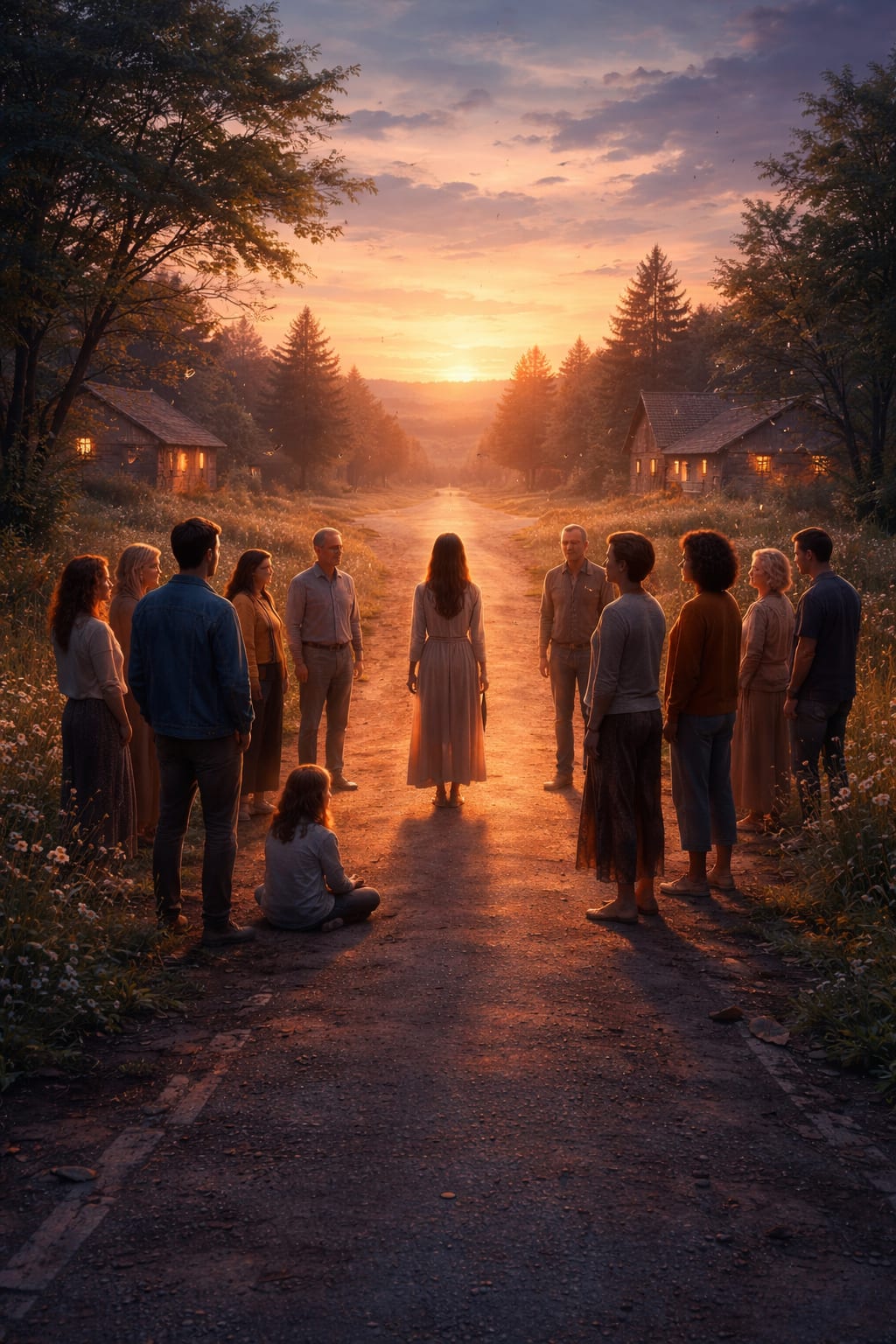
But there was a woman
who arrived without rehearsal.
No script folded in her pocket.
No armor polished to match the light.
She stood where the road widened
and did not ask where to stand.
Her presence unsettled the careful symmetry.
Some called her rare.
Others called her difficult.
A few mistook her stillness for promise
and leaned too hard against it.
She did not move away.
She did not merge.
Inside her, a thousand rooms remained intact—
grief seated beside gratitude,
clarity walking hand in hand with ache.
She had learned the discipline of holding
without spilling herself into the crowd.
People gathered, each carrying a version
of what they hoped she would be.
One wanted her to lead.
One wanted her to heal.
One wanted her to be quieter,
another louder,
another smaller,
another saved.
She listened the way dusk listens to day—
not arguing, not absorbing,
just allowing the temperature to change.
There was a man who spoke in edges,
sharp with belief, convinced unity
meant alignment.
There was a child who sat cross-legged
and noticed how the light touched everyone
without choosing.
There were elders with mismatched memories,
lovers mid-unraveling,
wanderers who had forgotten
they were still whole.
They stood together,
none matching,
no two rhythms the same.
And something remarkable happened.
No one disappeared.
The woman did not fix them.
The man did not soften.
The child did not instruct.
The elders did not agree.
The lovers did not reconcile.
The wanderers did not suddenly arrive.
They simply stayed.
Wind moved through the space
like a witness that refused to take sides.
Differences remained sharp,
but they stopped cutting.
Someone exhaled.
Someone else followed.
This was not harmony—
it was adjacency without threat.
Proximity without demand.
Belonging without performance.
The town did not change overnight.
The road did not close.
No monument was built.
But something learned how to stand.
Later, when asked what united them,
no one gave the same answer.
One said, she didn’t leave.
Another said, I didn’t have to pretend.
Another said, nothing was taken from me.
Another said nothing at all
and smiled like they had remembered
their own name.
As for the woman,
she left as quietly as she arrived—
not because she was done,
but because the space no longer needed
a reminder.
The town would forget her face.
They would remember the feeling.
That was enough.
I. The Town Speaks
We were built for order.
Lines, schedules, names that matched
what they were meant to hold.
We liked our unity rehearsed—
festivals, mottos, shared phrases
painted on walls we never questioned.
When she arrived,
we didn’t know where to place her.
She didn’t oppose us.
That would have been easier.
Opposition has shape.
She stood among us
without asking permission
to remain herself.
We felt exposed—
not because she looked at us,
but because she didn’t.
Some of us tried to claim her.
Some tried to correct her.
Some tried to become her.
None of it worked.
What unsettled us most
was not her difference,
but her refusal to disappear
for our comfort.
We learned, slowly,
that unity was not the same as alignment.
That standing together
did not require sameness—
only steadiness.
We are still learning.
But now, when we gather,
we leave room
for what does not match.
II. The Child Speaks
I noticed the quiet first.
Not the empty kind—
the kind that feels like
everyone is breathing at once.
She didn’t talk to me like I was small.
She didn’t talk much at all.
I watched people bring their noise to her
like bags they were tired of carrying.
Some hoped she would take them.
She didn’t.
She just stayed.
I saw that nothing bad happened
when people were different
next to each other.
No one cracked.
No one vanished.
I remember thinking:
Oh.
We don’t have to blend to belong.
Later, when I forgot this—
because grown-ups forget things—
I remembered her standing there,
whole,
and the way the air felt safe
without rules.
That’s how I learned
what united means.
III. The Wind Speaks
I move through everything.
Arguments. Agreements.
Bodies trying not to touch.
I know the sound of performance—
the tightness of it,
the way it rushes.
When she arrived,
I slowed.
Not because she stopped me,
but because nothing needed pushing.
I passed between them all—
sharp voices, soft ones,
truths that didn’t line up.
No one tried to trap me.
No one asked me to choose.
That’s rare.
Difference remained,
but it stopped bracing against itself.
I’ve seen unity that shouts.
It collapses.
This was quieter.
It held.
I left them as I found them—
not changed,
but less afraid
of standing near what they were not.
That is how things last.
IV. Time Speaks
I am not in a hurry.
I have watched empires confuse noise for unity,
watched devotion harden into demand,
watched difference mistaken for threat
simply because it refused to perform.
When she arrived,
nothing new began.
That is what most misunderstand.
She did not change them.
She did not awaken them.
She did not save anything.
She stood.
I have always favored those
who can remain intact
while standing near others’ becoming.
Moments like this are rare—
not because people are incapable,
but because staying requires patience
without reward.
I stretched myself around them—
around the man who needed certainty,
the child who remembered first,
the town learning to loosen its grip,
the wind that finally rested.
No one was completed.
That takes longer than a gathering.
But something aligned with truth:
belonging does not require disappearance.
Years later, they will misremember details.
They will argue over motives.
They will rename what happened.
I allow this.
What lasts is not the story,
but the orientation.
When difference stands without apology
and proximity no longer feels dangerous,
I slow.
That is how you know
something real occurred.
I move on now.
I always do.
But I leave behind
the quiet ability to stay.
United
We were built on agreement—
same hours, same roofs,
same words repeated softly enough
to pass for peace.
I noticed the quiet first.
Not silence—
the kind where everyone forgets
to brace.
Time did not begin here.
It rarely does.
But it slowed.
She arrived without rehearsal.
No posture of importance.
No hunger to be understood.
She stood where the road widened
and did not ask where to stand.
We did not know what to do with that.
Some of us leaned in too closely,
mistaking steadiness for promise.
Some backed away,
afraid we were being measured.
Some tried to name her
so we could keep her.
The wind moved through us all,
uninterested in sides,
unwilling to carry anyone’s certainty
for them.
Inside her, rooms stayed intact—
grief seated beside gratitude,
clarity walking with ache.
She had learned the discipline
of not spilling herself
to be held.
I watched people bring their noise to her
like bags they were tired of carrying.
She didn’t take them.
Nothing broke.
That’s when I knew.
Unity is often confused
with alignment.
Time has watched this error repeat itself
for centuries.
There was a man who spoke in edges,
convinced standing together
meant standing the same.
There were elders with mismatched memories,
lovers mid-unraveling,
wanderers who forgot
they were still whole.
We stood together anyway.
No two rhythms matching.
No one disappearing.
The wind slowed—
not stopped,
just no longer rushed.
This was not harmony.
It was adjacency without threat.
Proximity without demand.
Belonging without performance.
I sat cross-legged and noticed
how the light touched everyone
without choosing.
No one fixed anyone.
No one softened on command.
No one was corrected into safety.
Time stretched itself around the moment—
not to preserve it,
but to let it land.
Later, we would argue about what happened.
We would rename it.
We would forget her face.
That is how it lasts.
She left the way she arrived—
quietly,
because the space no longer needed
a reminder.
The wind moved on.
The road stayed open.
Nothing matched perfectly.
But something learned how to stand.
And when asked what united us,
no one gave the same answer.
One said, she didn’t leave.
One said, I didn’t have to pretend.
One said nothing
and breathed like they had remembered
their own name.
Time moved forward again.
It always does.
But it left behind
the quiet ability to stay.
I did not come to gather you.
I did not come to teach.
I came because I could stay
without leaving myself behind.
If anything opened,
it was already yours.
If anything held,
it was because you stood
without asking to be shaped.
This was never about me.
It was about remembering
that wholeness does not need permission
to stand beside another.
Author’s Note
This piece came from sitting with a question I see everywhere but rarely hear named:
What if unity doesn’t require sameness?
I wrote this as a story in voices—human, collective, elemental, and temporal—to explore what happens when people share space without asking one another to perform, agree, or disappear.
Nothing here is meant to persuade.
It’s an offering of presence.
If something in you recognizes this feeling, you’re not alone.
With care,
Flower InBloom
About the Creator
Flower InBloom
I write from lived truth, where healing meets awareness and spirituality stays grounded in real life. These words are an offering, not instruction — a mirror for those returning to themselves.
— Flower InBloom
Keep reading
More stories from Flower InBloom and writers in Poets and other communities.


Comments
There are no comments for this story
Be the first to respond and start the conversation.