
The Day the Sky Forgot Our Names
A quiet story about memory, loss, and the fragile courage of being human

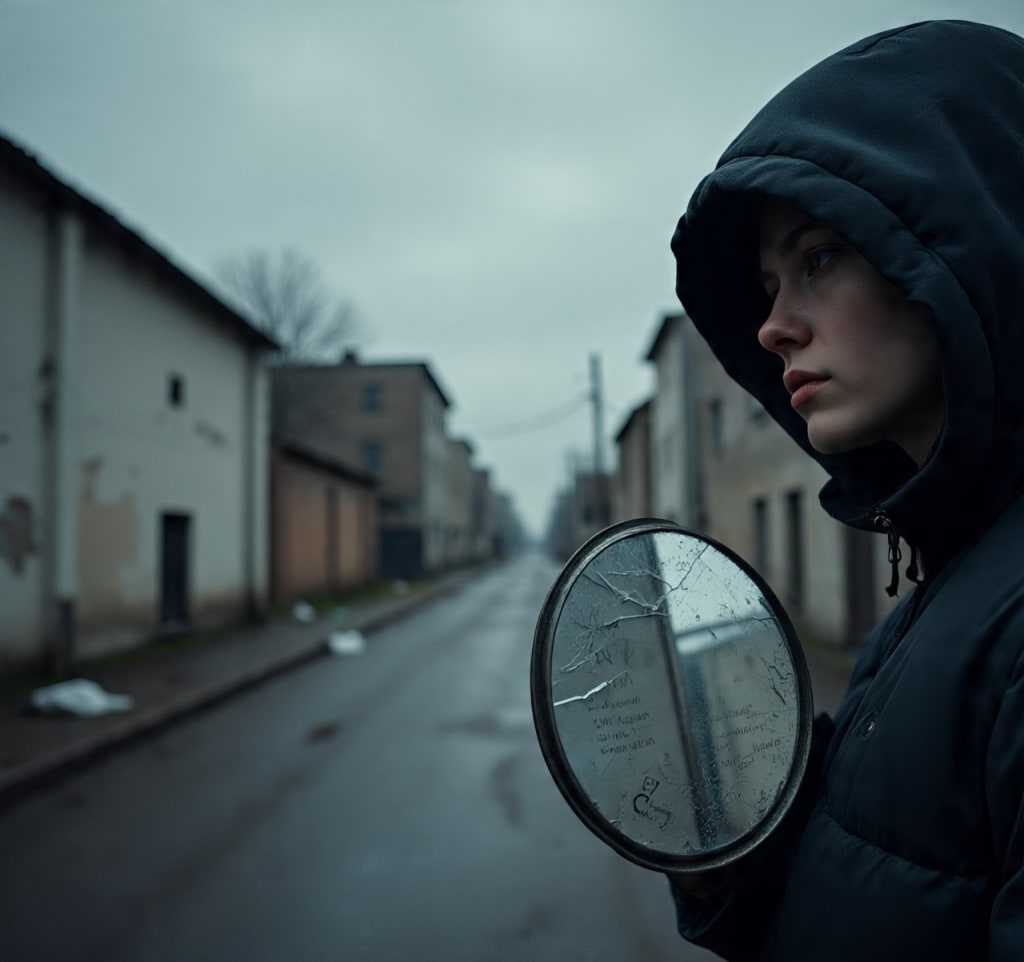
The day the sky forgot our names, it did not announce itself with thunder.
There was no earthquake, no sirens, no breaking news banner crawling across glowing screens. It began softly—so softly that most people mistook it for a normal morning.
I noticed it first when my phone refused to unlock.
Not because the battery was dead. Not because the system crashed.
It simply did not recognize me.
My reflection stared back from the black screen like a stranger who had learned my face but not my history. I laughed at first, assuming technology was being technology—temperamental, dramatic, demanding updates like a spoiled child. I tried again. And again.
“Who are you?” the screen might as well have asked.
Outside, the city was waking up the way cities always do—cars coughing awake, coffee shops exhaling steam, pigeons arguing over crumbs like they’d done for centuries. Life continued with embarrassing confidence.
Only we were changing.
At the café on the corner, the barista held my cup in midair, her smile trembling.
“I’m sorry,” she said carefully. “What was your name again?”
I told her.
She nodded, but her eyes slid away, already forgetting.
Behind me, a man argued with his wife—not loudly, not angrily, but desperately. He kept repeating, “I know I love you,” as if love alone should be enough to anchor memory. She watched him the way one watches a fading photograph—recognition thinning by the second.
By noon, it was undeniable.
Names were slipping.
Not disappearing entirely, but loosening—like threads pulled from fabric, like chalk washed by rain. People still remembered how to breathe, how to work, how to survive. But identity—the fragile architecture of who—was eroding.
News outlets scrambled for language. Scientists spoke of neurological anomalies. Spiritual leaders whispered about judgment. Influencers posted crying videos titled I Don’t Know Who I Am Anymore and watched their follower counts rise.
None of them had answers.
By evening, governments urged calm. “Your name does not define you,” a spokesperson said, as if repeating it might make it true.
But when my mother called me and asked, “Are you… my son?” something inside me cracked open like old glass.
“Yes,” I said. “I am.”
She believed me. For now.
That night, I wrote my name on my arm with a black marker. Then my mother’s. Then the names of people I loved. I filled my skin with ink as if I could tattoo memory itself.
Across the world, others did the same. Names were carved into desks, whispered into mirrors, etched into walls. People began introducing themselves with stories instead of words.
“I’m the one who burned the rice every Sunday.”
“I’m the girl who cried during cartoons.”
“I’m the man who never learned how to say goodbye.”
It worked. A little.
But memory is greedy. It does not like to share space with fear.
Days passed. Names faded from skin. Ink washed away. Voices grew uncertain. Even mirrors seemed less convincing, as if reflection itself was beginning to doubt.
What remained were moments.
The way your chest tightened when someone smiled at you.
The ache of nostalgia without an address.
The instinct to protect, even when you couldn’t explain why.
I volunteered at a shelter where people gathered—not because they knew who they were, but because loneliness had not yet forgotten them.
There, I met a woman who sat by the window every day at sunset.
“Do you remember your name?” I asked her once.
She shook her head.
“Do you remember anything?”
She smiled softly. “I remember waiting.”
“For what?”
“For someone who always comes back.”
That evening, a man arrived breathless, eyes wild with relief. He stopped when he saw her, like the universe had pressed pause just for him.
She looked up.
Something unspoken passed between them—recognition without language, love without labels.
They held hands.
Names did not return.
But neither did the fear.
Weeks later, the phenomenon slowed. Not because it was solved, but because we adapted. Humans are remarkable that way—we survive not by certainty, but by improvisation.
We stopped asking Who are you?
We started asking Who are you to me?
And that changed everything.
I no longer know my name as I once did. Sometimes it hovers just out of reach, like a word on the tip of the tongue. But I know this:
I am the one who writes things down so they won’t vanish.
I am the one who listens when others forget how to speak.
I am the one who believes that identity is more than a sound we answer to.
Maybe the sky didn’t forget our names.
Maybe it took them away to remind us that we are more than what we are called.
And if tomorrow I wake up unable to remember even this—
I hope someone will look at me and say,
“You matter. Sit here. You’re safe.”
Sometimes, that is the truest name of all.



Comments
There are no comments for this story
Be the first to respond and start the conversation.