
The Bridge Between Us
Two strangers met on the same bench every Sunday. They thought it was coincidence—until it changed their lives.

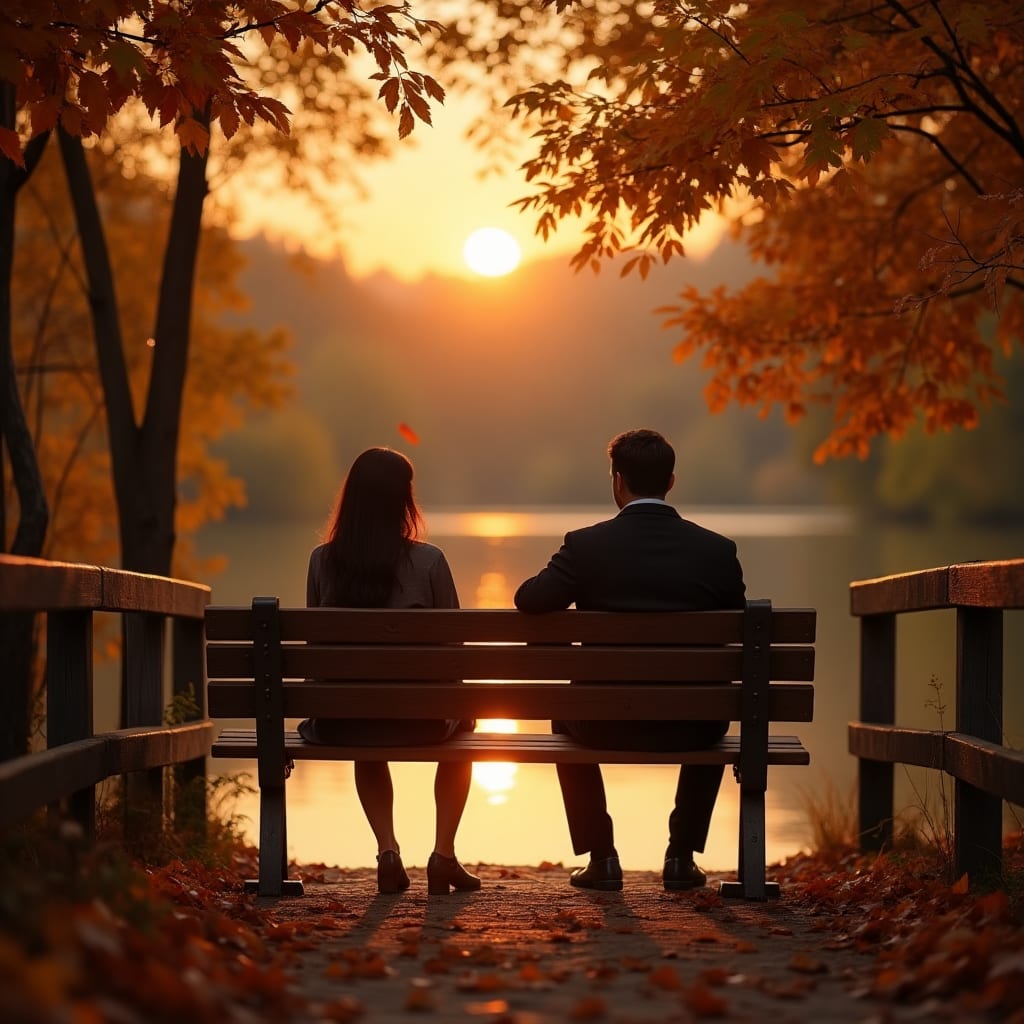
Every Sunday, at exactly 4 PM, Mira would walk to the old wooden bridge that crossed the quiet stream behind Elm Park.
She called it her “thinking place.”
It wasn’t famous or fancy—just a forgotten little crossing with a weather-worn bench and creaky railings. But it was hers. A place where she could breathe. Where the world, with all its demands and noise, faded into the background.
She didn’t expect to share it.
Then, one Sunday in late October, she arrived to find someone already sitting there.
A man. Early thirties. Messy hair. A camera bag at his side. He was staring out over the water, lost in thought.
Mira hesitated. It felt like an intrusion. But the bridge was public, after all. She sat at the opposite end of the bench, opened her book, and pretended not to notice him.
He glanced at her, nodded politely, and returned to the view.
Neither spoke.
She read. He stared. The river moved beneath them, catching the light like a living mirror.
Then 5 o'clock came. The man stood up, adjusted his camera strap, and left.
Mira didn’t think much of it—just a quiet coincidence.
Until he returned the next Sunday.
Same time. Same seat.
Again, they didn’t speak.
This time, she watched him a little. Not directly, but from the corner of her eye. He didn’t fidget like most people. He sat still, with a kind of intentional calm, like the bench was an anchor in his otherwise drifting life.
The third Sunday, it rained. Still, they both showed up. She brought a thermos of tea. He brought an umbrella large enough to shield them both, though they didn’t speak.
By the fourth Sunday, something had shifted.
He turned to her and said, “I think we’re in a relationship now.”
She laughed. “How romantic.”
And just like that, the bridge had a new sound—voices.
His name was Eli. A photographer. He had once traveled constantly, but had recently come back to his childhood town to care for his mother, who had dementia.
“Sometimes,” he said, “she doesn’t remember me. But she remembers the bridge. She used to bring me here when I was little.”
Mira nodded. She understood.
She worked at the local library. A quiet life. Recently quiet in all the wrong ways. Her younger sister had passed away the year before, and Mira hadn’t known how to grieve properly. She just… kept going.
“I don’t know how to talk about her,” she said once. “So I talk to the water.”
Eli didn’t offer advice. Just listened.
And week by week, word by word, silence gave way to something new.
They didn’t exchange numbers. Never met during the week. It was unspoken—this time was sacred. No interruptions. No rush.
Just two people, sitting on a bridge, finding comfort in each other’s company.
They talked about their favorite books. About childhood memories. About regrets and dreams. Sometimes they didn’t talk at all. And that, too, was a kind of closeness.
One Sunday in December, Eli brought her a photo. It was the bridge—empty, covered in snow, early morning light spilling across the planks.
“It felt like you, somehow,” he said.
She touched the image. “It feels like home.”
Then January came.
And he didn’t show up.
She waited until sunset. Came back the next week. And the next.
Nothing.
No note. No message.
It hurt more than she expected. Which was strange, because they’d never even hugged. Never made plans. Never promised anything.
But something had been building there. And now it was missing.
Weeks passed.
Then, one Sunday in March, she arrived at the bridge to find a letter on the bench. Her name on the envelope.
Inside, a short note in familiar handwriting:
“Mira,
My mother passed in January. I had to leave town suddenly. I didn’t know how to say goodbye to you, so I didn’t. I regret that.
I’m back now. If you’re still willing to meet me here, I’ll be on this bench every Sunday at 4 PM.
But this time, I’ll bring two cups of tea.
—Eli”
Her eyes filled with tears.
She sat down.
Waited.
At 4:01, he arrived—looking just as she remembered.
And this time, they didn’t sit on opposite ends of the bench.
They sat in the middle.
About the Creator
Muhammad Hamza Safi
Hi, I'm Muhammad Hamza Safi — a writer exploring education, youth culture, and the impact of tech and social media on our lives. I share real stories, digital trends, and thought-provoking takes on the world we’re shaping.
Keep reading
More stories from Muhammad Hamza Safi and writers in Poets and other communities.




Comments (1)
There is a bridge between people, and that bridge is made of tears. True heart, love, its elevation is tears