
Sun Tzu's 5 quotes that change lives
Five quotes that can change your life plus explanation what does they mean

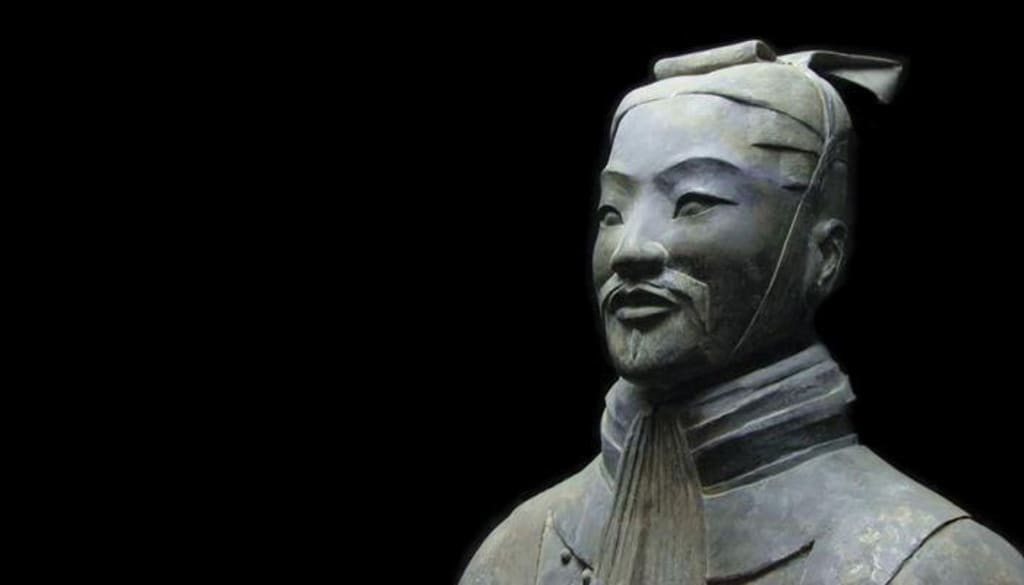
"If you know the enemy and know yourself, you need not fear the result of a hundred battles."
Knowing your own strengths and weaknesses, as well as those of your enemy, can give you an advantage in battle.
By understanding your own capabilities and limitations, you can effectively plan and execute strategies that align with your strengths and avoid situations where you are likely to fail. Additionally, by knowing the strengths and weaknesses of your enemy, you can anticipate their actions and plan your responses accordingly. This can help you to both defend against and attack your opponent with greater efficiency and effectiveness.
Overall, the quote suggests that knowledge and preparation are crucial to success in any competitive situation, including warfare. By understanding yourself and your opponent, you can increase your chances of victory and minimize your chances of defeat.
"Let your plans be dark and impenetrable as night, and when you move, fall like a thunderbolt."
It is a powerful statement on the importance of secrecy and surprise in warfare. In essence, it means that a successful military campaign requires a level of deception and secrecy that keeps the enemy guessing, while also having the ability to launch an unexpected and devastating attack at the right moment.
By keeping one's plans hidden and unknown to the enemy, the enemy will be uncertain about the military leader's intentions and movements, which can lead to confusion and indecision. This can create an advantage for the military leader, as the enemy will not be able to anticipate the attack and prepare an effective defense.
The second part of the quote, "when you move, fall like a thunderbolt," refers to the importance of striking quickly and decisively once the plan is set in motion. The thunderbolt is a metaphor for a sudden and overwhelming attack that leaves the enemy no chance to recover.
In summary, Sun Tzu's quote emphasizes the importance of secrecy, deception, and surprise in warfare, and highlights the need to strike quickly and decisively once the plan is set in motion.
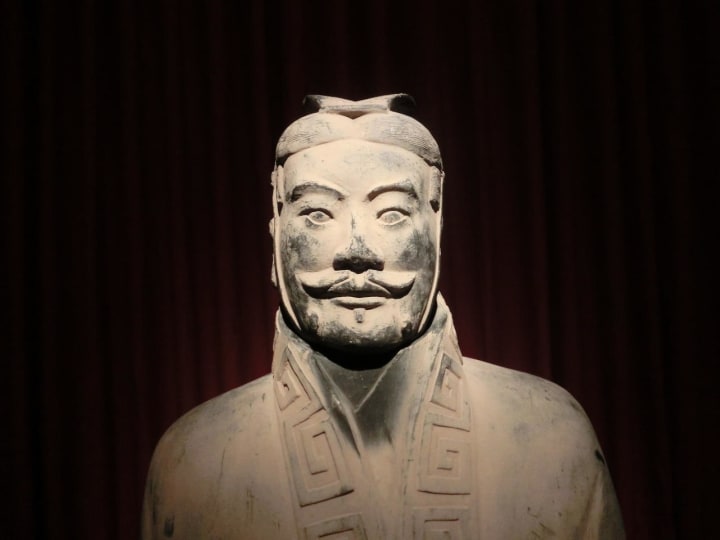
"The supreme art of war is to subdue the enemy without fighting."
This quote emphasizes the importance of strategy and preparation in achieving victory. It suggests that the ultimate goal of war or conflict is not to engage in physical combat, but rather to achieve one's objectives without resorting to violence.
Subduing the enemy without fighting requires a deep understanding of the enemy's strengths and weaknesses, as well as one's own strengths and weaknesses. By studying the enemy and oneself, a wise commander can identify the most effective strategies for achieving victory with minimal loss of life and resources.
This principle can also be applied to many aspects of life beyond war, such as business, politics, and personal relationships. By understanding the motivations and goals of others, and by developing one's own strengths and abilities, it is often possible to achieve success and overcome obstacles without resorting to conflict.
In essence, this quote suggests that the true "art" of war, or of any challenge, is not in the application of brute force, but rather in the ability to outmaneuver one's opponent through skillful planning, analysis, and execution.
"All warfare is based on deception."
This suggests that deception is a fundamental element of warfare. The idea is that if an enemy is deceived into thinking you are stronger, weaker, more capable, or less capable than you really are, they may make decisions that benefit you and hurt themselves. In this sense, deception can be used as a tool to gain a strategic advantage without actually having to engage in battle.
One way in which deception can be used in warfare is through the creation of false perceptions. For example, an army might spread rumors about their strength, or display decoy weapons to make the enemy believe they are better equipped than they really are. This can cause the enemy to overestimate the strength of the opposing army, or become complacent in their own position, allowing the deceiving army to gain an advantage.
Overall, Sun Tzu's quote suggests that warfare is not simply a matter of brute force, but rather requires strategic thinking and the use of various tactics, including deception, to achieve victory.
"The greatest victory is that which requires no battle."
This quote by Sun Tzu speaks to the idea that the ultimate goal of warfare or conflict is not necessarily to engage in physical battle or violence, but rather to achieve a desired outcome through strategic planning and effective execution.
In the context of war, the greatest victory is one that is achieved without having to engage in combat. This means that a commander who can outmaneuver his opponent and win the war through strategic planning and deception is considered a greater tactician than one who simply wins through brute force.
However, this quote can also be applied to other areas of life beyond warfare. It suggests that the most successful and fulfilling accomplishments are those that are achieved through skillful planning, foresight, and execution, rather than through force or aggression.
In this way, the quote can be seen as a reminder to focus on strategy and planning in order to achieve success, rather than relying solely on brute force or direct confrontation.
About the Creator
kicker 25
I am interested in dieting and healthy life for about 4 years. Whether you're looking to lose weight, build muscle, or philosophy some recipies I am here to help you! Give me a topic and i will help!!




Comments
There are no comments for this story
Be the first to respond and start the conversation.