
Robert Frost: The Poet of New England’s Heart
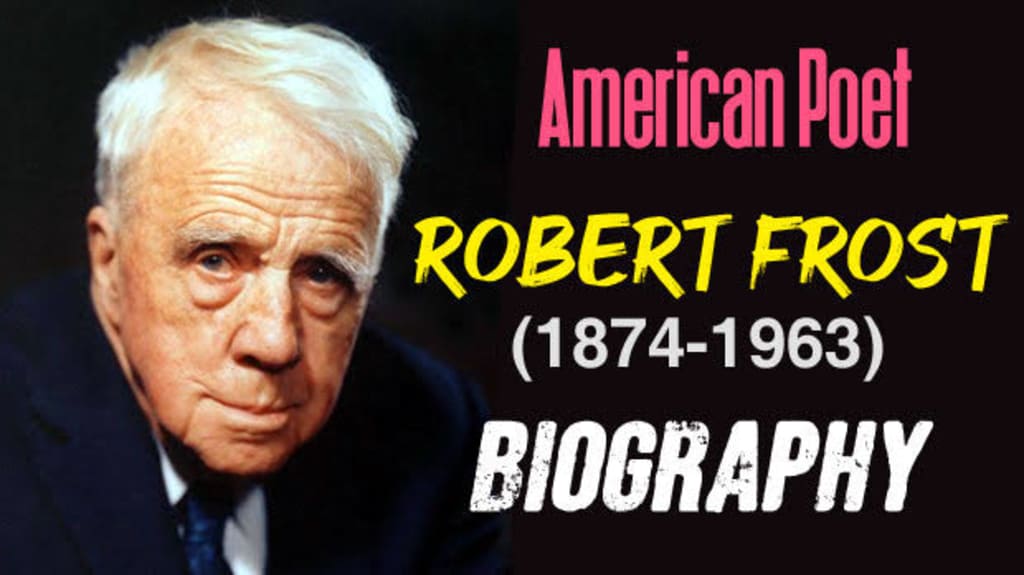
Robert Frost, one of America’s most celebrated poets, is renowned for his depictions of rural life, his mastery of colloquial speech, and his profound philosophical insights. His poetry resonates deeply with readers, capturing universal themes such as human struggle, nature’s beauty, and the complexities of individual choice. Born on March 26, 1874, in San Francisco, Frost’s life and work reflect a uniquely American spirit, tempered by personal hardships and a relentless pursuit of artistic excellence.
Early Life and Influences
Frost’s early life was marked by instability and hardship. His father, a journalist and a politically ambitious man, died of tuberculosis when Frost was only 11 years old. This loss prompted the family to move to Lawrence, Massachusetts, to live with Frost’s maternal grandparents. It was in New England, with its rolling landscapes and rural communities, that Frost found his poetic voice. His environment—its woods, fields, and hardworking people—became the backdrop for much of his poetry.
Frost attended Dartmouth College briefly but left without completing his degree. He later enrolled at Harvard University, but financial constraints and health issues forced him to leave after two years. Despite his incomplete formal education, Frost was a voracious reader, drawing inspiration from poets like Ralph Waldo Emerson, Henry David Thoreau, and William Wordsworth. These influences are evident in his deep engagement with nature and his philosophical undertones.
The Struggles and Breakthroughs
Frost’s journey to literary success was not immediate. He initially worked various jobs, including teaching, farming, and newspaper delivery, to support his family. During this time, he continued writing poetry but struggled to gain recognition. In 1912, frustrated by his lack of success in America, Frost moved to England with his wife, Elinor, and their children. This move proved pivotal in his career.
In England, Frost published his first two collections, A Boy’s Will (1913) and North of Boston (1914). These works garnered critical acclaim, and he was introduced to prominent literary figures such as Ezra Pound and Edward Thomas. These connections, along with the appreciation for his work in England, helped establish Frost’s reputation. When he returned to America in 1915, he was celebrated as a major poetic voice.
Themes and Style
Frost’s poetry is characterized by its simplicity on the surface and complexity beneath. His themes often explore rural life, nature, individualism, and the human condition. While his poems are rooted in the pastoral settings of New England, they transcend geographical boundaries, speaking to universal experiences and emotions.
One of Frost’s signature features is his use of colloquial language. He employs conversational tones and everyday speech, making his poetry accessible while layering it with profound meaning. His work often contains a dramatic quality, with characters or speakers engaged in dialogue or introspection.
For example, in The Death of the Hired Man, Frost portrays a poignant interaction between a husband and wife discussing a dying farmhand. The poem delves into themes of duty, compassion, and belonging, showcasing Frost’s ability to address complex emotional dynamics within seemingly simple narratives.
Nature as a Metaphor
Nature plays a central role in Frost’s poetry, not just as a setting but as a metaphor for life’s complexities. In Stopping by Woods on a Snowy Evening, Frost juxtaposes the serene beauty of snow-covered woods with the pull of responsibilities, symbolizing the tension between rest and duty. The poem’s famous concluding lines—“And miles to go before I sleep”—have been interpreted as reflections on mortality and the human obligation to persevere.
Similarly, Birches uses the image of trees bent under ice to explore themes of resilience, nostalgia, and the balance between imagination and reality. Frost’s depiction of nature is neither purely idyllic nor harshly realistic; instead, it serves as a mirror for human experiences and emotions.
The Road Not Taken: A Quintessential Frost Poem
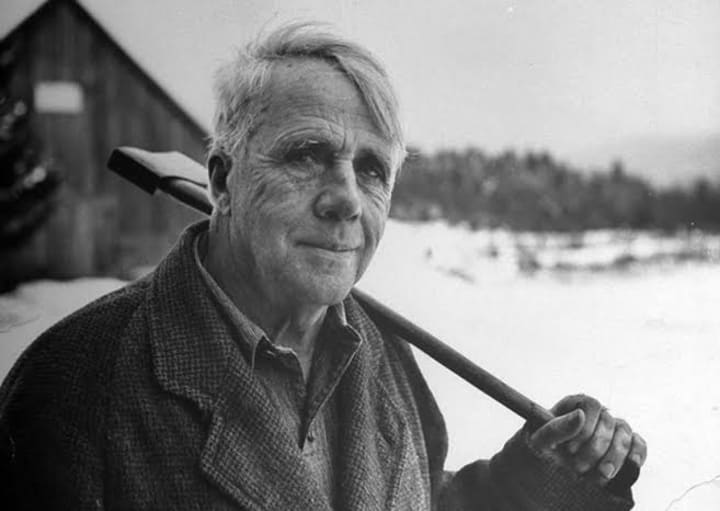
Perhaps Frost’s most famous poem, The Road Not Taken, epitomizes his ability to weave profound meaning into a seemingly straightforward narrative. The poem describes a traveler choosing between two diverging paths in a wood. While it is often interpreted as a celebration of individualism, the poem’s ambiguity leaves room for other readings. The traveler’s decision is tinged with doubt and reflection, illustrating Frost’s interest in the complexity of choice and the human tendency to ascribe meaning to life’s decisions retrospectively.
Philosophical Depth and Ambiguity
Frost’s work often grapples with existential questions and philosophical musings. His poems resist simple conclusions, embracing ambiguity and inviting readers to engage with their meanings actively. In Design, for instance, Frost questions the presence of a higher power by examining a white spider on a white flower, pondering whether such moments signify a grand design or mere coincidence.
This intellectual depth, combined with his lyrical skill, distinguishes Frost from many of his contemporaries. He strikes a balance between the personal and the universal, grounding his philosophical explorations in relatable imagery and scenarios.
Achievements and Legacy
Frost’s contributions to literature earned him widespread acclaim during his lifetime. He received numerous honors, including four Pulitzer Prizes for Poetry—an unprecedented achievement. He also served as the U.S. Poet Laureate and recited a poem at President John F. Kennedy’s inauguration in 1961, a testament to his national significance.
Frost’s influence extends far beyond his accolades. His poetry has inspired countless readers and writers, and his themes continue to resonate in contemporary times. He is often associated with the quintessential American spirit: independent, thoughtful, and deeply connected to the land.
Personal Life and Challenges
Despite his professional success, Frost’s personal life was marked by tragedy. He and Elinor endured the loss of several children, and Frost himself struggled with bouts of depression. These experiences shaped his poetry, imbuing it with a sense of melancholy and resilience. His ability to find beauty and meaning in life’s hardships is one of his enduring qualities as a poet.
Frost’s Enduring Appeal
What makes Robert Frost’s poetry timeless is its ability to speak to the human experience in all its complexity. His works are accessible yet profound, capturing the essence of ordinary moments while exploring life’s deeper questions. Frost’s rural settings and conversational style create a sense of intimacy, inviting readers to see themselves reflected in his lines.
Moreover, Frost’s exploration of choice, resilience, and the relationship between humans and nature remains relevant in today’s world. His poetry encourages readers to pause, reflect, and engage with the world around them, reminding us of the beauty and challenges inherent in life.
Conclusion
Robert Frost stands as a towering figure in American literature, a poet whose works continue to inspire and challenge readers. His ability to weave profound insights into the fabric of everyday life has solidified his place as a literary icon. Through his exploration of nature, human relationships, and existential questions, Frost offers a body of work that is both deeply personal and universally resonant. As generations of readers return to his poems, Frost’s legacy endures, reminding us of the power of poetry to illuminate life’s complexities.
About the Creator
Mr Ali
Hello EveryOne..!!


Comments (1)
This is an excellent and comprehensive overview of Robert Frost's life and work! You've effectively captured the key elements of his biography, highlighting the influences that shaped his poetry, the struggles he faced, and the achievements he earned. This is a truly impressive and informative piece that offers a rich understanding of Robert Frost and his poetry.