
Poet Laureate
A tradition of honouring poets that goes back many centuries

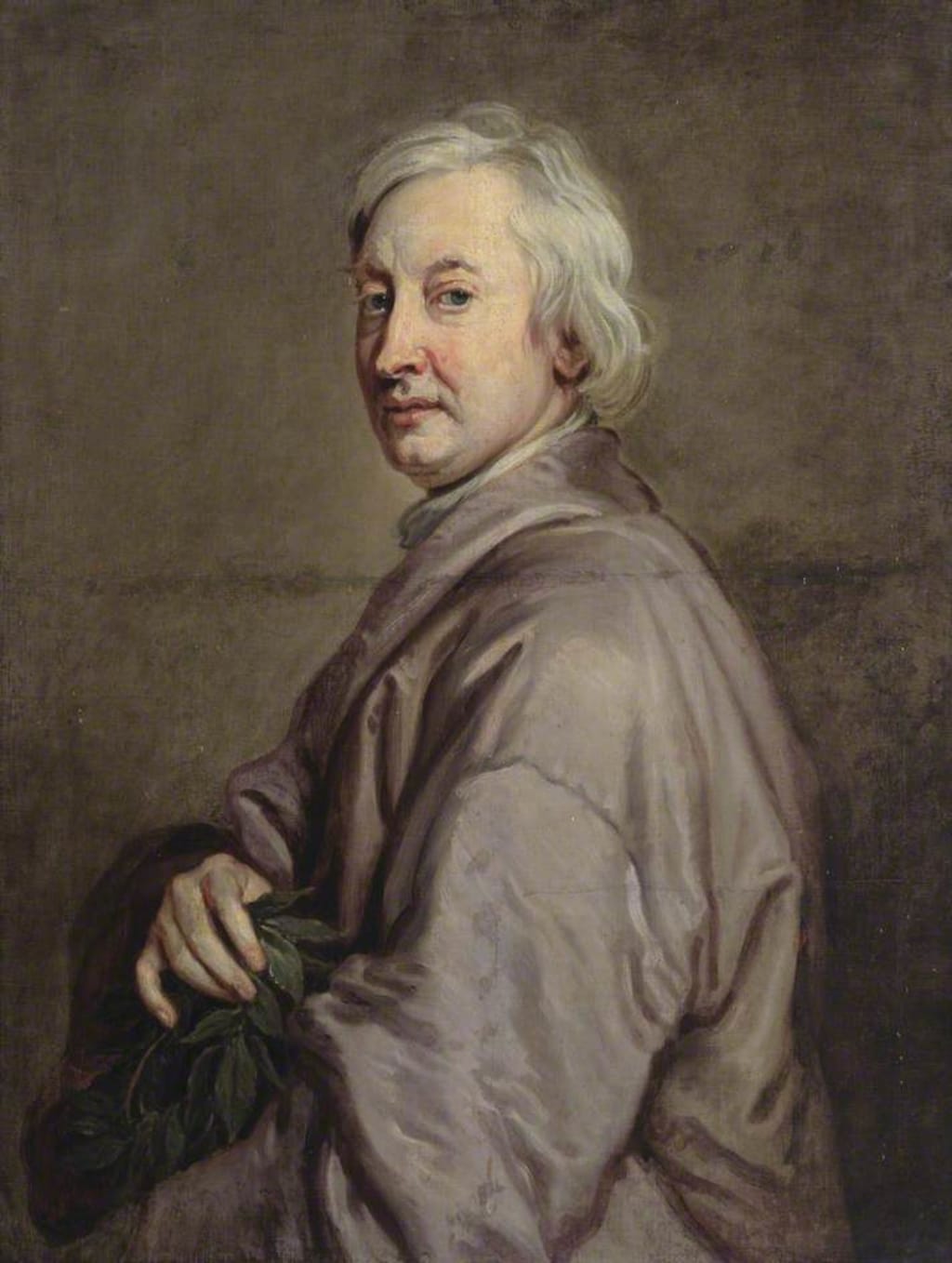
A poet laureate is a poet who is honoured for being, in theory, the best of his or her generation and given benefits in exchange for being required to perform certain duties. The institution is a British one, but it has been copied in the United States along somewhat different lines, and there are also poets laureate in Canada, New Zealand and a few other countries. It is therefore important to distinguish what the differences are, to avoid confusion.
The British tradition of offering “laurels” to a poet could be said to date back to the 12th century and the appointment of a “king’s versifier” by King Richard I. Geoffrey Chaucer (1340-1400), for example, was given royal patronage in exchange for a regular supply of wine, and John Skelton (1460-1529) assumed the title of “poet laureate” due to his close connection to King Henry VIII, his former pupil.
However, the first “regular” poet laureate is often thought to be Ben Jonson (1572-1637), who in 1616 was given an annual pension of 60 pounds by King James I. On his death a new appointment was made, namely to William Davenant (1606-68), and it thereafter became customary for the reigning monarch to always have a poet laureate attached to the royal household. The first official poet laureate would, however, have to be John Dryden, who received letters patent when appointed in 1668.
The poet laureate’s main task has always been to produce poems to order when so required by the monarch. This might be to mark an important royal or state occasion, such as a coronation or a military victory. The poems in question have not usually been of any particular merit, and the poets themselves have not always been the best around at the time, despite what might be assumed. The kings and queens of England and Great Britain have not necessarily been great connoisseurs of poetry, and their choices have at times been bizarre.
The list of poets laureate has therefore included some of the “greats” of English Literature, such as Wordsworth and Tennyson, but others who are justly forgotten, including Henry James Pye (appointed by King George III in 1790) and Alfred Austin, who succeeded Tennyson in 1896.

One reason for the mixed quality of poets laureate has been that most poets are free spirits who do not want to be tied down in support of a particular monarch (or ruling party of government). This has worked both ways, in that the best poets might be thought of by the establishment as being too “dangerous” to be allowed the publicity that goes with the post. The list of poets who were offered the post but turned it down include Walter Scott in 1813, William Morris in 1896 and Philip Larkin in 1984.
There have been a number of changes over the years in the way that poets laureate are appointed. For example, it has not been the case for many years that the choice is entirely that of the monarch; as with bishops and other non-political public appointments, the government of the day provides a shortlist of recommendations from which the monarch is invited to choose.
The post had become, especially during the 20th century, a means of bestowing an honour for life on a particular poet, whose powers could of course wane as they moved into old age. For example, John Masefield was nearly 90 when he died in 1967 after a “reign” of 37 years. However, the post is now seen as a more active appointment, for a fixed 10-year term, with the holder expected to be an ambassador for poetry.
The first “10-year laureate” was Andrew Motion, from 1999 to 2009, the next being Carol Ann Duffy, the first female laureate as well as the first Scot to hold the post. She is very much a public poet who is not afraid to tackle the issues of the day, be they corruption in high places, street violence, or the war in Afghanistan. She, like Andrew Motion before her, and her successor Simon Armitage, is not afraid to be controversial or to say uncomfortable things. This is a million miles away from the obsequious flattery written by many poets laureate of earlier generations.

However, some traditions die hard, and today’s poet laureate is still entitled to payment of a one-off “butt of sack”, which equates to about 600 bottles of sherry. Andrew Motion, however, is still waiting for his to arrive, although Carol Ann Duffy, who is particularly fond of sherry, in unlikely to want the oversight to continue in her case! There is also a modest annual monetary payment of less than 6,000 pounds.
Another development has been the appointment of a “Children’s Laureate”, who can be either a writer or illustrator of children’s books, with a two-year brief to champion and promote better access to literature (not just poetry) for children of all ages. This is not a government appointment but is in the hands of “Booktrust”, a charity that receives a measure of government support. However, the idea for the children’s laureateship came originally from Ted Hughes, a previous poet laureate. The first appointee was the illustrator Quentin Blake, who held the post from 1999 to 2001.
Non-British Poets Laureate
The United States custom of appointing a poet laureate dates from an Act of Congress of 1985, although this merely made official the practice, begun in 1937, of awarding someone the post of “Consultant in Poetry to the Library of Congress”. The appointment is made annually by the Librarian of Congress, although a post-holder can be re-appointed. The term of office runs from October to May, and a stipend of $35,000 is paid.
The function of the post is to raise awareness of poetry among the general population, although the post-holder’s formal duties are not all that arduous, being limited to giving an annual lecture and poetry reading. Given the generous payment (at least in comparison with the British equivalent), and the limited length of term of office, the American laureateship can be seen more as a means of honouring a number of prominent poets within a relatively short time frame.
In Canada, the Poet Laureate is appointed by Parliament to promote poetry and culture within Canadian society. The office, inaugurated in 2001, is awarded for two years at a time to an established poet who is able to write in both English and French, the appointees alternating between poets from the English-speaking and French-speaking communities.
New Zealand has a poet laureateship administered by the National Library of New Zealand. As in Canada, the appointment is for two years. The first poet laureate, appointed in 1998, was Bill Manhire.
About the Creator
John Welford
John was a retired librarian, having spent most of his career in academic and industrial libraries.
He wrote on a number of subjects and also wrote stories as a member of the "Hinckley Scribblers".
Unfortunately John died in early July.
Keep reading
More stories from John Welford and writers in Poets and other communities.
Departure
Flowers in her arms, The crowd smiling up at her, Saying thanks, with tears
By Fiona Hamerabout 24 hours ago in Poets



Comments
There are no comments for this story
Be the first to respond and start the conversation.